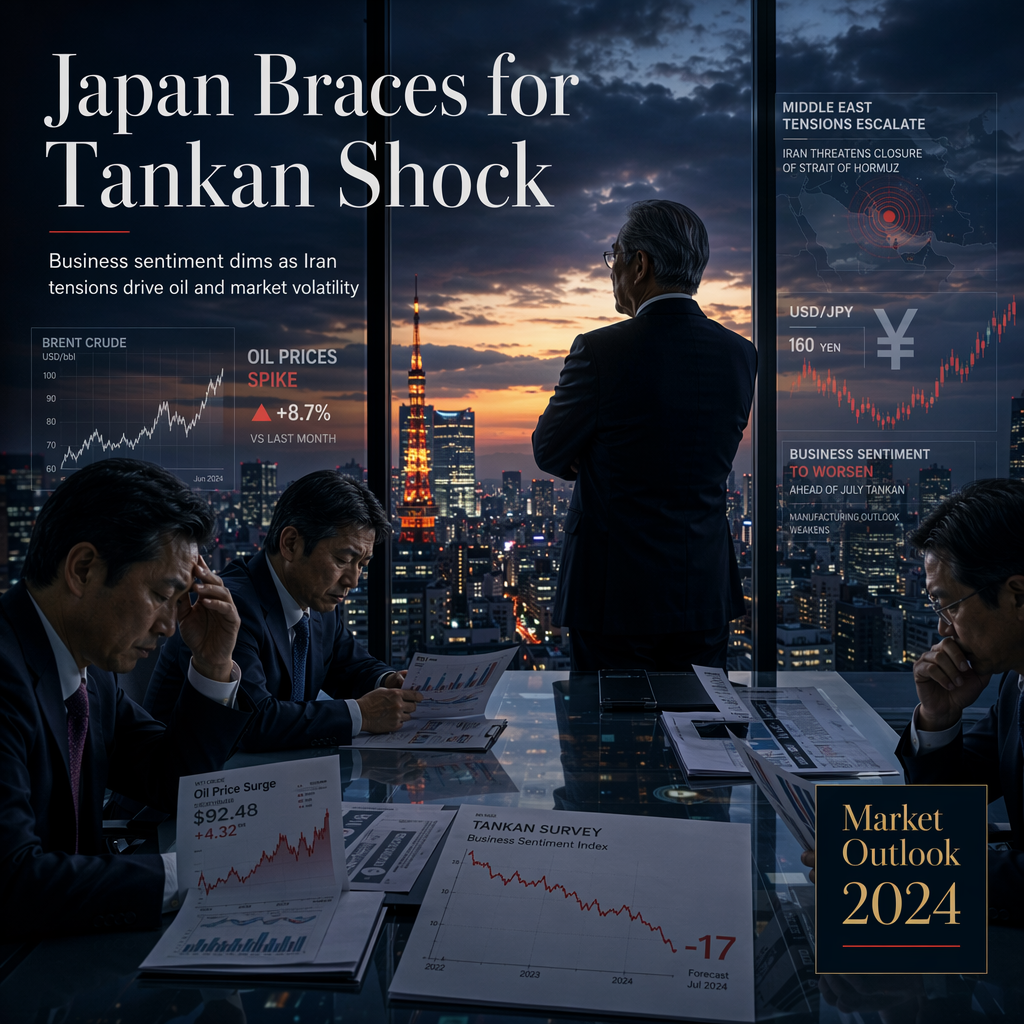
According to market participants, the upcoming July Tankan survey by the Bank of Japan is expected to reflect deteriorating business sentiment, largely due to the escalating situation in Iran and its impact on global oil prices and geopolitical risks in the Middle East [1]. Rising crude oil prices and heightened regional risks are affecting corporate earnings forecasts, with manufacturing sectors in particular adopting a cautious outlook [1]. Multiple economists have noted that the intensifying Iran situation is increasing uncertainty for Japanese companies, and they anticipate the business conditions Diffusion Index (DI) will likely decline compared to the previous survey [1].
While some positive factors are mentioned, such as the robust US economy and improved profitability for export-oriented firms due to the weaker yen, the overall consensus is that the negative effects stemming from the Iran issue outweigh these benefits [1]. Market participants are closely watching the Tankan results, as they could influence the Bank of Japan's monetary policy decisions [1].
Key indicators to monitor include the extent of deterioration in the business conditions DI, the magnitude of oil price increases, and currency movements, all of which are impacting corporate sentiment [1]. There is also heightened caution regarding volatility in oil-related stocks and sectors sensitive to Middle Eastern risks [1]. Investors are advised to pay close attention to the Tankan announcement, as it is a critical indicator for Japan's economic outlook and can significantly affect both equity and currency markets [1].
CONCLUSION
The July Tankan survey is anticipated to show worsening business sentiment in Japan, primarily due to the Iran situation and rising oil prices. Investors and analysts are closely monitoring the results, as they may influence Bank of Japan policy and trigger volatility in sensitive sectors. Overall, the market is bracing for negative impacts, with some offsetting positives from external factors.