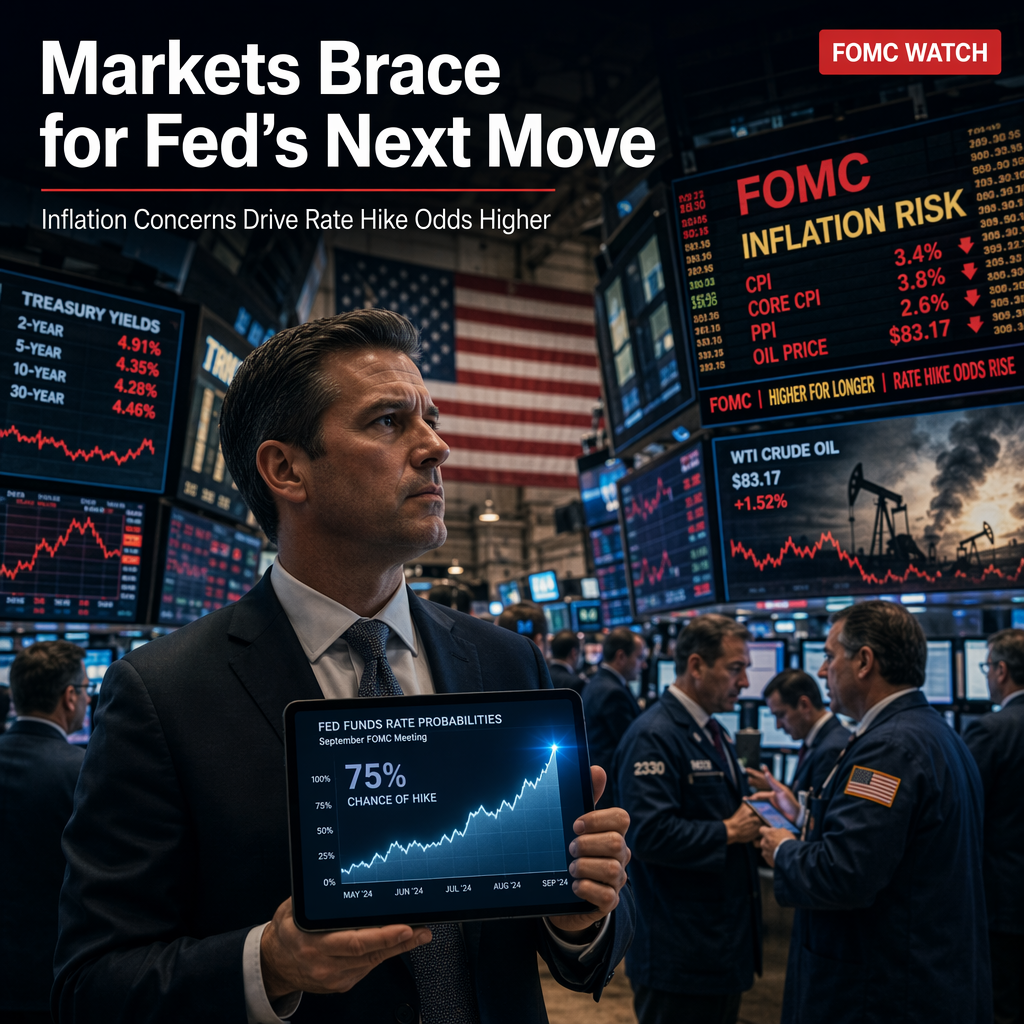
According to DBS Group Research economist Eugene Leow, investors are approaching the upcoming Federal Open Market Committee (FOMC) meeting with heightened caution, as markets currently assign a 34% probability to a rate hike in July and nearly 100% odds for a hike at the September meeting [1]. Leow notes that while the recent pause in US-Iran hostilities led to a correction in crude oil prices, persistent inflation concerns remain, as evidenced by a recent uptick in 2-year breakeven rates, despite the decline in crude prices and mild June CPI figures [1].
Leow highlights that the Taylor Rule model used by DBS points toward further Federal Reserve tightening, emphasizing that in the current environment of reduced forward guidance, economic data will play an increasingly significant role in shaping policy expectations [1]. The ongoing volatility in the Middle East is also cited as a factor contributing to a risk premium in oil prices, which could keep inflation elevated for the foreseeable future [1].
Regarding market implications, Leow outlines contrasting scenarios for the US Treasury yield curve. If the Fed holds rates steady, the yield curve may steepen modestly, with upward pressure more pronounced at the long end, potentially pushing 10-year yields toward the 4.7-4.8% range, while short-term yields are expected to remain firm due to persistent expectations of Fed tightening [1]. Conversely, if the Fed surprises with a rate hike, long-end US Treasuries may rally, with 10-year yields possibly drifting toward 4.5% as markets gain confidence in the Fed's vigilance against inflation [1].
CONCLUSION
Markets are assigning significant odds to a September Fed rate hike, reflecting ongoing inflation concerns and geopolitical risks. The upcoming FOMC decision is expected to have a notable impact on the US Treasury yield curve, with investor sentiment remaining cautious as data and policy signals are closely watched.