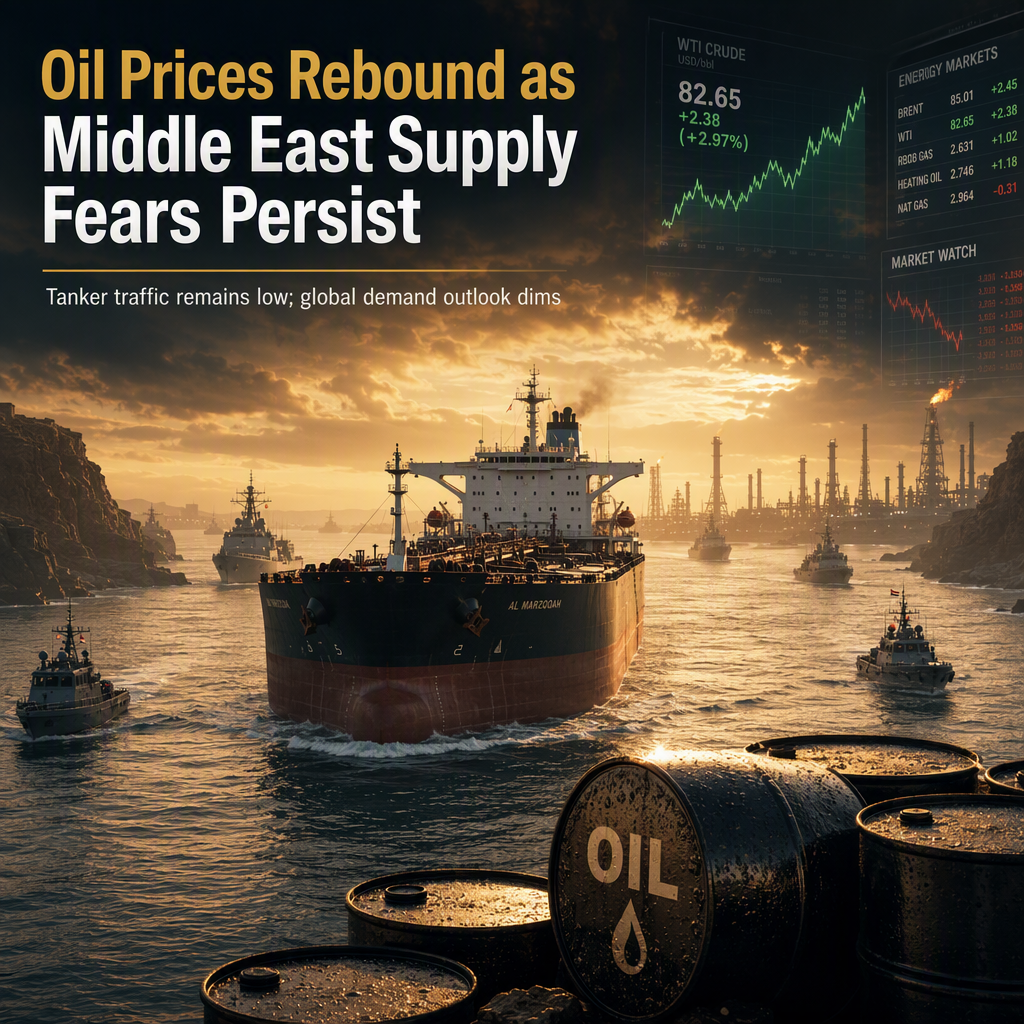
West Texas Intermediate (WTI) US Oil rebounded on Friday, trading around $80.80, up 0.40% on the day, as prices recovered some losses following two days of correction. This rebound was driven by ongoing concerns about energy supply disruptions in the Middle East, particularly around the Strait of Hormuz and the Bab el-Mandeb Strait, which together account for approximately 27% of global energy supply. Despite a slight pickup in commodity vessel traffic on Thursday, transits remain well below the pre-conflict daily average of 130-140 vessels, with current numbers under 12 per day according to Kpler data cited by Reuters.
Diplomatic developments indicate that Iran is not engaged in discussions with the United States about reopening the Strait of Hormuz, but is reportedly in the final stages of talks with Oman regarding collective management of navigation through the waterway. These persistent supply risks are maintaining a significant risk premium in oil markets as long as navigation remains disrupted.
On the demand side, concerns persist as the Organization of the Petroleum Exporting Countries (OPEC) has lowered its forecast for global oil demand growth this year to 580,000 barrels per day, down from 780,000 previously, marking the fourth consecutive downward revision. The International Energy Agency (IEA) has also trimmed its demand outlook, warning that prolonged conflicts and elevated prices are beginning to weigh on consumption.
Strategists at Rabobank highlight the ongoing volatility in oil prices, noting that Brent crude has fluctuated between roughly $72 and $102 per barrel since the end of June’s memorandum of understanding, reacting to headlines about the Hormuz crisis. They emphasize that tanker transits are still running at only 3 to 10 ships a day, far below pre-war levels, and would need to recover to around 80 per day to stabilize energy markets, even with current diversionary flows through Saudi Arabia and the UAE. Rabobank also warns that ongoing stockpile drawdowns have left global inventories heading toward historic lows, especially in refined products, leaving the market highly exposed to further supply shocks [1].
CONCLUSION
WTI oil prices are currently supported by persistent supply risks in the Middle East, but a deteriorating global demand outlook and historically low inventories are contributing to ongoing market volatility. The balance between these opposing forces is likely to keep oil prices sensitive to further developments in both supply disruptions and demand forecasts.