
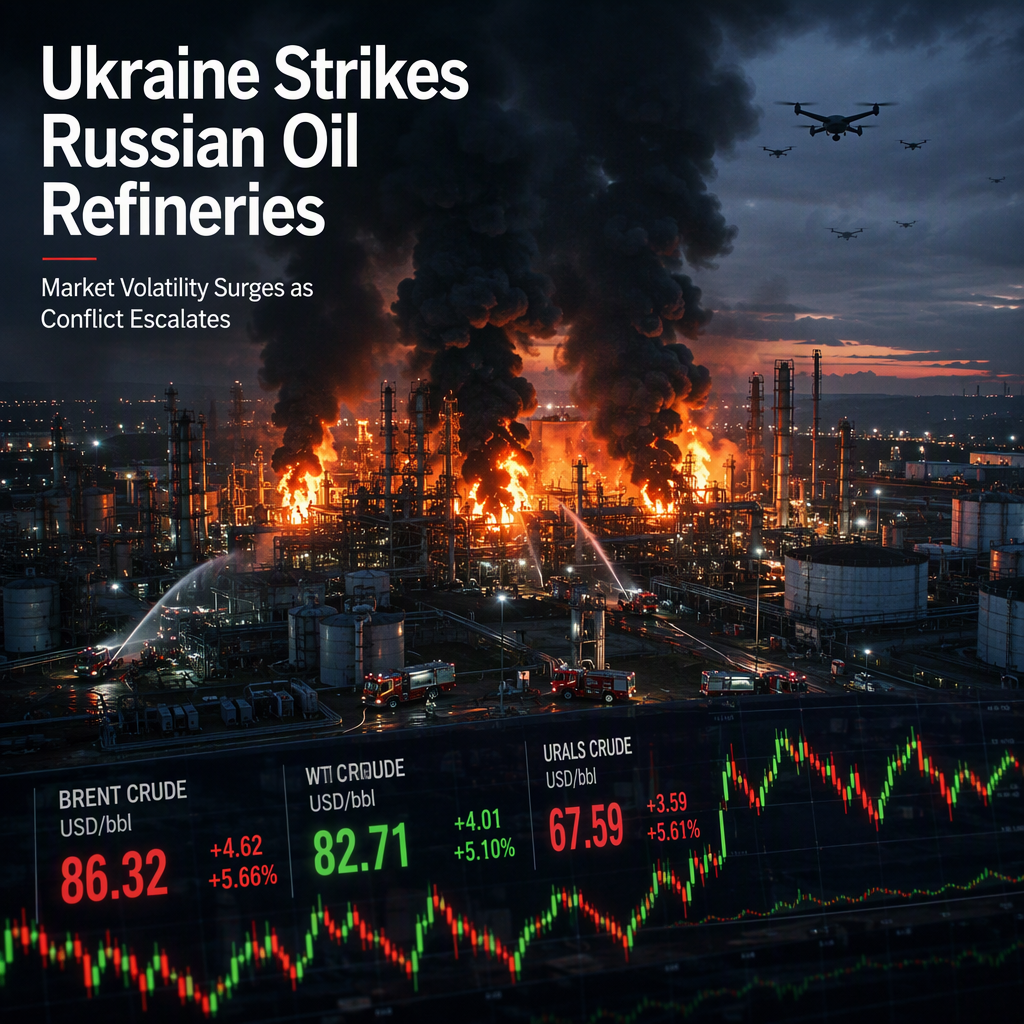
Ukraine has resumed strikes on Russian oil refineries, intensifying efforts to disrupt Russia's energy infrastructure and impact its oil export revenues, according to NBC News. President Zelenskyy publicly rejected President Trump's calls for an energy ceasefire, stating, "We will not stop until the aggressor feels the impact in its economy," signaling a continued escalation in the conflict and heightened uncertainty for global oil markets [1].
The renewed attacks targeted multiple Russian oil refineries overnight, with analysts noting that such actions are intended to undermine Russia's energy sector. Financial markets responded with increased volatility in crude prices as traders assessed the risk of supply disruptions and broader geopolitical instability in the region [1].
Energy sector observers highlighted that previous strikes on Russian oil facilities led to brief surges in Brent and WTI crude futures. The latest developments could drive prices higher if Russian output is significantly curtailed. Brent crude is currently supported at $86 per barrel with resistance at $92, while WTI crude finds support at $82 and resistance at $88. Technical indicators point to increased upside momentum, though some chart patterns suggest possible consolidation if supply fears ease [1].
Trading desks are advising the use of tight stop losses due to unpredictable headline risk and recommend closely monitoring refinery production data for signs of disruption. Sentiment remains bullish among hedge funds, which are betting on higher oil prices should the strikes persist. Analysts estimate that a sustained outage at major Russian refineries could reduce the country's oil exports by up to 5%, potentially affecting European energy prices downstream. However, no confirmed financial damage figures have been released by Russian authorities [1].
CONCLUSION
Ukraine's renewed strikes on Russian oil refineries have injected significant volatility into global crude markets, with analysts and traders anticipating further price increases if disruptions persist. President Zelenskyy's firm stance against an energy ceasefire signals ongoing escalation, keeping market sentiment bullish and risk elevated. The situation remains fluid, with market participants closely monitoring developments for further impact.