
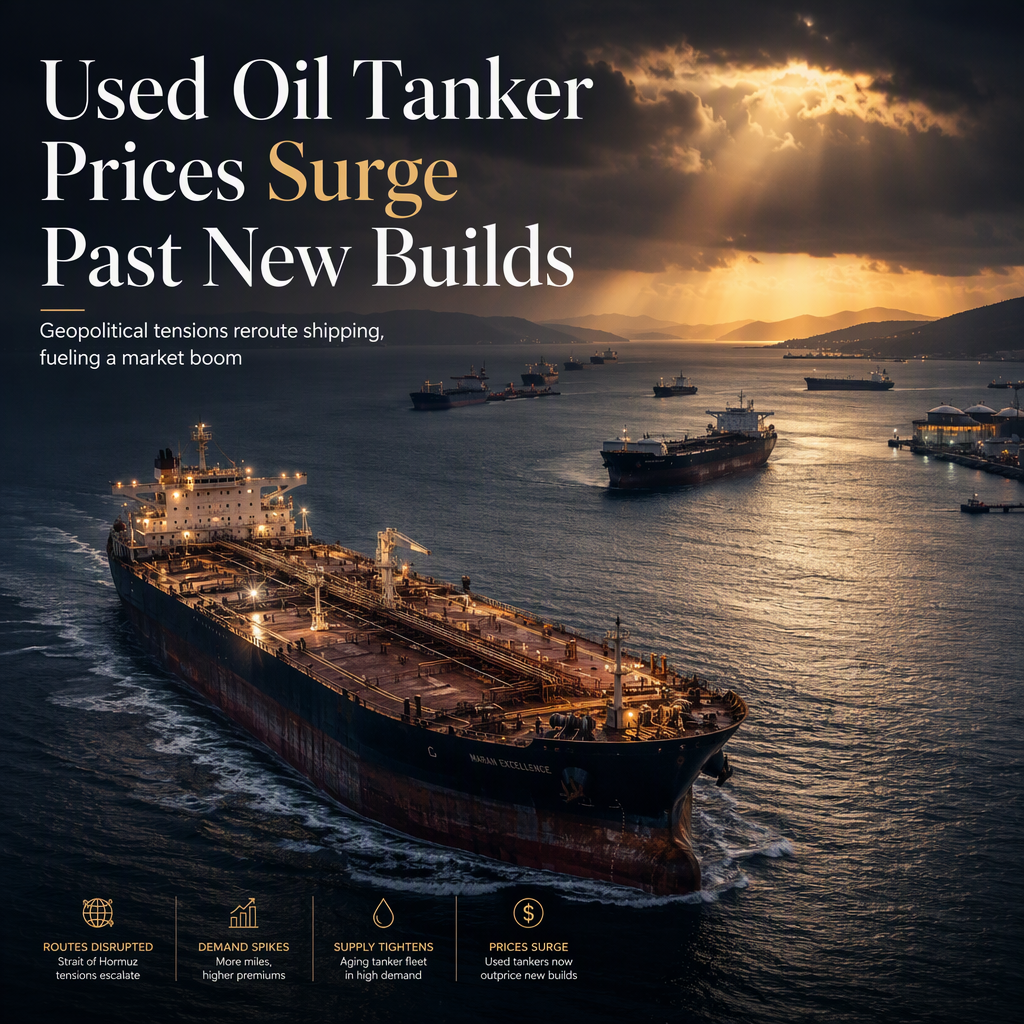
The ongoing military conflict between the U.S. and Iran has significantly disrupted global oil shipping, forcing vessels to avoid the Strait of Hormuz and leading to a surge in demand for oil tankers that are immediately available for service [1]. As a result, the prices of 15-year-old oil tankers have recently exceeded those of new builds, a highly unusual market phenomenon attributed to geopolitical tensions and the resulting rerouting of shipping lanes [1].
Industry sources report that long delivery times for new ships—up to two years—have prompted owners and operators to pay a premium for older vessels that can be deployed without delay [1]. This supply crunch is expected to persist as uncertainty in the Middle East continues to affect traditional oil transportation routes [1].
Imabari Shipbuilding's Saijo Shipyard is responding to the increased demand and market volatility by expanding its facilities, supported by a government-backed fund [1]. Market analysts highlight that the spike in used tanker prices reflects both the scarcity of available ships and the heightened risk premiums associated with navigating alternative, longer routes [1]. A Tokyo-based shipping analyst stated, "Owners are willing to pay more for ships that can start operating today. The military standoff has fundamentally changed how oil is moved and priced" [1].
While no specific trading advice was provided, sentiment remains bullish for the used oil tanker market, with expectations that prices will remain elevated as long as geopolitical tensions continue to disrupt traditional shipping lanes [1].
CONCLUSION
The U.S.-Iran conflict has fundamentally altered the oil shipping market, driving up prices for used tankers above those of new builds due to immediate demand and supply constraints. Market sentiment is bullish, and elevated prices are expected to persist as long as Middle East tensions disrupt established shipping routes.