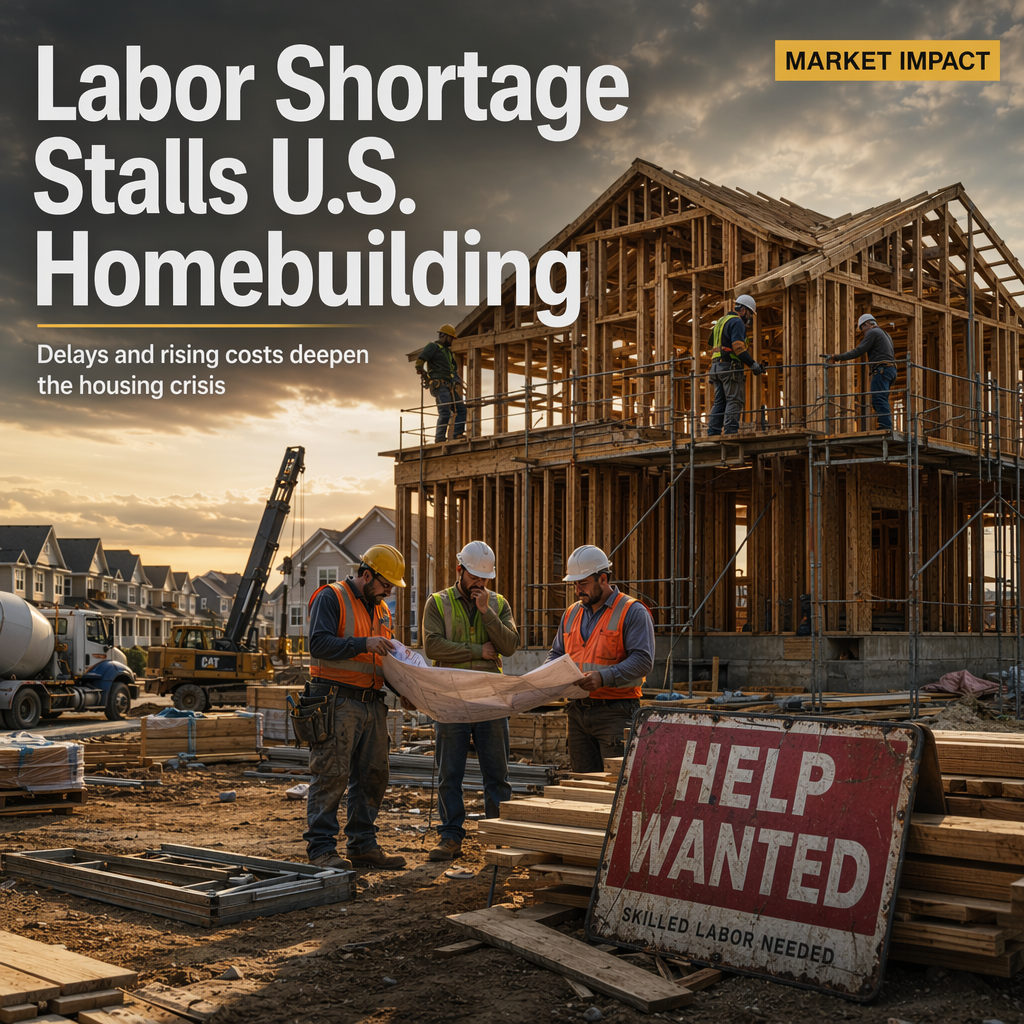
A significant labor shortage in the U.S. homebuilding industry is exacerbating the housing affordability crisis, according to builders and industry experts [1]. The construction sector is currently short by approximately 250,000 workers each month, with the gap having reached as high as 400,000 jobs in previous years [1]. This persistent shortage is causing delays in home construction, increasing costs, and constraining the supply of much-needed housing across the country [1].
Industry leaders cite several factors contributing to the shortage, including an aging workforce, insufficient numbers of younger Americans entering skilled trades, and immigration policies that have not kept pace with labor demands [1]. Jim Tobin, president and CEO of the National Association of Home Builders (NAHB), emphasized that labor is one of the largest and most expensive inputs in home production and land development [1]. NAHB estimates that government regulations add nearly $95,000 to the price of a typical new home [1].
A recent report from the Home Builders Institute and NAHB projects that builders will need roughly 723,000 new workers annually to meet demand and address the nation's 1.5 million-home housing gap [1]. Ed Brady, President and CEO of the Home Builders Institute, noted that labor constraints are extending construction timelines by nearly two extra months, further inflating costs and delaying delivery of new homes [1].
Builders are investing in workforce development programs and encouraging more young Americans to enter skilled trades, but industry leaders argue that immigration reform is also necessary to address the labor shortage [1]. Immigrants currently account for roughly one-third of the homebuilding contractor workforce, highlighting the sector's reliance on immigrant labor [1].
CONCLUSION
The ongoing labor shortage in the U.S. homebuilding industry is significantly impacting housing affordability and supply, with rising costs and extended construction timelines. Industry leaders stress the need for both workforce development and immigration reform to address these challenges and meet future housing demand.