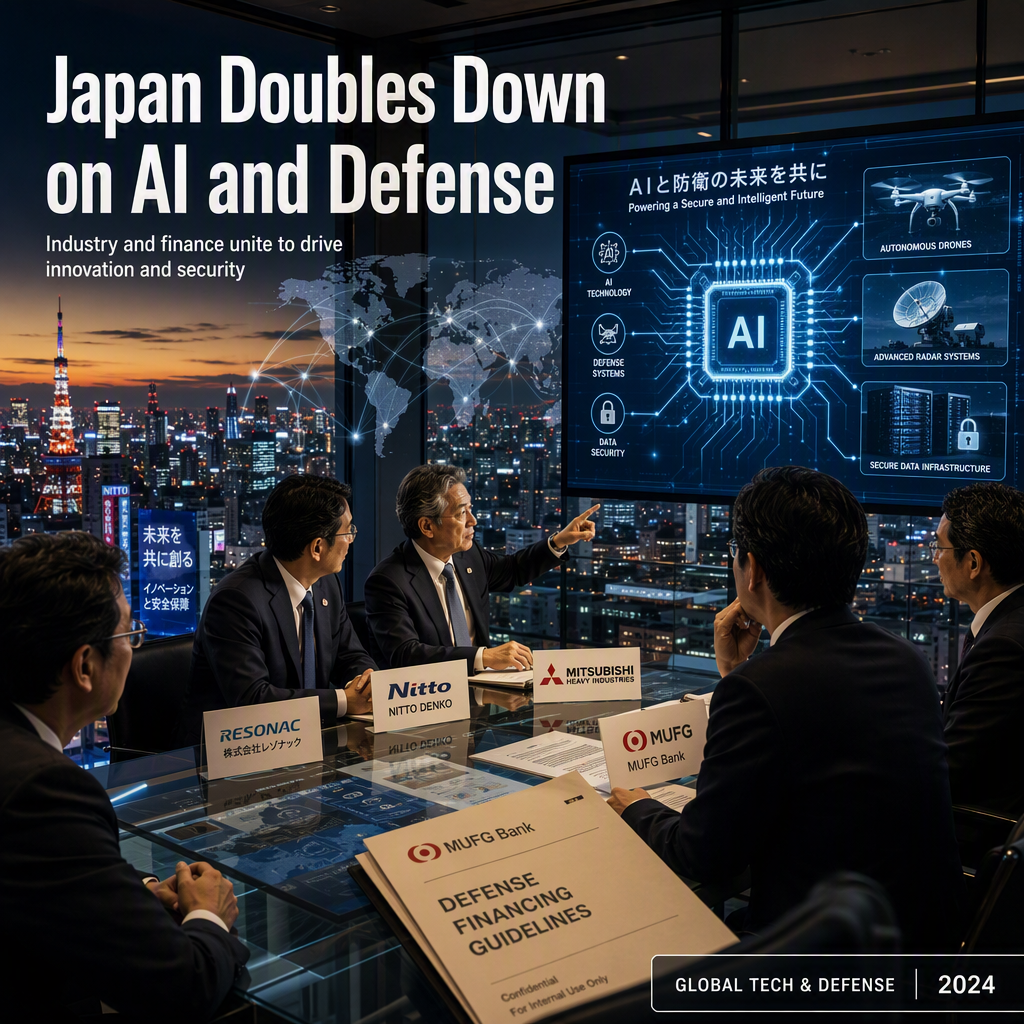
Japanese companies and financial institutions are making significant moves to strengthen the country's position in artificial intelligence (AI) and defense sectors. Resonac Holdings and Nitto Denko have agreed to invest in a U.S.-based fund managed by Matter Venture Partners, which focuses on companies developing chips and AI-related hardware. This fund, which also includes major industry players such as TSMC and ASML, aims to accelerate innovation and address global production bottlenecks in AI hardware. The investments are expected to foster collaboration between Japanese and international partners, support joint development, and improve access to next-generation chip technologies. While the financial specifics of Resonac and Nitto Denko's investments were not disclosed, industry analysts highlight that these moves signal a strengthening of global supply chain resilience and a bullish long-term outlook for the AI hardware sector, despite ongoing supply constraints. A spokesperson for Resonac Holdings emphasized the importance of finding partners for collaboration to overcome production challenges and drive future growth in the sector [1].
In a parallel development, Mitsubishi Heavy Industries has entered into a capital and business alliance with AI startup Preferred Networks, including a $64 million investment to jointly develop domestic AI technologies for defense equipment and other systems. The partnership, first announced in June, is focused on enhancing Japan's ability to produce advanced AI-driven defense solutions, reducing reliance on foreign technologies, and accelerating research and development for security systems. The investment will be used to build infrastructure and strengthen R&D cooperation, particularly for defense applications [2].
On the financial front, MUFG Bank is set to introduce new guidelines to finance defense-related companies, marking a shift from its previously cautious stance. The bank's new policy is expected to expand financing for startups and small- to midsize companies in the defense sector, with a focus on compliance with national security policies. Industry analysts anticipate that other Japanese banks may follow MUFG's lead, potentially increasing liquidity and access to capital for defense-related businesses. This move is seen as a response to heightened security concerns and the government's push for a more resilient domestic defense industry. A senior MUFG Bank official stated that thorough screening will be conducted to ensure compliance while supporting companies vital to Japan's national defense [3].
Collectively, these developments reflect a coordinated effort by Japanese industry and finance to bolster the country's technological and defense capabilities, foster international collaboration, and address supply chain vulnerabilities in critical sectors.
CONCLUSION
Japanese companies and financial institutions are intensifying their investments and partnerships in AI and defense, signaling a strategic shift to strengthen domestic capabilities and global competitiveness. The moves by Resonac, Nitto Denko, Mitsubishi Heavy, and MUFG Bank are expected to drive innovation, improve supply chain resilience, and attract further investment into Japan's AI and defense sectors. Market sentiment is positive, with expectations of long-term growth and increased collaboration both domestically and internationally.