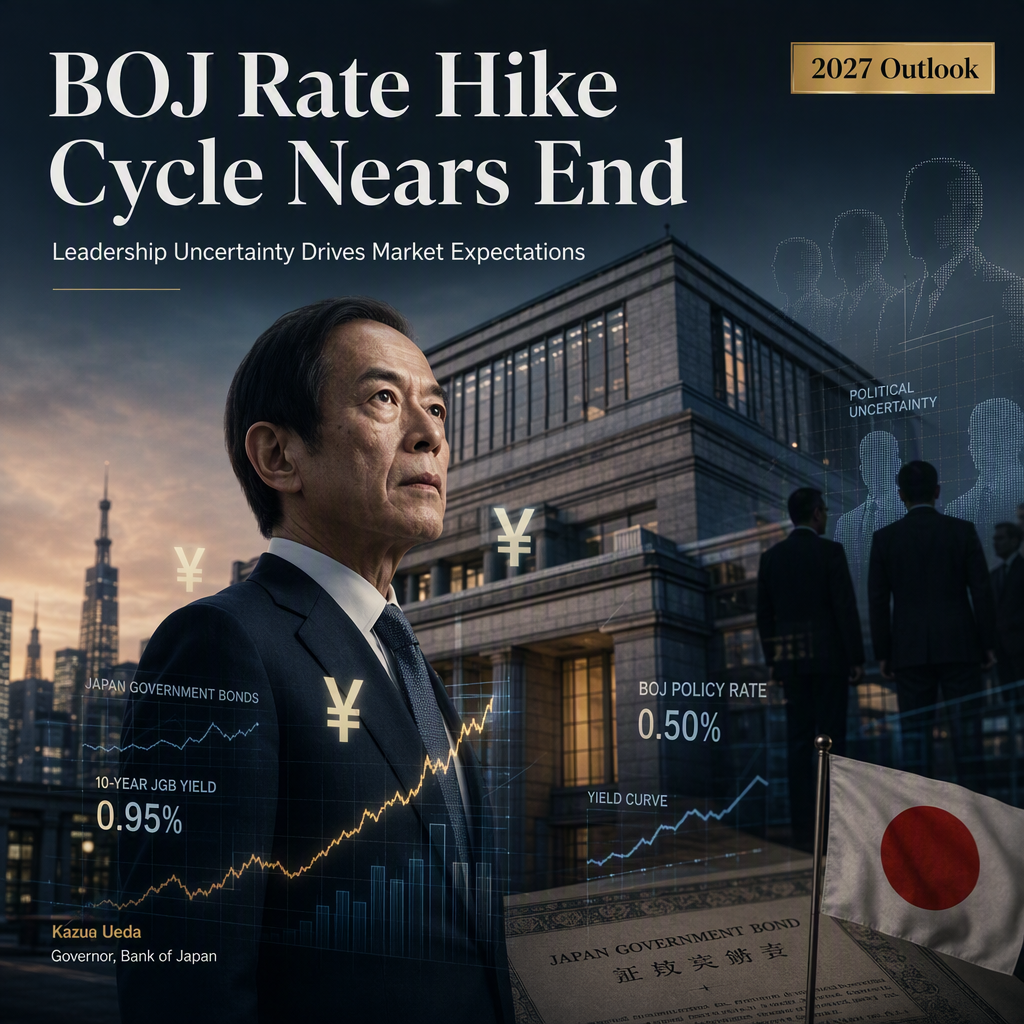
Bank of Japan (BOJ) watchers are increasingly predicting that the central bank will conclude its current rate-hiking campaign by next summer, as the prospect of new BOJ leadership appointments in 2027 under Prime Minister Sanae Takaichi shapes expectations for the pace of monetary tightening [1]. Prime Minister Takaichi is perceived as reluctant to support the rate hikes pursued by BOJ Governor Kazuo Ueda, which is influencing market sentiment and the central bank's policy trajectory [1].
Many forecasters now anticipate that the BOJ's tightening cycle will end by July next year, with market participants closely monitoring the policy path amid speculation that the window for further rate increases could soon close [1]. Japanese government bond yields have been climbing toward the 3% mark, reflecting both fiscal concerns and rising expectations for faster interest rate hikes [1].
Governor Ueda has highlighted upside inflation risks and has not ruled out the possibility of faster hikes, but Prime Minister Takaichi's perceived reluctance to embrace aggressive tightening is seen as a moderating influence on future policy moves [1]. Analysts note that the impending 2027 appointments are prompting investors to position for the end of the current tightening phase, which could impact currency markets and bond yields [1]. The yen, already at multidecade lows, remains under pressure as traders assess the likelihood of additional BOJ action amid leadership uncertainty [1].
CONCLUSION
The anticipation of new BOJ leadership in 2027 and Prime Minister Takaichi's cautious stance on rate hikes are leading markets to expect an end to the current tightening cycle by next summer. This dynamic is driving movements in bond yields and the yen, with investors closely watching for any shifts in BOJ policy amid ongoing political and inflationary pressures.