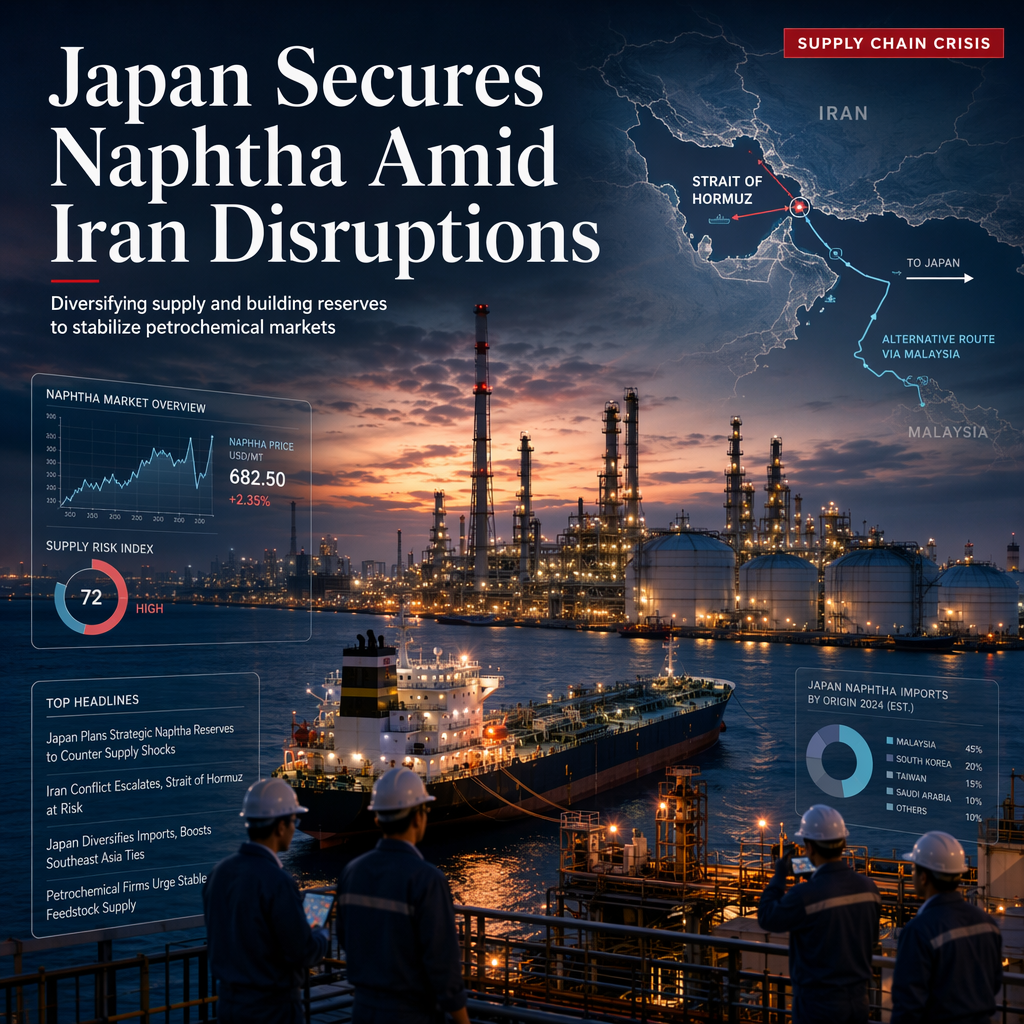
Japan is taking steps to establish naphtha reserves following significant supply disruptions caused by the Iran war and the effective closure of the Strait of Hormuz, a critical route for Middle Eastern oil shipments. These disruptions have sharply curtailed Japan's naphtha imports, prompting the government to consider various measures to bolster naphtha availability, which is essential for the country's petrochemical production [1].
One strategy under consideration is to require oil companies to store crude oil that can later be processed into naphtha, as dedicated naphtha storage infrastructure is limited and building new reserves would require substantial investment. This approach is seen as a way to provide greater flexibility in responding to future supply shocks [1].
Japan's naphtha imports have recovered to 80% of pre-Iran war levels, but the supply situation remains fragile. In response, the government is also exploring diversification strategies, including sourcing naphtha from Malaysia, which has pledged to supply Japan with the maximum possible amount of LNG and naphtha. Additionally, chemical companies are promoting naphtha-light alternatives for products such as diapers and pads, and materials companies are considering new production methods, like producing naphtha from hydrogen, to mitigate supply risks [1].
Market sentiment remains uncertain, with ongoing volatility in naphtha prices and concerns about future supply disruptions. While there is no direct trading advice, the article suggests that both companies and policymakers should prepare for continued instability in the petrochemical feedstock markets [1].
CONCLUSION
Japan's efforts to build naphtha reserves and diversify supply sources reflect ongoing concerns about the stability of petrochemical feedstock markets following the Iran war. With imports still below pre-war levels and market volatility persisting, both industry and government are bracing for continued uncertainty.