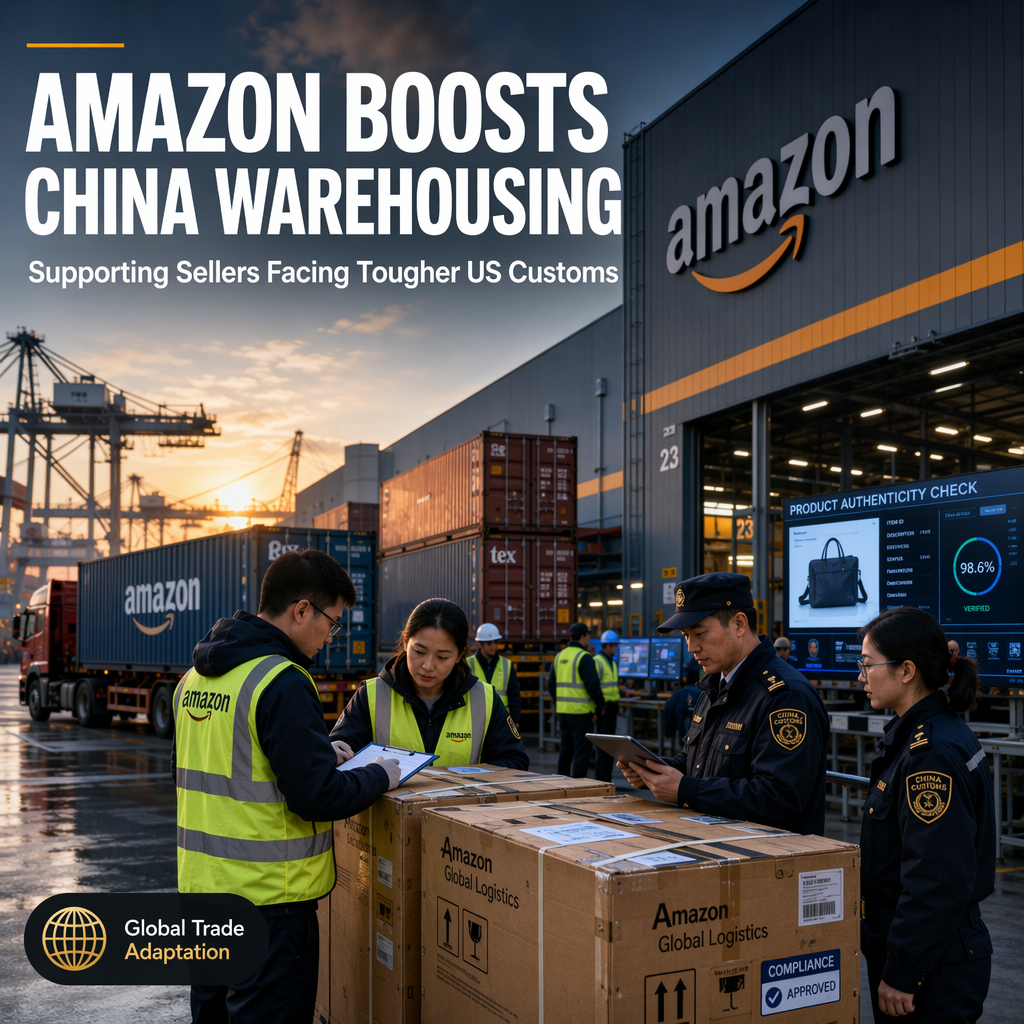
Amazon is expanding its warehousing network in China, building new facilities near key ports such as Shanghai and Shenzhen, with another center planned soon [1]. This initiative was highlighted at a cross-border commerce exhibition in Hangzhou in early July, where Amazon showcased its strategy to support Chinese sellers facing increasingly strict U.S. customs regulations [1]. The new warehouses are designed to help sellers ensure their goods meet U.S. entry requirements, addressing concerns about heightened scrutiny of imported products, including issues like faked storage and product authenticity, which have led to elevated complaint rates in electronics categories such as USB drives [1].
Amazon's investment in these compliant logistics solutions comes amid broader challenges for global e-commerce players in Southeast Asia's localized market and policy shifts affecting cross-border trade [1]. By positioning its infrastructure close to export hubs, Amazon aims to streamline logistics for Chinese sellers, potentially improving their competitiveness in the U.S. retail market and reducing risks associated with customs delays or rejections [1].
The expansion reflects Amazon's ongoing adaptation to international trade dynamics and regulatory changes, providing sellers with tools to facilitate smoother entry of products into the United States [1]. No specific financial figures, analyst opinions, or market reactions were mentioned in the article [1].
CONCLUSION
Amazon's move to expand its warehousing network in China is a strategic response to stricter U.S. customs regulations, aiming to support Chinese sellers and mitigate risks related to product authenticity and customs delays. While the initiative may enhance seller competitiveness and streamline cross-border logistics, the article does not provide concrete market reactions or financial data. The overall market impact is expected to be medium, given the potential for improved trade compliance and logistics efficiency.