
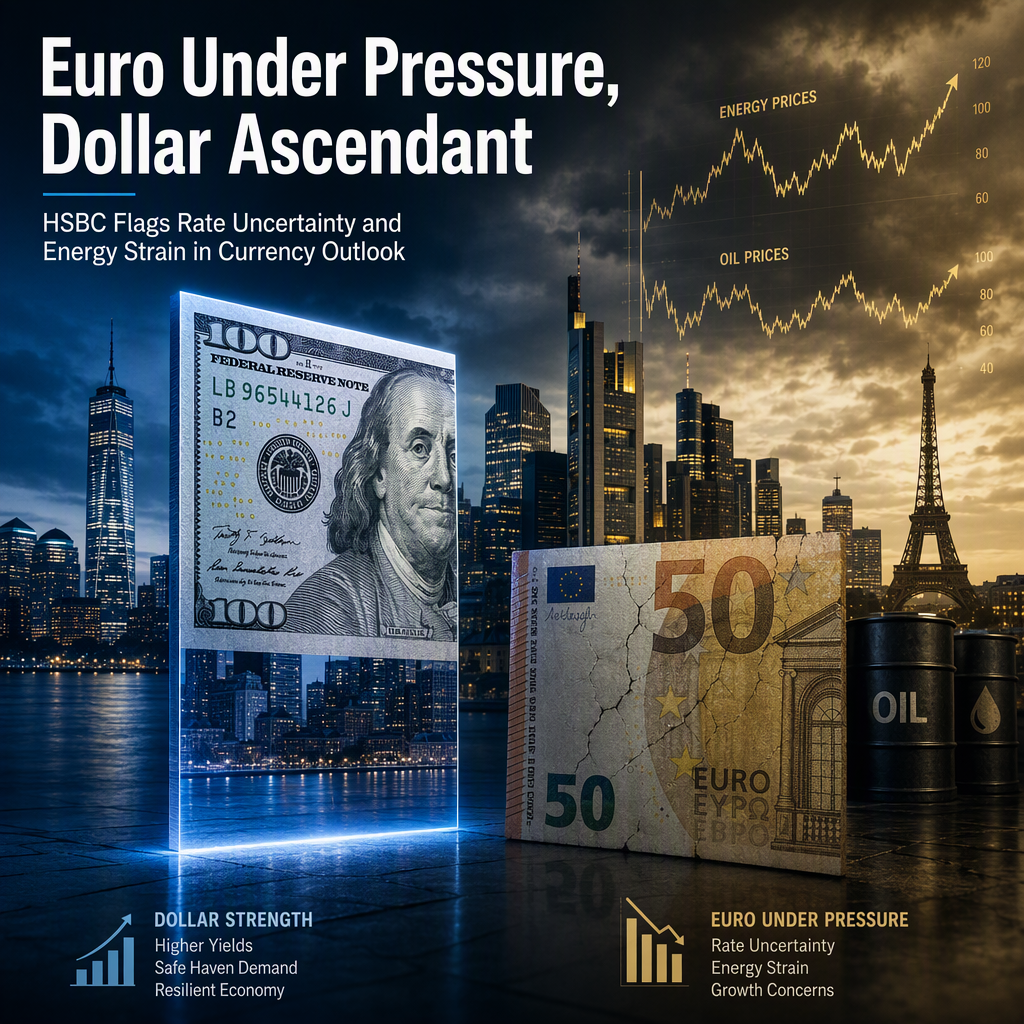
HSBC has identified mounting challenges for the Euro, citing uncertainty over the European Central Bank's willingness to raise interest rates, especially in contrast to the Federal Reserve's more hawkish stance at its September meeting [1]. The bank notes that Europe is more exposed to elevated energy costs, which could negatively impact regional growth and the EUR/USD exchange rate. Despite stronger PMI readings, other economic data from September has generally disappointed, further weighing on the Euro's outlook [1].
Conversely, HSBC's FX Viewpoint suggests the US Dollar is likely to strengthen modestly in the near term, supported by cyclical, political, and structural factors [2]. Firm US rate expectations relative to other economies, resilience in energy prices, and a reassessment of US fiscal risks are highlighted as key drivers favoring the Dollar against major peers [2]. The bank emphasizes that the main question is whether US rate expectations will remain robust compared to other regions [2].
Both articles underscore the importance of monetary policy divergence and energy market dynamics in shaping currency performance. HSBC points to the Euro's vulnerability due to rate uncertainty and energy exposure, while the US Dollar benefits from stronger rate expectations and energy resilience [1][2].
CONCLUSION
HSBC sees the Euro facing significant headwinds from rate uncertainty and elevated energy costs, while the US Dollar is poised for modest near-term strength due to supportive cyclical and structural factors. Market sentiment favors the Dollar over the Euro, with monetary policy and energy prices remaining key determinants for both currencies.