
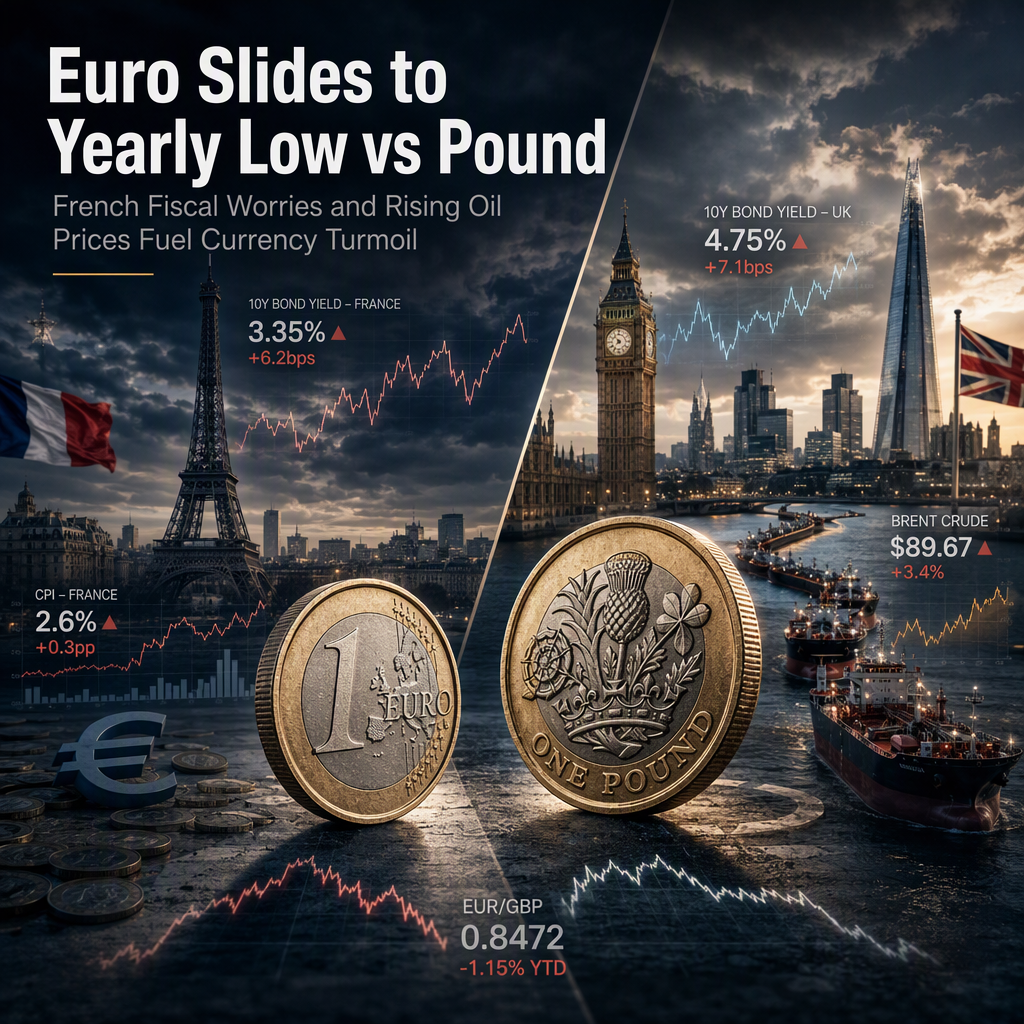
The Euro (EUR) reached a fresh year-to-date low against the British Pound (GBP), with EUR/GBP sliding to 0.8445 on Monday, reflecting a 0.17% daily decline as French political and fiscal concerns weighed heavily on the currency [1]. France is targeting a reduction of its budget deficit to 5% of GDP by 2027, but with public debt nearing 119% of GDP and a divided parliament, markets are skeptical about the government's ability to pass significant spending cuts [1]. This uncertainty has driven French government bond yields higher, widening the spread over German bonds to multi-year highs, and raising concerns about Eurozone growth prospects [1].
Meanwhile, the British Pound has also faced downward pressure, retreating about 0.11% against the US Dollar (GBP/USD trading at 1.3217) amid rising geopolitical tensions in the Middle East and ongoing conflict in Ukraine, which have contributed to higher energy prices [2]. Despite these pressures, market participants are increasingly betting on a Bank of England (BoE) rate hike before year-end, with Prime Terminal indicating a 90% probability of a rate increase at the upcoming November 5 meeting and expectations for the base rate to rise to 4.75% within a year from the current 3.75% [2]. BoE Monetary Policy Committee member Catherine Mann warned that UK inflation could reach near 4% by year-end, potentially igniting a wage-price drift and threatening to deanchor inflation expectations, especially as services inflation remains persistent [2].
Analysts at MUFG noted that negative developments in the euro zone have boosted the relative appeal of the pound, reinforcing recent gains in EUR/GBP [1]. They also highlighted that the UK Labour government is aware of challenging global bond market conditions ahead of the budget scheduled for October 28, prompting a cautious fiscal stance to limit negative market reactions—a move seen as supportive for the pound [1].
On the data front, key releases this week include Germany's final September inflation figures, the UK's August GDP report, and the final Eurozone inflation reading for September, all of which could influence interest rate outlooks for both the ECB and BoE [1]. In the UK, speeches by BoE officials, including Governor Andrew Bailey at the IMF and World Bank annual meetings, are also expected to provide further market direction [2].
Technical analysis shows GBP/USD maintaining a bearish near-term bias, trading at 1.3212 and remaining below key resistance levels, with the Relative Strength Index (14) at 37, indicating persistent downside pressure [2].
CONCLUSION
The Euro's decline to a yearly low against the Pound reflects heightened concerns over French fiscal stability and broader Eurozone risks, while the Pound faces its own pressures from rising energy prices and geopolitical tensions. Market expectations for a BoE rate hike remain strong, but both currencies are navigating significant headwinds. Upcoming economic data and central bank communications will be critical in shaping the near-term outlook for EUR/GBP and GBP/USD.