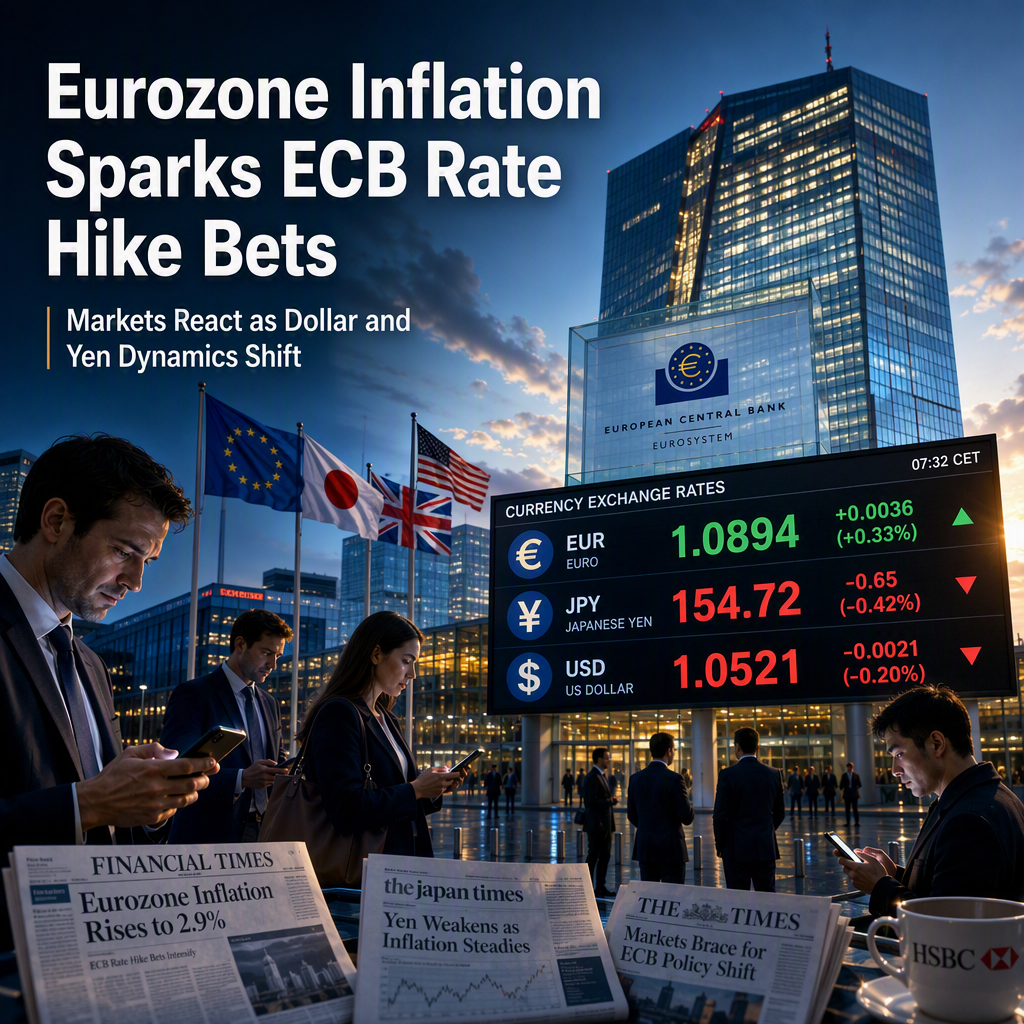
Eurozone inflation accelerated in July, with the Harmonized Index of Consumer Prices (HICP) rising to 2.9% year-over-year, up from 2.8% in June, and core inflation increasing to 2.5% from 2.4% [1][2][3]. These figures matched preliminary estimates and remained above the European Central Bank's (ECB) 2% target, reinforcing expectations of further monetary tightening. Markets are now pricing in a 96% chance of a 25-basis-point ECB rate hike in September, which would bring the policy rate to 2.5% [1]. ECB Chief Economist Philip Lane stated that Eurozone inflation, at around 3%, remains too high, and ING analysts noted that high energy prices and risks from the El Niño weather event could keep inflation elevated into next year [1][3].
The Euro has responded positively to the inflation data, strengthening against both the Japanese Yen and the British Pound. EUR/JPY traded around 184.70, with the pair struggling for direction as the Yen found support from expectations of a Bank of Japan (BoJ) rate hike, potentially as soon as September, with overnight index swaps pricing in an 80% chance of such a move [1]. Standard Chartered analysts now expect the BoJ to hike by 25 basis points on September 18, with a higher terminal rate of 1.75% in this cycle, though they caution the BoJ may not be able to outpace market expectations [1]. However, concerns about Japan's fiscal trajectory, particularly a proposal to cut the consumption tax on food, are seen as a potential headwind for the Yen [1].
In the currency markets, the Euro also extended gains against the British Pound, reaching session highs at 0.8560, supported by the robust inflation data and comments from ECB officials emphasizing the importance of anchoring inflation expectations [2]. Meanwhile, the US Dollar has come under pressure due to softer US economic data, including a drop in retail sales and weaker employment figures, leading traders to reduce expectations for a Federal Reserve rate hike in September. The CME FedWatch tool now shows only a 32.8% chance of a rate hike, down from 51.2% a month earlier [3].
Strategists at BNY Mellon and Saxo Bank highlighted that the weakening Dollar, despite higher US Treasury yields, introduces additional inflation risks globally and may prompt investors to seek greater geographical diversification [3][4]. Societe Generale and Deutsche Bank analysts noted that mixed signals from the Federal Reserve and reduced bullish dollar positions could see the Dollar Index drift lower or remain range-bound between 95 and 100 for the rest of the year [4].
CONCLUSION
Eurozone inflation remains stubbornly above target, strengthening the case for an ECB rate hike in September and supporting the Euro against major currencies. Meanwhile, shifting expectations for BoJ and Fed policy, along with fiscal and economic uncertainties, are driving volatility in the Yen and Dollar. The market impact is high as investors recalibrate positions in response to evolving central bank outlooks and inflation dynamics.