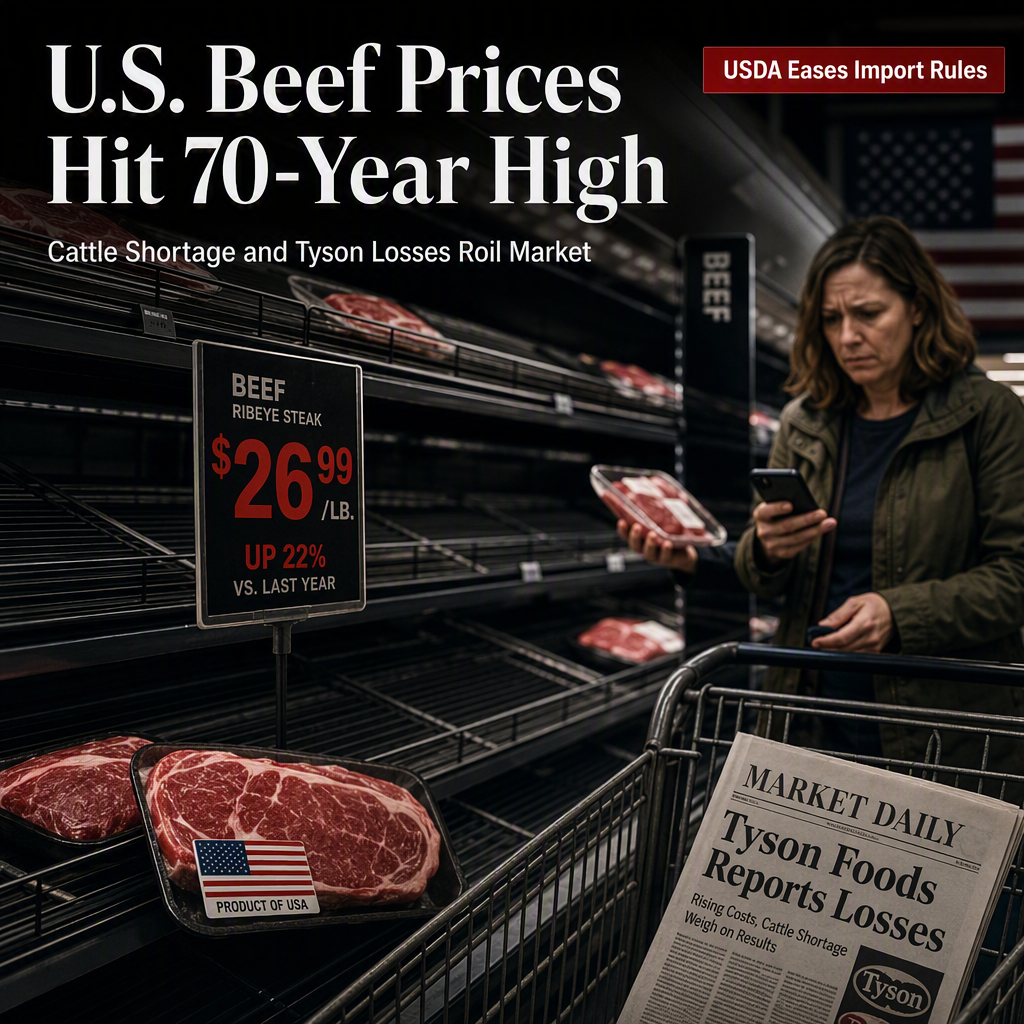
American consumers are experiencing significantly higher beef prices due to an ongoing cattle shortage, which has also negatively impacted the financial performance of major meatpacking companies such as Tyson Foods [1]. The U.S. cattle herd has reached its lowest level in over 70 years, primarily as a result of drought conditions that reduced forage areas and forced ranchers to liquidate cattle. Additional pressures include higher operating costs for feed, labor, fuel, and equipment, as well as constrained live cattle imports due to disease concerns [1].
According to the latest consumer price index data from the Bureau of Labor Statistics, beef prices have increased 11.8% over the past year and rose 1.2% in June alone. Specific categories saw even sharper increases: ground beef prices climbed 12.4%, beef roasts 13.8%, and steaks 11.4% year-over-year [1]. Tyson Foods CEO Donnie King stated during the company's earnings call that the beef segment operated at a loss of $138 million, with sales volume down 15.9% and pricing up 12.1% as constrained supply pushed input costs and pricing higher [1].
In response to the supply challenges, the U.S. Department of Agriculture (USDA) announced it will resume imports of cattle from Mexico starting in late August, following a suspension due to an outbreak of the New World screwworm. The USDA has recorded 44 cases of the screwworm in the U.S. since June, mainly in Texas and New Mexico. The phased reopening will begin at the Douglas, Arizona, port of entry, focusing on cattle from the Mexican states of Sonora and Chihuahua, which have been identified as low-risk for the disease [1].
Tyson Foods' CEO noted that while the reopening of the Mexican border for cattle imports could improve long-term cattle availability, it is not expected to have a material impact on the company's results for the remainder of the current fiscal year, which ends in September. King emphasized that the reopening will not fully resolve the current beef supply gap and stated that Tyson Foods is actively working to improve factors within its control rather than waiting for the cattle cycle to turn [1].
CONCLUSION
The U.S. beef market is facing significant supply constraints, leading to sharp price increases for consumers and financial losses for major processors like Tyson Foods. While the USDA's phased resumption of Mexican cattle imports offers some hope for future supply improvements, the immediate outlook remains challenging, with no quick resolution expected for the current fiscal year.