
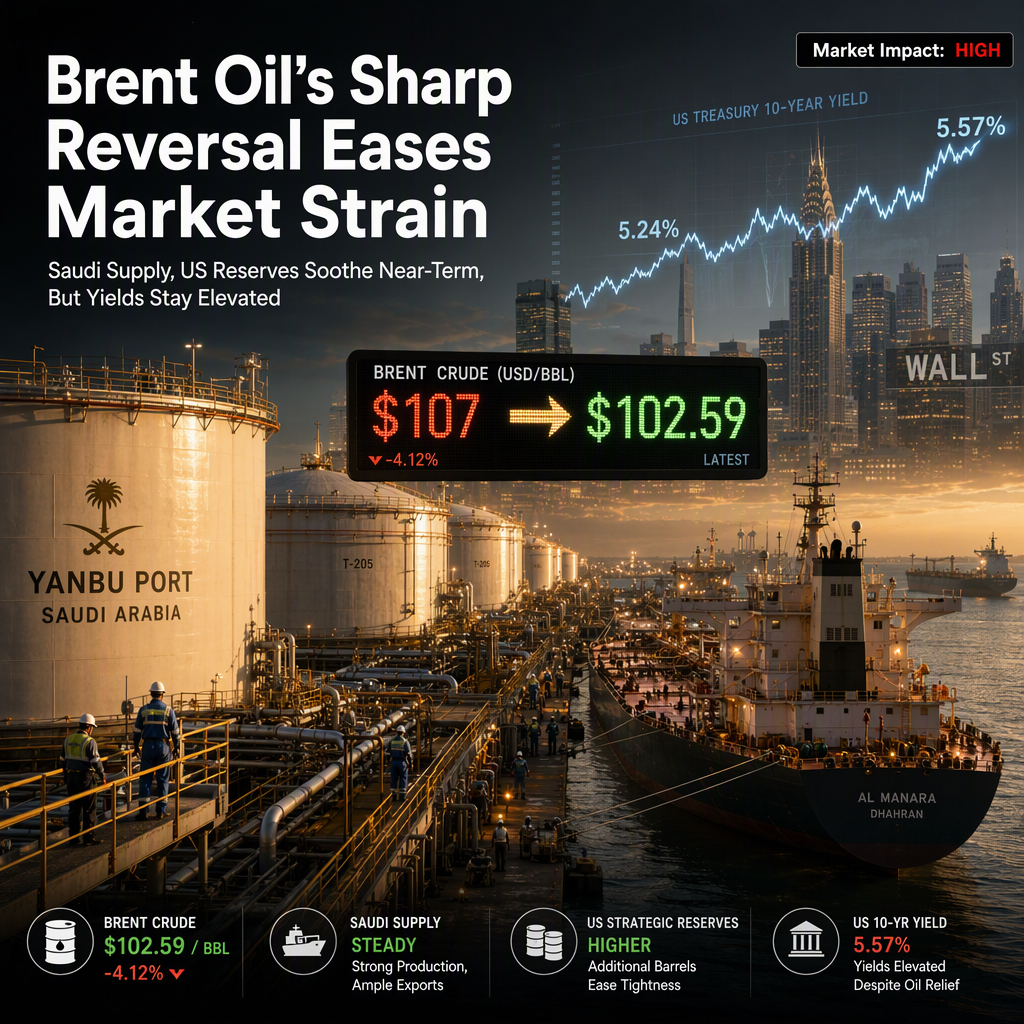
Brent crude oil experienced a sharp intraday reversal, with front-month prices initially rising to $107 per barrel before falling due to supply-related headlines, including a Reuters report that Saudi Arabia resumed oil loadings from the port of Yanbu and the US announcing its final release of up to 40 million barrels from the Strategic Petroleum Reserve. This contributed to a pullback in spot Brent prices, while longer-dated contracts, such as the December 2027 future, continued to climb, reaching a new high of $80.81 per barrel, up +0.65% yesterday. This indicates that investors are still pricing in a prolonged period of disruption despite near-term relief from increased oil flows out of the Gulf and the US SPR release [1].
The decline in oil and gas prices, with Brent crude down -2.56% to $102.59 per barrel, provided some relief to markets and helped temper expectations for further Federal Reserve tightening. NY Fed’s Williams commented that there is no 'urgency' for the next hike, which contributed to dialing back Fed tightening expectations [2].
US Treasuries saw a mixed session in response to these developments. The 10-year yield ended the day unchanged at its post-2007 high of 5.24%, while the 30-year yield reached a post-2002 high of 5.57%, up +1.9 basis points. The 2-year yield fell, reflecting support at the front end of the curve, while the long end remained elevated, leading to a steepening of the US Treasury curve [2].
Despite the pullback in oil and gas prices, investors remained cautious, as there were no clear signs of progress towards a deal that would resolve supply disruptions. The continued strength in longer-dated Brent futures suggests that markets are still concerned about the potential for prolonged disruption in oil supply [1].
CONCLUSION
Brent oil's reversal on supply headlines and the US SPR release eased near-term price pressures, but longer-dated futures and US Treasury yields signal persistent market concerns about prolonged disruption. The mixed performance across asset classes reflects ongoing uncertainty, with investors remaining cautious despite temporary relief. Overall, the event had a high market impact, influencing both commodity and bond markets.