
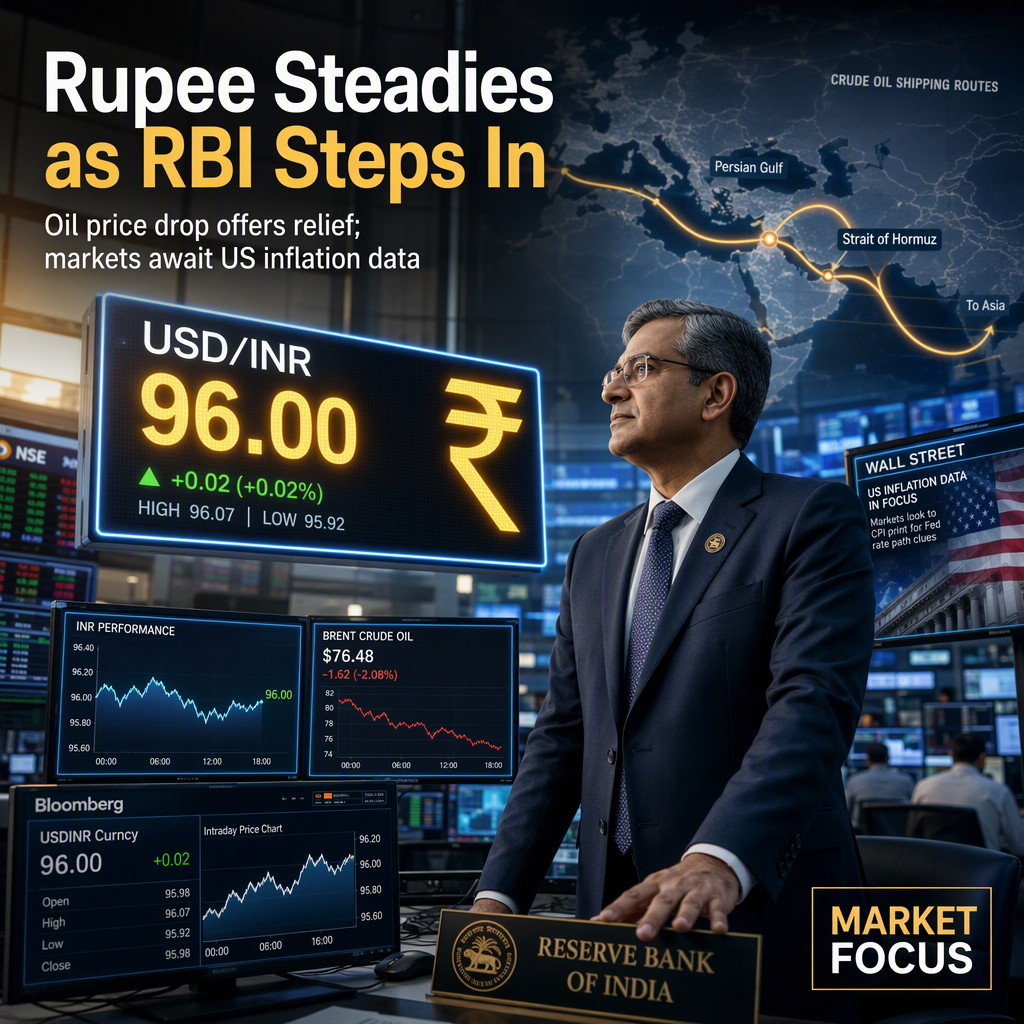
The Indian Rupee (INR) opened flat against the US Dollar (USD) on Wednesday, with the USD/INR pair hovering near 96.00. The currency has found temporary support from consistent intervention by the Reserve Bank of India (RBI) in both the spot and Non-Deliverable Forwards (NDFs) markets, as well as a decline in oil prices. Specifically, the MCX Crude Oil contract expiring on October 19 fell by 0.45% to approximately Rs. 8,635 in the opening session, providing relief to the INR, as India is a major oil importer [1].
The drop in oil prices is attributed to increased flows from Saudi Arabia, with Deutsche Bank noting that about half the flows through the East-West pipeline have been restored. Goldman Sachs estimates that Persian Gulf oil exports, including dark exports, have recovered to their 2025 average after doubling in September. However, analysts caution that upside risks to oil prices remain due to ongoing skepticism about the reopening of the Strait of Hormuz and stalled US-Iran diplomacy, as reported by Axios. This could potentially lead to a resumption of higher oil prices in the future [1].
Market participants are closely watching the upcoming US Personal Consumption Expenditures (PCE) Price Index data for August, scheduled for release at 12:30 GMT. The core PCE inflation is expected to remain steady at 3.3% year-on-year, with a monthly increase of 0.3% compared to the previous 0.2%. This data is anticipated to significantly influence expectations regarding the Federal Reserve's (Fed) interest rate policy. Currently, markets expect the Fed to continue its monetary tightening cycle in response to persistent inflation risks, driven by energy supply constraints and strong demand from the Artificial Intelligence (AI) sector [1].
The Fed began its current rate hike cycle in September, raising rates by 25 basis points to a range of 3.75%-4.00%. Analysts at MUFG/BTMU note that the US rate market anticipates nearly another 100 basis points of rate hikes in the coming year. The Nonfarm Payrolls (NFP) data for September, due on Friday, is also seen as a key trigger for future Fed interest rate projections [1].
CONCLUSION
The Indian Rupee remains stable due to RBI intervention and lower oil prices, but faces potential risks from future oil price increases and US monetary policy decisions. Market attention is now focused on upcoming US inflation and employment data, which could shape expectations for further Fed rate hikes.