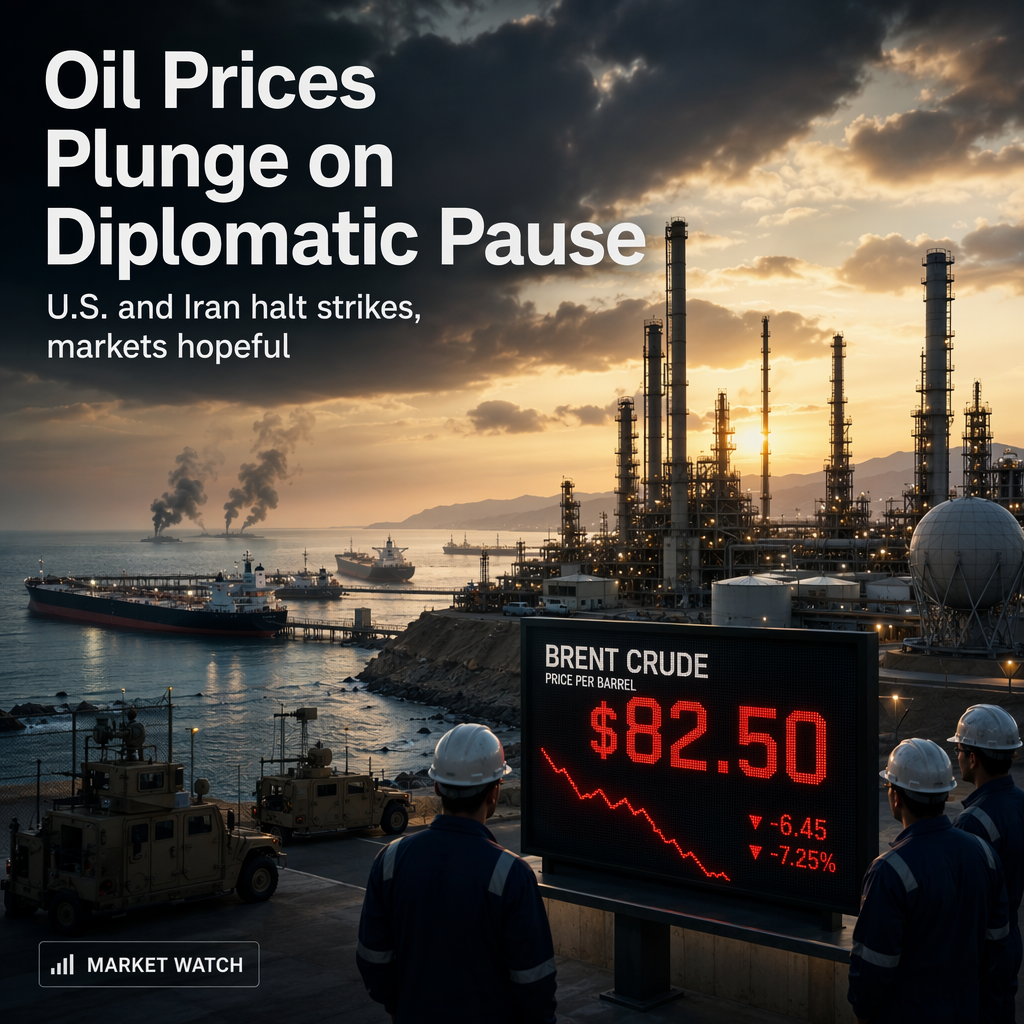
West Texas Intermediate (WTI) oil prices opened with a bearish gap, dropping by over 7% and trading around $82.50 per barrel during Asian hours on Monday, following a pause in strikes between the United States and Iran after two weeks of direct attacks [1]. Both Brent and WTI crude futures fell sharply, with Brent crude prices down 3.9% to $96.78 last Friday, though it had risen 9.9% for the week, marking the fourth consecutive weekly rise [2]. CNBC also reports that both Brent and WTI futures are down around 5% in early trading, attributing the decline to the diplomatic overtures between the U.S. and Iran [3].
The de-escalation comes as the U.S. halted its military campaign amid concerns over depleting interceptor supplies and a shrinking list of high-value targets in Iran. General Dan Caine reportedly warned President Trump that continuing the campaign would severely strain critical munitions reserves [1]. U.S. Ambassador to the UN Mike Waltz stated that President Trump is 'giving the talks some space,' and that American forces remain 'locked and loaded,' but the administration is seeking to create room for negotiations [1][3]. A senior Iranian official confirmed to Reuters that Tehran's policy is 'attack for attack,' meaning Iran will suspend military operations if U.S. strikes pause [1][3].
Despite the diplomatic pause, market participants remain cautious about potential supply disruptions. Risks in the Red Sea have increased, with Iran-backed Houthis in Yemen claiming responsibility for attacks on Saudi oil facilities in Jizan and Yanbu, and the Saudi-led coalition responding with strikes on Houthi positions in Yemen [1][2]. These attacks are significant because Saudi Arabia has been using its Red Sea export infrastructure to circumvent disruptions through the Strait of Hormuz. Commerzbank's Charlie Lay warns that any sustained disruption to these alternative routes could put renewed upward pressure on oil prices, especially as bottlenecks in refined products are emerging due to falling inventories [2].
The broader market reaction has been positive for equities, with stocks rising globally as oil prices fall and diplomatic efforts between the U.S. and Iran continue [3]. However, the underlying risks to oil supply remain elevated, and analysts caution that any renewed escalation or disruption to key transport routes could quickly reverse the downward trend in oil prices [2].
CONCLUSION
Oil prices have dropped sharply as the U.S. and Iran pause military strikes and pursue diplomatic talks, easing immediate fears of supply disruptions. However, ongoing risks in the Red Sea and potential bottlenecks in oil products keep the market on edge. While equities have responded positively to the de-escalation, analysts warn that the situation remains fluid and further disruptions could quickly impact prices.