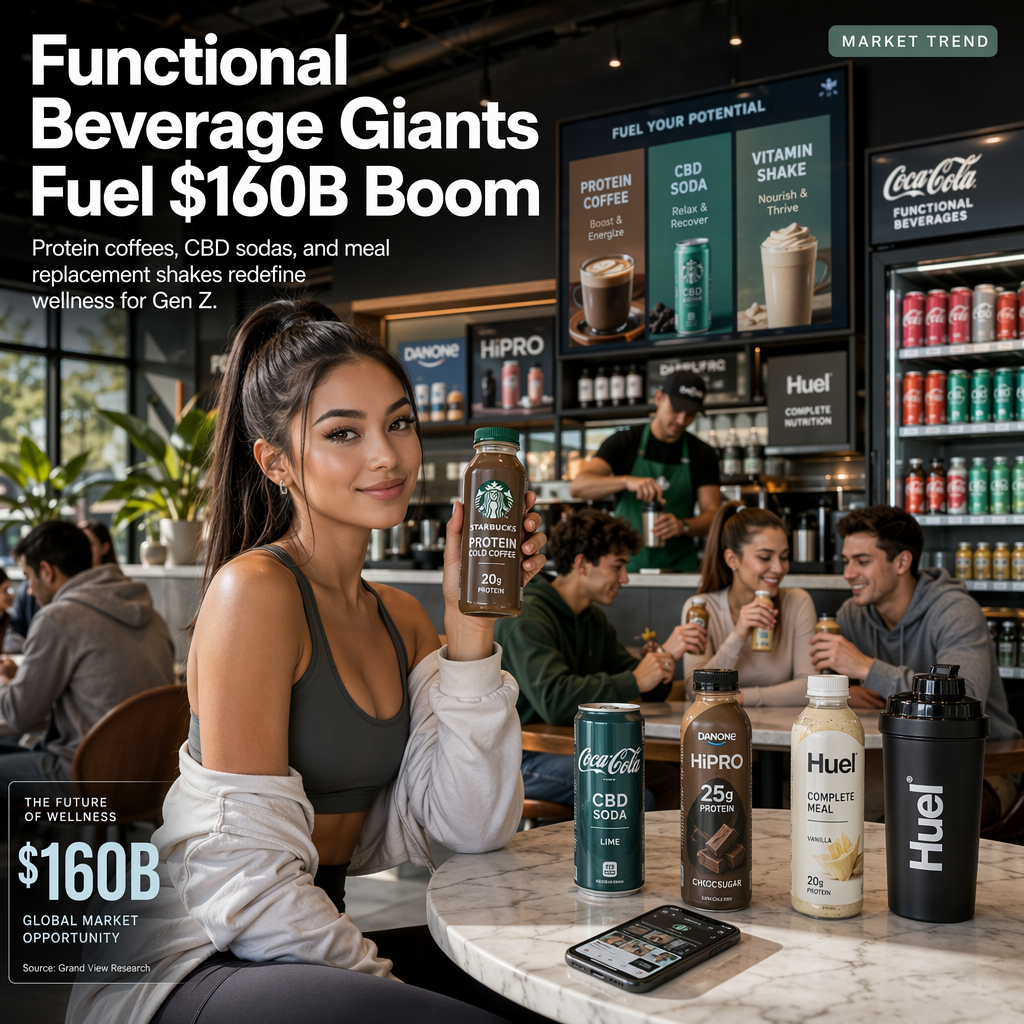
Major beverage companies including Starbucks and Coca-Cola are rapidly expanding their portfolios to include functional beverages such as protein coffee and CBD-infused sodas, targeting health-conscious younger consumers. The global functional drinks market is valued at $160 billion, reflecting a lucrative opportunity for brands seeking to meet rising demand for wellness-oriented products [1]. According to Olivia Ferdi, co-founder of wellness drinks startup TRIP, social media has elevated functional drinks to 'status symbol' status among consumers [1].
Consumer data from EY's recent survey of over 2,500 adults in the U.S. and Brazil indicates that 75% of millennials and 80% of Gen Zers regularly consume functional beverages, including energy drinks, probiotic drinks, and vitamin-enhanced drinks. Over half of respondents are willing to pay a premium for drinks that support their health and wellness goals [1]. Circana's 2026 beverage evolution report further highlights that nearly 64% of consumers sometimes choose drinks as snacks, with this figure rising to 70% among 25-to-34-year-olds, underscoring the trend toward drinks as meal replacements [1].
Starbucks has introduced protein coffees in stores across the U.S., Canada, and Europe within the past year, building on its ready-to-drink protein coffees launched in supermarkets in 2024. Sam Henderson, EMEA Group Manager of Beverage Development at Starbucks, stated that protein cold foam sales are nearly matching those of flat whites, a traditionally popular beverage, indicating strong performance for protein-based offerings [1].
Industry expansion is also evident in Danone's recent acquisition of Huel, a protein drinks maker backed by Steven Bartlett, in a deal reportedly worth $1.15 billion. Huel specializes in nutritionally complete protein shakes designed as meal replacements, further signaling the sector's growth and strategic interest from major players [1].
CONCLUSION
The functional beverage market is experiencing robust growth, driven by strong demand from younger, health-focused consumers and strategic moves by industry leaders like Starbucks, Coca-Cola, and Danone. With high willingness among consumers to pay for wellness benefits and increasing use of drinks as meal replacements, the sector is poised for continued expansion and innovation.