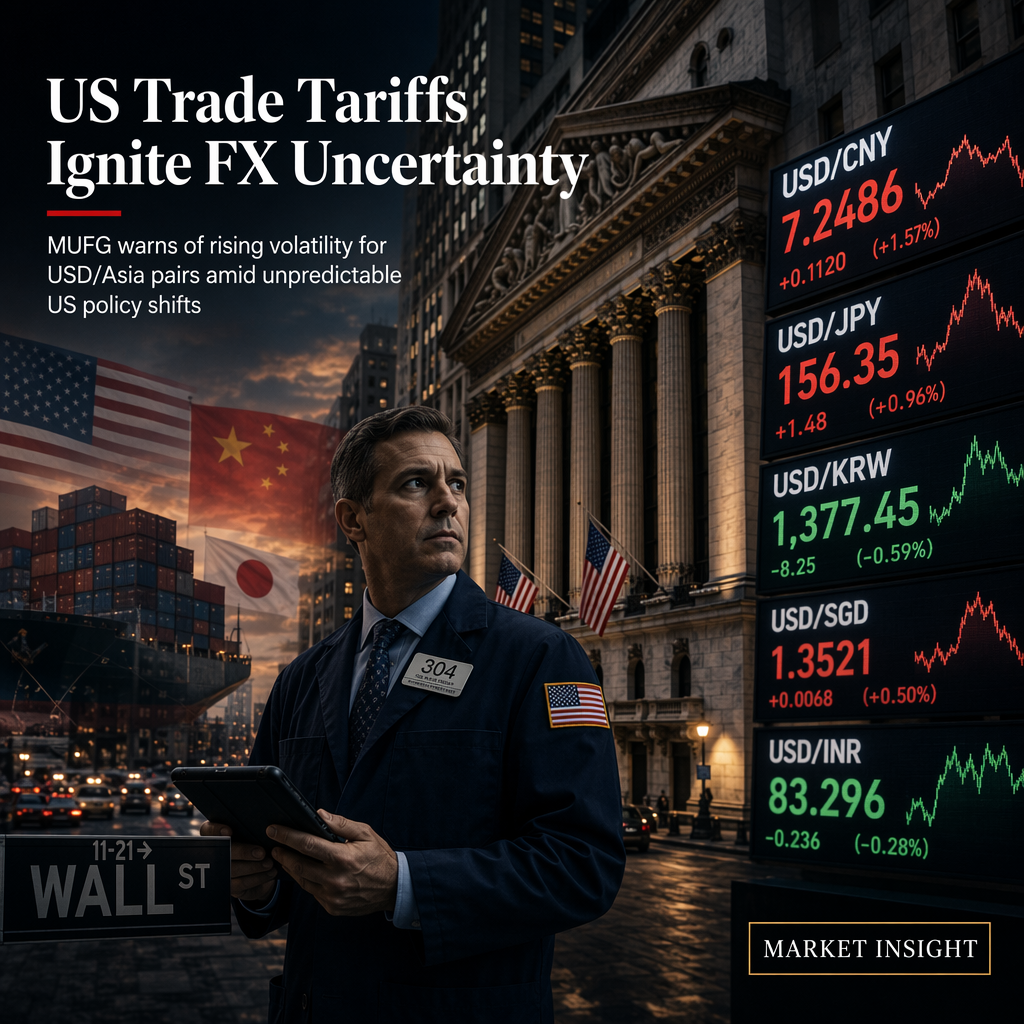
According to Derek Halpenny at MUFG, the expiration of Section 122 trade measures in the United States and their replacement with more targeted Section 301 actions are set to reintroduce significant uncertainty into the foreign exchange (FX) markets [1]. Halpenny notes that the US has already announced investigations under Section 301 against most of its key trading partners, although the specific timing and targeted products for these tariffs remain unclear [1]. He expects that the new tariffs will largely replicate the effects of the outgoing Section 122 tariffs, suggesting that the overall FX implications should be limited in scope [1].
However, Halpenny highlights that the implementation process for Section 301 actions is less predictable and could involve greater differentiation, which may lead to increased FX volatility [1]. He points out that this renewed trade policy uncertainty coincides with a US rates curve that is currently priced for hikes and elevated risks in the Middle East, factors that could make the FX market's reaction more supportive of the US dollar in the near term [1].
Halpenny identifies USD/Asia currency pairs as particularly vulnerable to upside movement, as yield considerations are less likely to counteract the impact of tariffs compared to USD/LatAm pairs [1]. He suggests that G10 currencies should be less affected by these developments, but warns that if the uncertainty persists and becomes more pronounced, it could eventually lead to US dollar selling as investors grow increasingly concerned about unpredictable policies from Washington and potential damage to the US economy [1].
CONCLUSION
MUFG's analysis indicates that renewed US trade tariff actions are likely to increase FX volatility, with USD/Asia pairs most exposed to upside risk. While the immediate impact on G10 currencies may be limited, prolonged uncertainty could eventually weigh on the US dollar as investor concerns mount.