
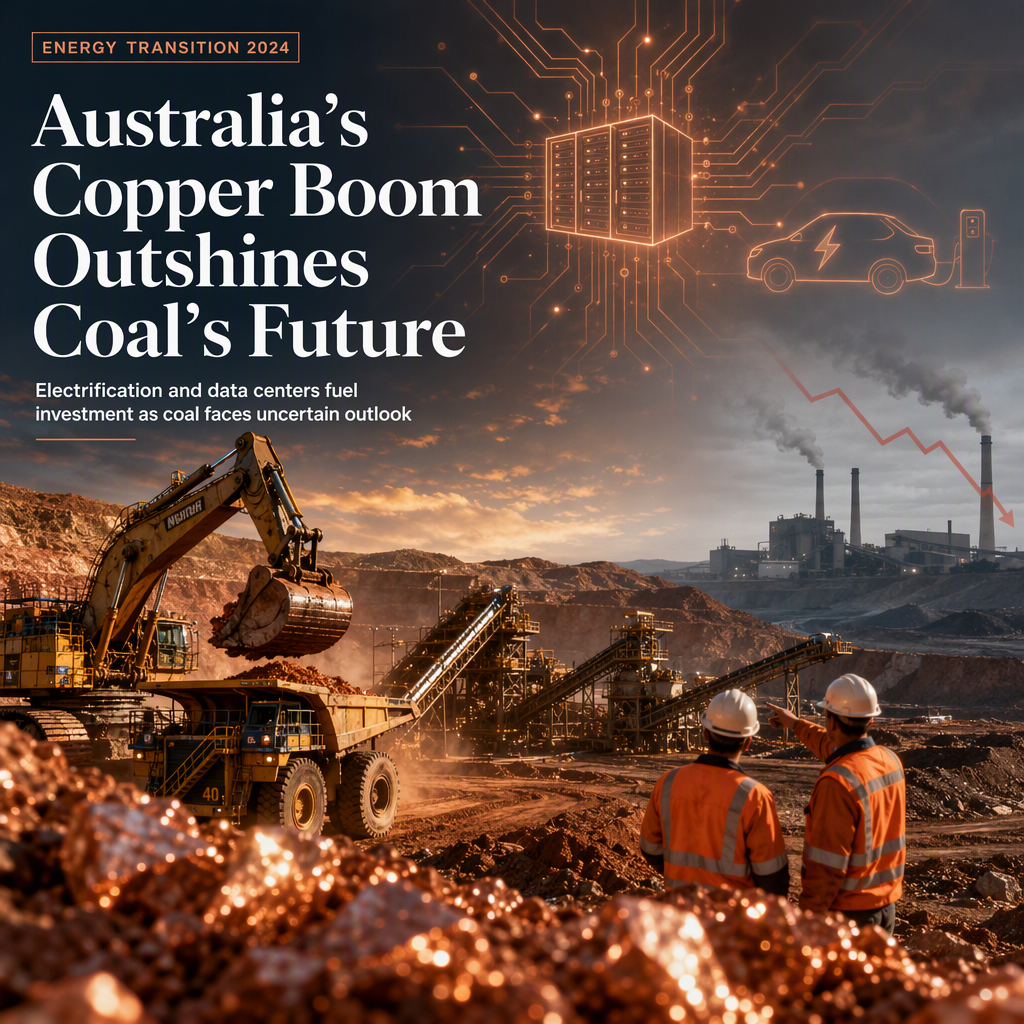
Australia's resource sector is experiencing a significant divergence, with copper mines booming due to strong investment and demand, while the coal industry faces ongoing challenges despite a recent surge in demand. The boom in copper is attributed to the global shift toward electrification and the expansion of data centers, both of which require substantial amounts of copper. Industry analysts emphasize that electric vehicles (EVs) use much more copper than traditional vehicles, and the rapid growth of data center infrastructure is further supporting copper's prospects. As a result, copper mines in Australia are attracting new investment and planning expansions to increase output over the next decade [1].
In contrast, coal operators are dealing with a more uncertain outlook. Although there has been a recent uptick in coal demand—driven by energy shortages and temporary spikes in global coal prices—the sector continues to face long-term headwinds. Coal is increasingly seen as 'dirty energy,' leading investors to hesitate in committing capital to new projects due to concerns about future regulatory constraints and declining demand as countries implement climate transition policies. Yancoal Australia's Moolarben, the nation's second-largest coal mine, illustrates this tension as it continues operations in an industry widely perceived as being in decline [1].
The contrasting fortunes of copper and coal highlight a broader realignment in Australia's commodities sector, with market sentiment shifting in favor of 'green metals' used in clean energy technologies over fossil fuels. Financial analysts note that while coal prices have experienced short-term support, the overall trend remains bearish, with resistance at recent highs and little technical evidence of a sustained rally. Conversely, copper's price chart shows solid upward momentum, with support levels holding and technical indicators suggesting continued strength [1].
Market participants are closely watching policy changes, commodity price movements, and shifts in global demand to gauge the future trajectory of Australia's resource exports. The expectation is that the coming years will see further divergence between metals critical to the energy transition and those tied to traditional, carbon-intensive energy sources [1].
CONCLUSION
Australia's commodities sector is undergoing a clear shift, with copper benefiting from strong demand and investment linked to electrification and data center growth, while coal faces long-term challenges despite short-term price gains. Market sentiment and technical indicators favor copper, suggesting continued strength, while coal's outlook remains bearish amid climate policy pressures.