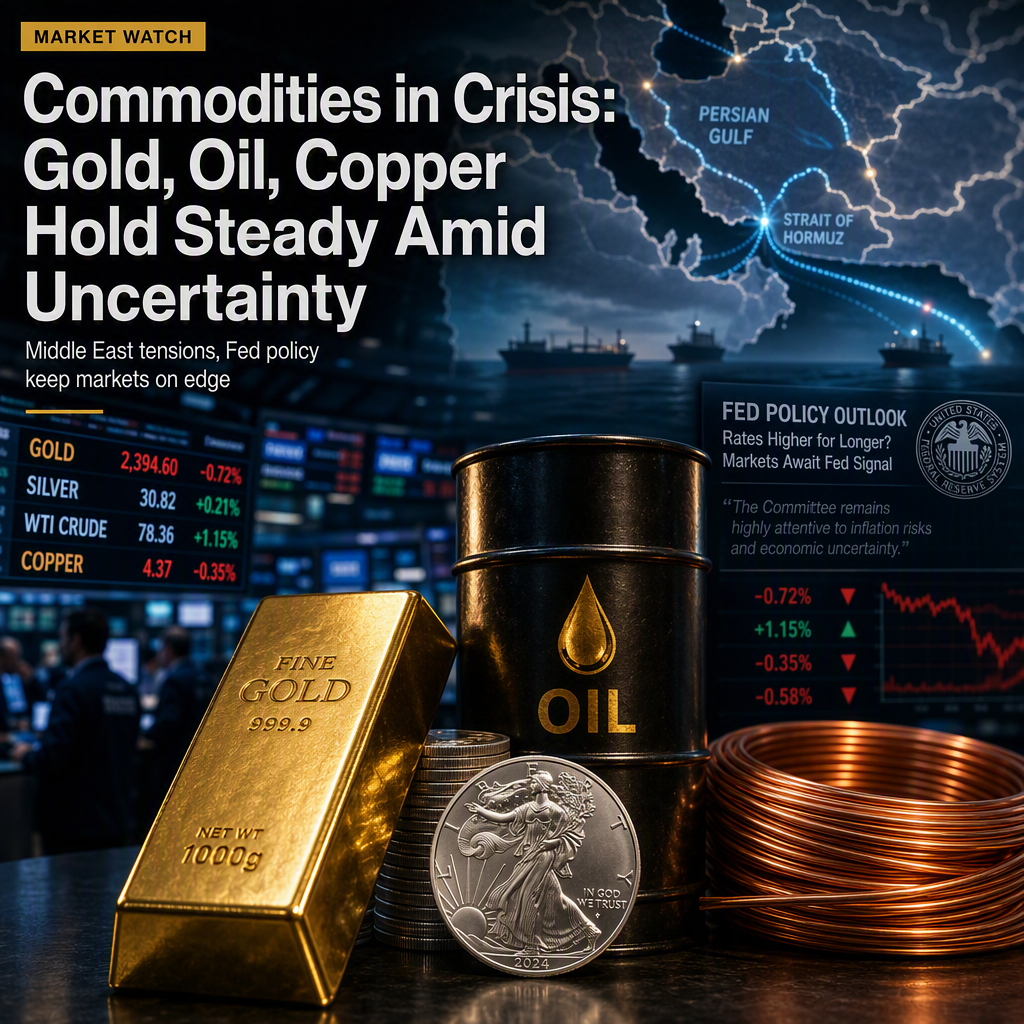
Recent developments in global commodity markets have been shaped by persistent geopolitical tensions, particularly in the Middle East, and evolving expectations around U.S. Federal Reserve policy. TD Securities strategists report that gold prices are likely to remain range-bound into early 2027, supported by doubts over the Federal Reserve's willingness to raise rates but limited by the risk of oil-driven inflation. They note that ongoing hostilities in the Persian Gulf could push energy prices higher, potentially altering front-end rate expectations and keeping gold in a $4,200-4,500/oz range until inflation eases, the U.S. Dollar weakens, and carry costs decline later in 2027 [1].
Silver has also been caught in a consolidation range, trading around $65.00 and down 1.20% on the day. The white metal's price action is influenced by weaker-than-expected U.S. economic data, which has led investors to scale back expectations for a Fed rate hike at the September meeting. The CME FedWatch Tool indicates a 35% chance of a September hike, down from 47% a month ago. However, the support from lower rate expectations is offset by rising energy prices due to U.S.-Iran tensions, with the failure to renew a ceasefire and uncertainty over Iranian port blockades fueling global supply concerns. Higher oil prices could reignite inflation and prompt central banks to maintain or even tighten monetary policy, posing a headwind for non-yielding assets like silver. Investors are now awaiting the July FOMC Minutes for further policy clues [2].
Oil markets remain elevated as the Strait of Hormuz conflict persists. Brent crude briefly rose above $91.85 per barrel, its highest in over three weeks, as hopes for a rapid reopening of the vital shipping route faded. President Trump’s refusal to revive the U.S.–Iran truce and ongoing shipping disruptions have reinforced supply concerns, keeping Brent, WTI, and Middle Eastern benchmarks supported. The unresolved standoff and fresh attacks near the strait have left oil vulnerable to further escalation and prolonged disruption, adding another supply-driven inflation risk to global markets [3].
Meanwhile, copper prices have surged above $14,000/t on the LME, approaching record highs as market tightness intensifies. ING analysts highlight that the tom-next spread reached a $75/t premium, the widest since January, and the cash/3m spread hit $545/t, reflecting tight spot supplies. Reduced LME inventories, driven by shipments to the U.S. ahead of potential tariffs and strong Chinese buying, have contributed to the squeeze. Despite a modest recent increase, inventories remain near multi-month lows, and the market is expected to stay supported if demand from electrification and infrastructure remains robust [4].
CONCLUSION
Geopolitical tensions and shifting Fed expectations are keeping gold and silver prices in tight ranges, while oil remains elevated due to unresolved Middle East conflicts. Copper is experiencing a supply-driven rally amid tight inventories and strong demand. The overall market environment is marked by heightened uncertainty and inflation risks, with investors closely watching central bank signals and geopolitical developments.