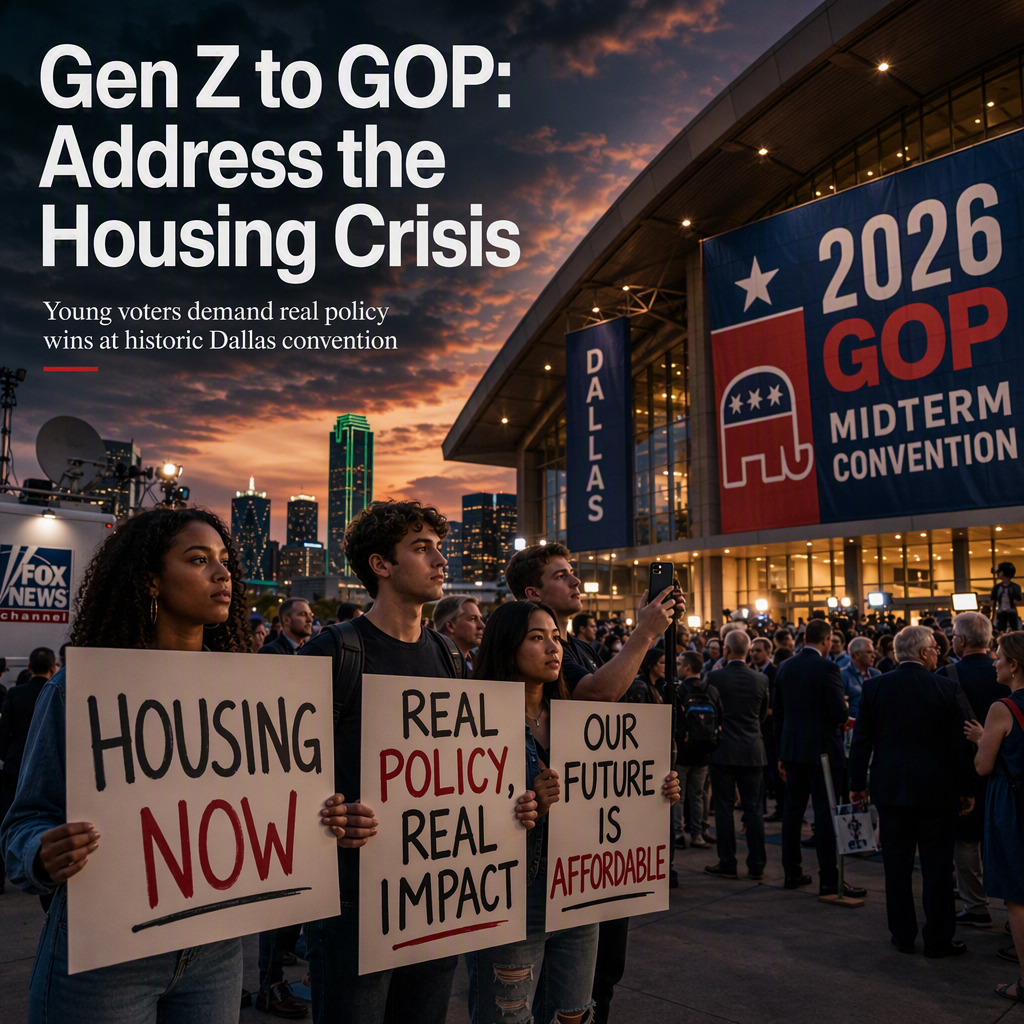
The core event discussed is the upcoming 2026 Republican Midterm Convention in Dallas, which will be the first midterm political convention in American history to receive two nights of primetime television coverage [1]. The article, written from a Gen Z perspective, urges the GOP to use this platform to address substantive issues, particularly the housing crisis, rather than focusing on internal party rhetoric or slogans [1].
Key data points highlighted include the assertion that housing is the number-one issue for Gen Z, and the cost of living is the top concern for the country overall [1]. The article notes several policy achievements: illegal border crossings have collapsed, catch-and-release is described as 'dead,' and net migration reportedly went negative for the first time in half a century [1]. Additionally, fentanyl deaths are said to have dropped by more than 20 percent in a year [1]. The Working Families Tax Cuts made the 2017 rates permanent, eliminated taxes on tips, overtime, and Social Security, introduced Trump Accounts for kids, and expanded the Child Tax Credit [1]. School choice is expanding, hostages have returned home, and new factories are being announced [1].
The article also references the death of Charlie Kirk, who was reportedly killed on a campus in September for engaging in public debate, framing this as a free speech issue that resonates with Gen Z [1]. The author calls for the GOP to make concrete promises, such as treating housing supply as a national emergency, reforming zoning laws, and expediting permits to address the housing shortage [1].
While no direct market reactions or analyst opinions are provided, the emphasis on housing, cost of living, and tax policy suggests these issues could influence voter sentiment and potentially impact markets sensitive to housing and consumer spending [1].
CONCLUSION
The article underscores Gen Z's demand for the GOP to focus on tangible policy solutions, especially regarding housing and cost of living, at the upcoming convention. Highlighting recent policy wins and advocating for aggressive action on housing, the piece suggests that addressing these concerns is critical for winning young voters and shaping future market and political outcomes.