
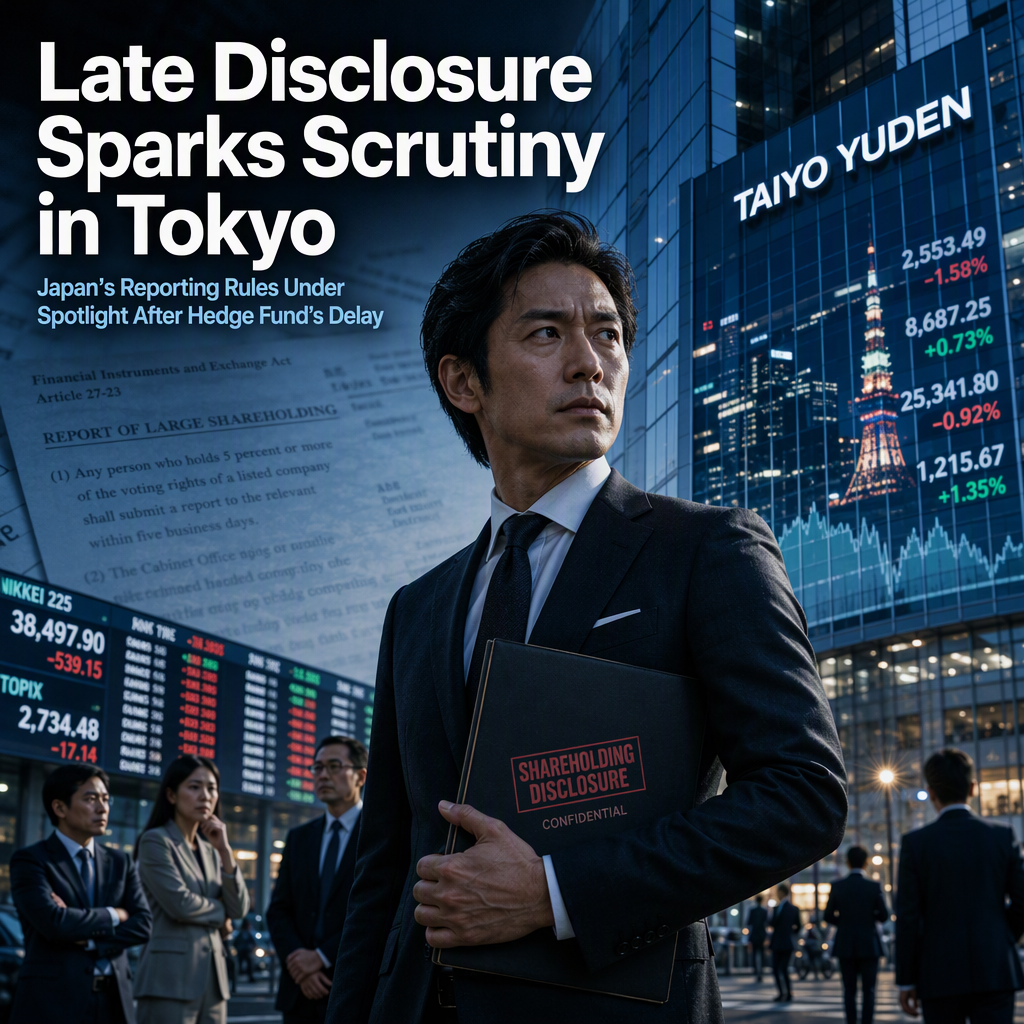
Situational Awareness, a U.S. hedge fund, failed to make timely filings after increasing its holdings in Japanese electronic components maker Taiyo Yuden beyond 5% by June 29, reporting the acquisition more than a month late [1]. This incident has drawn attention to Japan's disclosure system for large shareholding positions, which is now facing scrutiny from market participants and regulators [1]. The hedge fund's delinquency is not an isolated case; it is among approximately 1,500 shareholder reporting violations that occur annually in Japan [1]. The situation underscores potential gaps in Japan's rules for timely disclosure of large shareholdings, raising concerns about transparency and investor protection in the Japanese equities market [1].
CONCLUSION
The late filing by Situational Awareness has exposed weaknesses in Japan's shareholding disclosure regulations, prompting concerns about market transparency and investor protection. With around 1,500 violations occurring each year, the case may lead to increased regulatory scrutiny and calls for reform.