
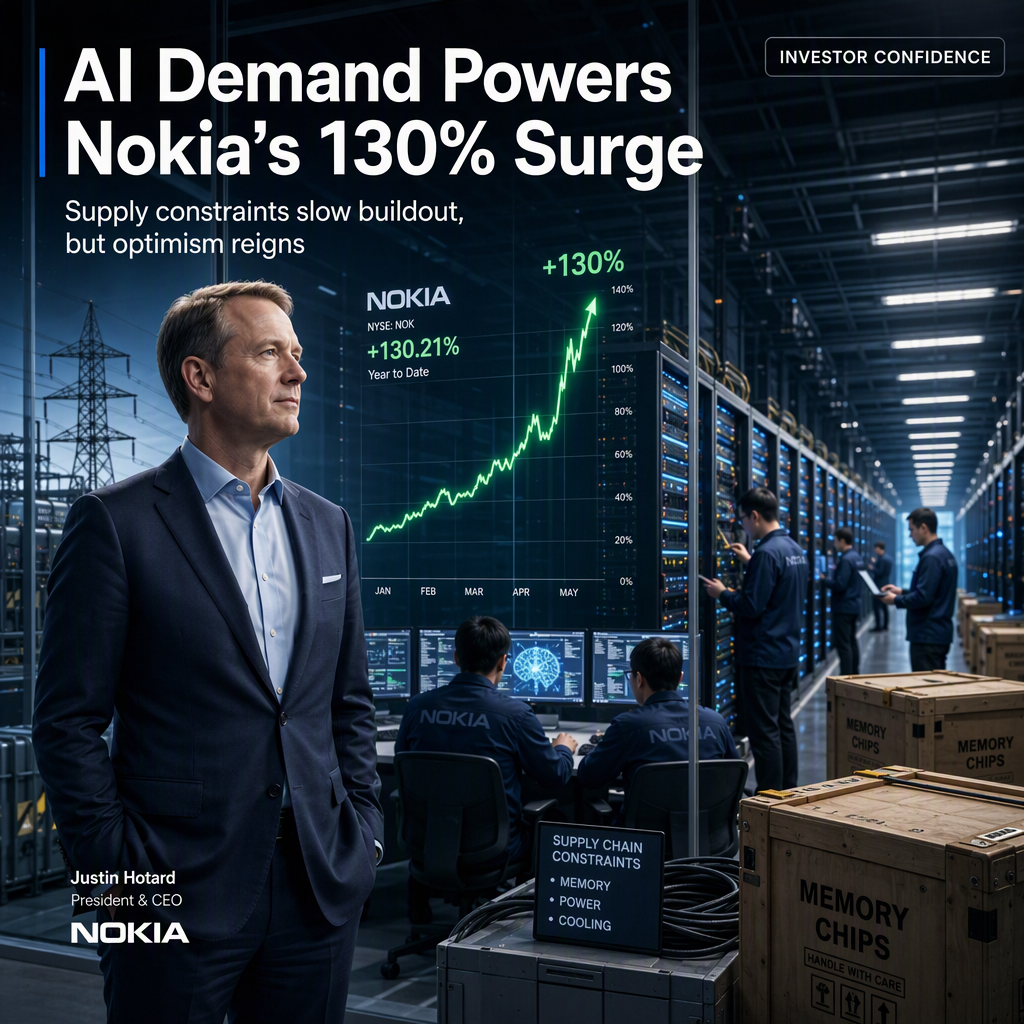
Nokia CEO Justin Hotard stated in an interview with CNBC that demand for AI data centers remains robust, despite ongoing supply constraints that are slowing the pace of new facility construction. Hotard emphasized that the tech industry could build data centers twice as fast if not for these constraints, which include shortages of key memory chips and energy. He asserted, 'I don't think you can say in any manner we're overbuilding today because reality is that if we could build 2x faster, our customers could build 2x faster, they probably would,' indicating confidence that the sector is still in the early stages of AI infrastructure development [1].
Nokia has pivoted to become a significant player in the AI infrastructure space, supplying technology for connecting racks of chips within data centers and interconnecting data centers across locations. This strategic shift has resonated with investors, as evidenced by Nokia's stock rising approximately 130% over the past year. A chart depicting Nokia's stock performance shows a significant upward trend, reflecting investor confidence in the company's AI infrastructure strategy [1].
Industry-wide, investments in AI infrastructure—including data centers, chips, and related technology—are projected to reach $10.3 trillion between 2025 and 2032, averaging 3.63% of U.S. gross domestic product per year, according to research presented at the Brookings Papers on Economic Activity. Companies are employing debt, joint ventures, and other complex financing methods to raise capital for these projects, which rely on continued demand for AI services [1].
Despite strong investment and growth, debate persists regarding whether the industry is building data centers too rapidly and if demand will be sustained in the long term. Safety concerns raised by an Anthropic researcher about existential threats posed by advanced AI prompted Anthropic CEO Dario Amodei to call for a slowdown in the development of frontier AI models, resulting in a knee-jerk sell-off in AI-related stocks last month. However, Hotard noted that demand for AI is not solely dependent on frontier labs like Anthropic and OpenAI releasing new models, stating that even without new frontier models in the next three years, demand for deployment remains strong [1].
CONCLUSION
Nokia's strategic focus on AI infrastructure has driven significant investor confidence, as reflected in its 130% stock surge over the past year. Despite supply constraints and ongoing debates about the pace of AI development, industry investment and demand remain strong, positioning Nokia as a key beneficiary of the AI buildout. The market takeaway is positive, with continued growth expected as supply issues are addressed.