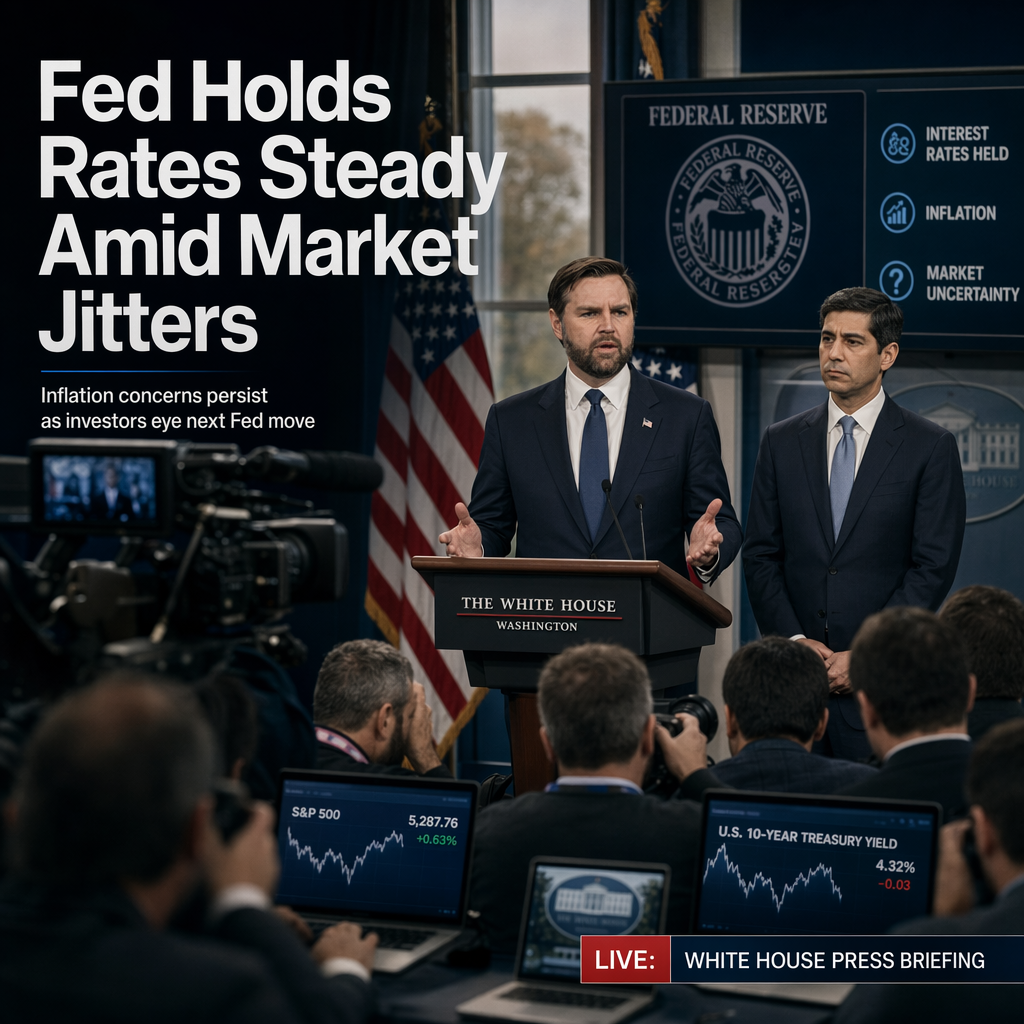
On June 18, 2026, Vice President JD Vance held a White House press briefing to announce the Federal Reserve's latest monetary policy decision: interest rates will remain unchanged under the leadership of Chair Kevin Warsh [1]. This decision comes despite market expectations for a possible rate hike, given recent inflationary pressures and strong employment numbers [1]. Warsh stated, 'While inflation remains above our target, we see signs of moderation and believe maintaining current rates will support continued growth without overheating the economy' [1].
The market reaction was mixed. The S&P 500 initially rose 0.4% following the announcement but later pared gains as investors digested the Fed's outlook for the rest of the year [1]. Technical analysis indicated resistance for the S&P 500 at the 5,500 level and support at 5,350 [1]. The Dow Jones Industrial Average traded flat, while the Nasdaq Composite gained 0.6%, driven by strong performance in technology stocks [1]. In the bond market, yields on the 10-year Treasury note remained near 4.25% [1].
The Federal Reserve's statement highlighted ongoing concerns about global economic risks, including energy prices and geopolitical tensions, which could influence future policy decisions [1]. Major banks, such as Morgan Stanley, advised investors to maintain defensive positions and monitor for breakout signals above resistance levels [1]. Many market participants are closely watching inflation data and labor market trends as key indicators for the next potential policy shift [1].
Vice President Vance reiterated the administration's support for stable financial markets and continued economic growth, emphasizing the Fed's commitment to data-driven decision making [1].
CONCLUSION
The Federal Reserve's decision to keep interest rates unchanged reflects a cautious approach amid persistent inflation and global uncertainties. Market reactions were mixed, with equities showing initial gains that later moderated. Investors and analysts are expected to closely monitor upcoming economic data for clues on future Fed policy moves.