
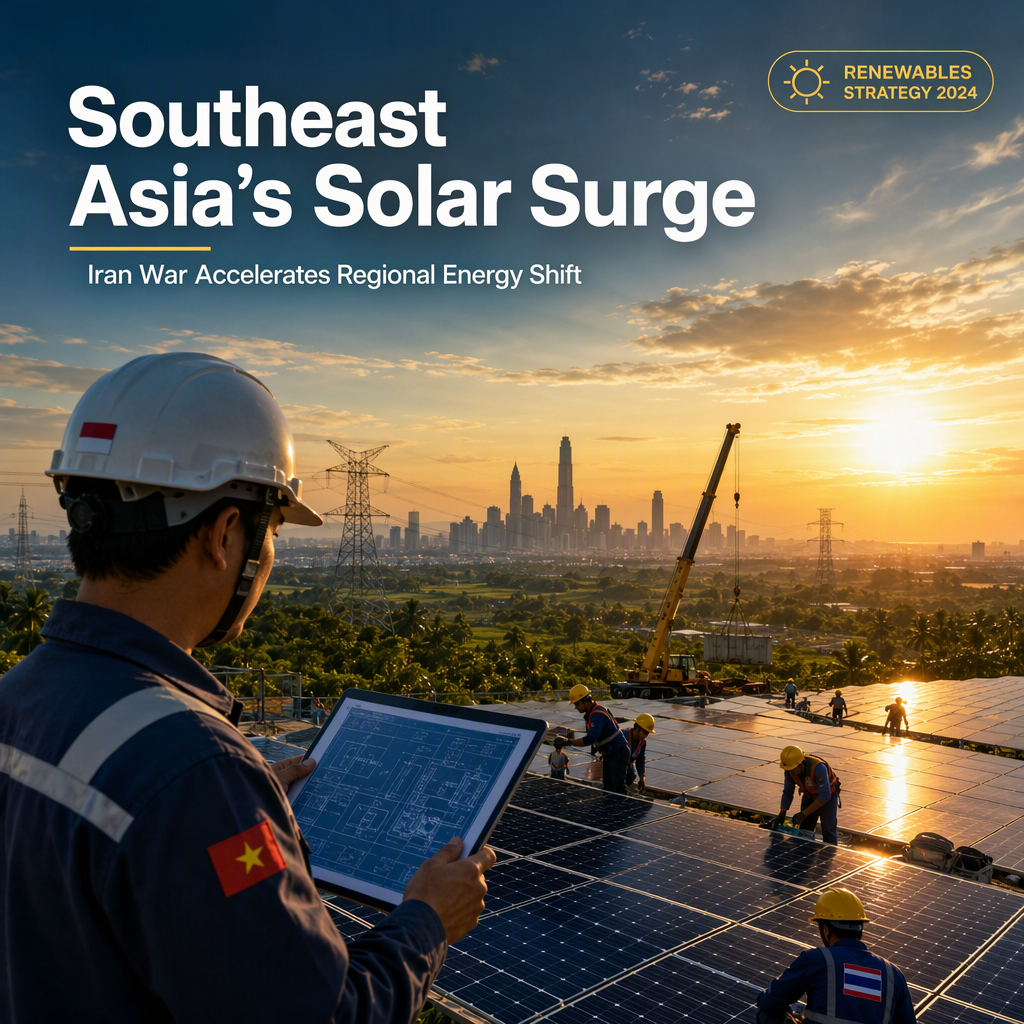
Southeast Asian governments are intensifying their focus on long-term renewable energy and electrification policies in response to energy shocks caused by the Iran war, according to a study released on Friday [1]. The study notes that the recent energy crisis, triggered by the Iran war, has accelerated the adoption of low-carbon policies across the region, with governments launching large-scale solar and electrification projects to achieve energy independence and protect their economies from fossil fuel price volatility [1].
Indonesia has announced an ambitious target to develop 100 gigawatts of solar power in the next few years, marking one of the most significant renewable energy initiatives in Southeast Asia and signaling a major policy shift away from fossil fuels [1]. The report emphasizes that the Iran war has "fundamentally changed the calculus for Southeast Asian energy planners, making renewables not just a climate imperative but an economic and security necessity" [1].
Despite the positive momentum, analysts highlight persistent challenges such as inadequate grid infrastructure and limited access to financing, which could impede the pace of renewable energy adoption in the region [1]. Market participants remain optimistic about the sector's prospects, but caution that achieving these ambitious targets will require substantial improvements in grid connectivity and increased investment flows [1]. Observers recommend close monitoring of policy implementation and financing developments over the next 12 to 24 months to assess progress [1].
CONCLUSION
The Iran war has catalyzed a significant shift in Southeast Asia's energy strategy, with governments prioritizing renewables for both economic and security reasons. While market sentiment is optimistic, the realization of these ambitious targets depends on overcoming infrastructure and financing challenges in the coming years.