
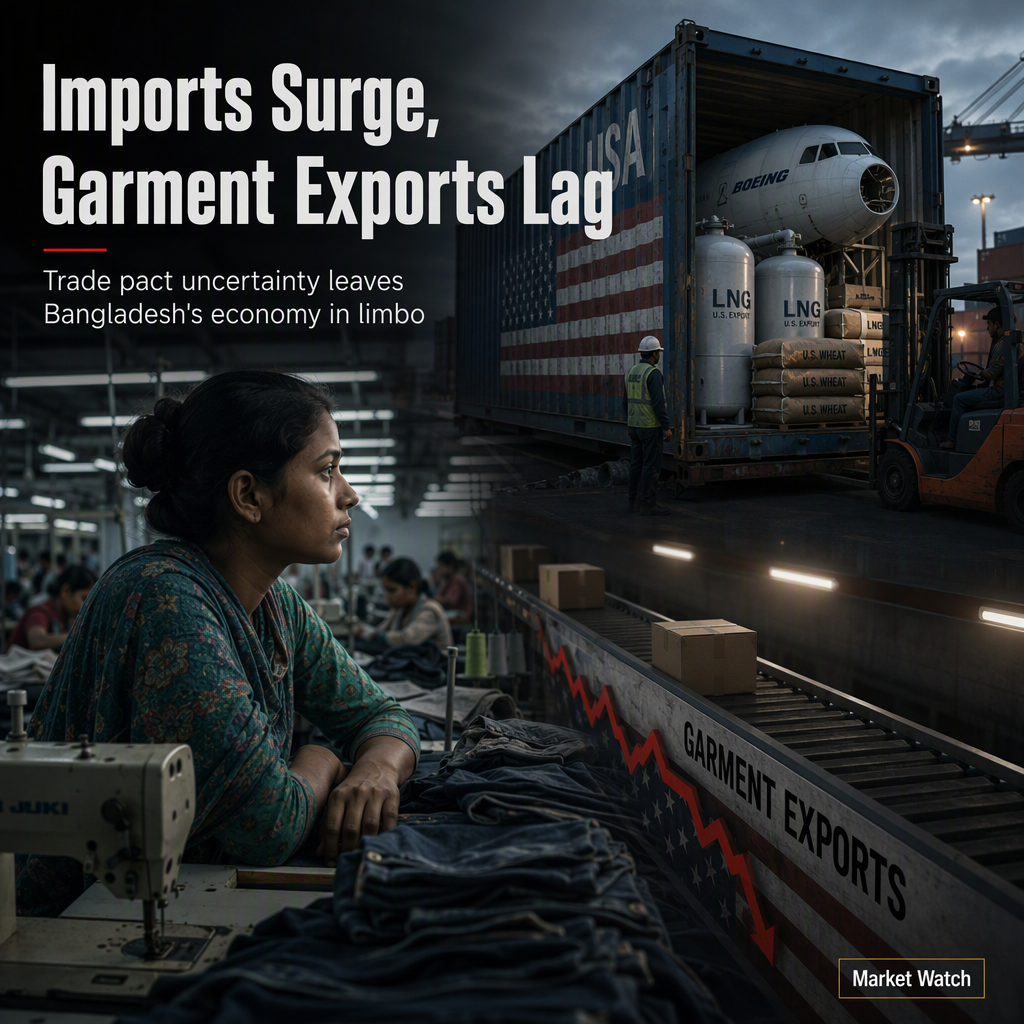
Bangladesh has significantly increased its purchases of U.S. goods following a trade agreement signed in February, committing to buy billions of dollars' worth of Boeing aircraft, liquefied natural gas, and grains [1]. However, this surge in imports has not translated into reciprocal benefits for Bangladesh's crucial ready-made garment sector. In fact, exports of ready-made garments to the U.S. fell by 7.55% year-on-year during the February-July period [1].
The garment sector, a cornerstone of Bangladesh's economy, has yet to see any substantial boost from the trade pact, as the agreement's implementation remains pending. Financial analysts have expressed concern over the lack of improved market access or reduced tariffs for Bangladeshi garments, highlighting the potential negative impact on the country's balance of trade given the large-scale commitments to U.S. imports without corresponding export growth [1].
Market sentiment among Bangladeshi exporters is described as cautious. While there is hope that the eventual implementation of the trade agreement could open new opportunities, uncertainty about the timeline and the actual benefits persists. Industry leaders are urging the government to negotiate more favorable terms for Bangladeshi exports to protect jobs and maintain economic stability in the garment sector [1].
CONCLUSION
Bangladesh's increased purchases of U.S. goods have not yet yielded benefits for its garment exports, which remain in decline. The market remains cautious as stakeholders await the implementation of the February trade pact and push for better export terms to support the vital garment industry.