
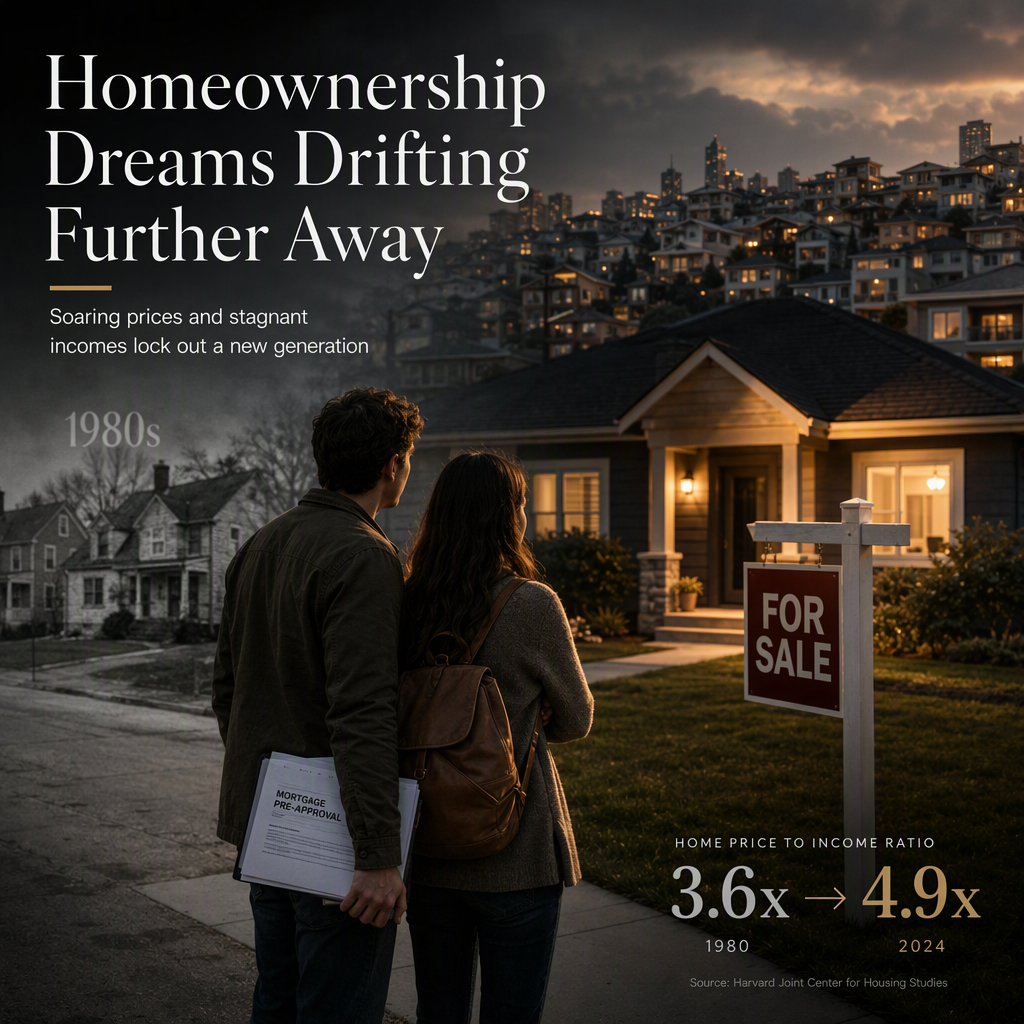
The core issue highlighted is the growing difficulty and expense of buying a home in the current market, compared to previous generations. While mortgage rates in the 1980s were significantly higher—averaging 13.9% in 1984—home prices were much lower relative to household incomes. In 1984, the median new home price was $79,900 and the median household income was $22,400, resulting in a home-price-to-income ratio of about 3.6 times income. By contrast, in August 2026, the median existing home price reached $429,100, while the latest median household income figure for 2025 was $87,460, pushing the ratio to approximately 4.9 times income. The average 30-year mortgage rate as of October 8 was 7.40% [1].
The article emphasizes that the challenge for today's buyers is not just higher mortgage rates, but also the much larger gap between home prices and incomes. For example, a 20% down payment on a $79,900 home in 1984 was about $16,000, or 71% of median household income. Today, a 20% down payment on a $429,100 home is nearly $86,000, which is roughly 98% of median household income. This makes it significantly harder for first-time buyers to save for a down payment while managing other expenses such as rent, student loans, and daily living costs [1].
Additionally, the monthly principal-and-interest payment on a $343,000 mortgage (after a 20% down payment on today's median home) at a 7.28% interest rate is approximately $2,350, not including property taxes, insurance, HOA fees, and maintenance. The article argues that simply cutting discretionary spending, such as on coffee, is insufficient to bridge the affordability gap faced by modern homebuyers [1].
No forward-looking statements or analyst opinions are provided in the article. The focus remains on the comparison of historical and current data to illustrate the increasing barriers to homeownership [1].
CONCLUSION
The data underscores that homeownership has become significantly less attainable for today's buyers due to the widening gap between home prices and incomes, compounded by high mortgage rates. The market impact is high, as these affordability challenges could have broad implications for housing demand and economic mobility.