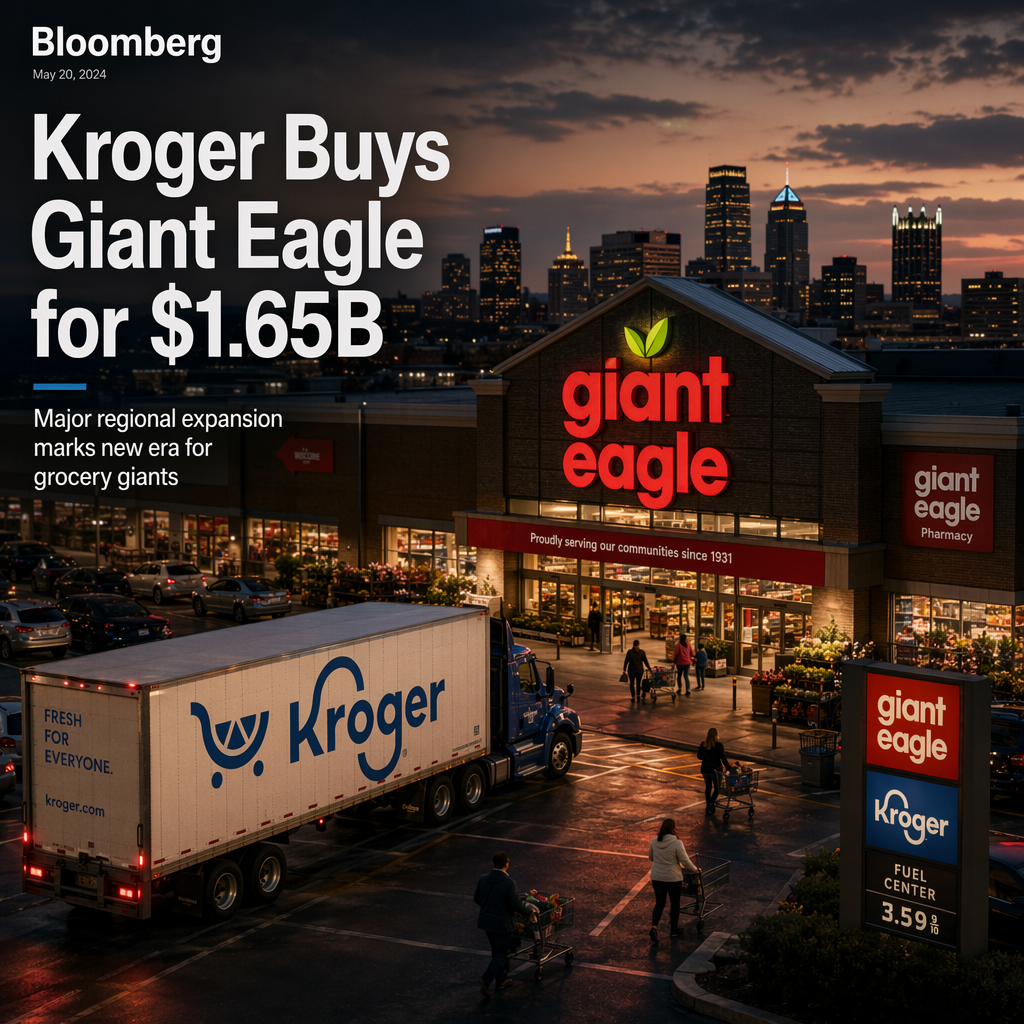
Kroger announced on Wednesday that it will acquire regional supermarket chain Giant Eagle in a $1.65 billion deal, marking its first major acquisition since regulators blocked its proposed $25 billion merger with Albertsons nearly two years ago [1]. The transaction consists of $1.25 billion in cash and the assumption of approximately $400 million in Giant Eagle's outstanding liabilities [1].
Giant Eagle operates about 197 supermarkets and 11 standalone pharmacies across northern Ohio, western Pennsylvania, West Virginia, Maryland, and Indiana, while Kroger currently operates roughly 2,700 supermarkets and multi-department stores, along with about 2,200 pharmacies, across 35 states [1]. Kroger CEO Greg Foran stated, "We evaluated the opportunity carefully, and the strategic fit is clear. Giant Eagle expands our reach into attractive adjacent markets" [1].
The acquisition is expected to strengthen Kroger's presence in several Midwestern and Mid-Atlantic markets as traditional grocery chains face intense competition from Walmart and Amazon, and as consumers continue to seek lower prices amid persistent inflation [1]. Kroger said it expects the Giant Eagle acquisition to increase adjusted earnings beginning in the second full year after the transaction closes, which is expected in 2027 [1].
This deal reflects a broader trend of consolidation in the consumer sector, as companies pursue acquisitions to gain scale and navigate inflationary pressures, changing consumer preferences, and heightened competition [1].
CONCLUSION
Kroger's $1.65 billion acquisition of Giant Eagle marks a significant strategic move to expand its regional footprint and strengthen its competitive position. The deal is expected to boost adjusted earnings starting in 2027 and underscores ongoing consolidation in the grocery sector as companies seek scale amid challenging market conditions.