
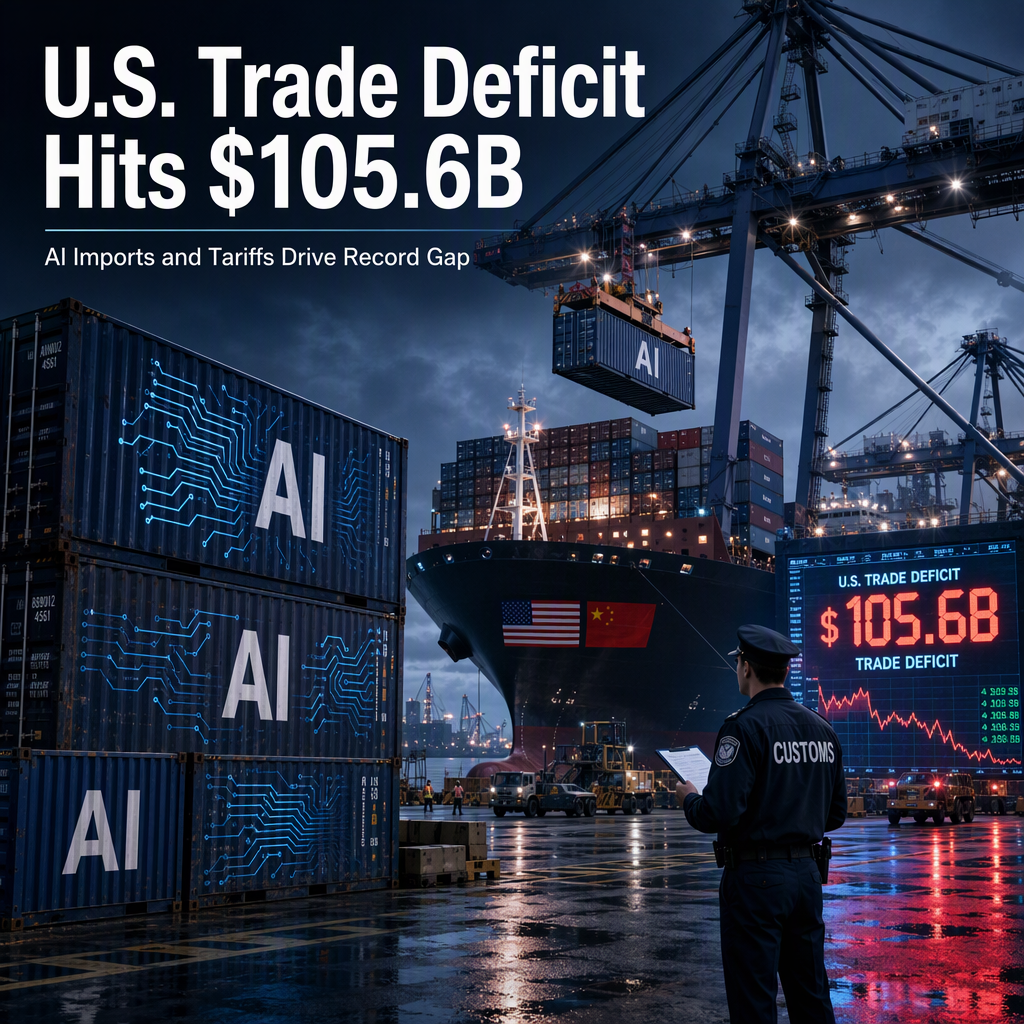
The U.S. trade deficit widened significantly in August, reaching $105.6 billion, according to data released by the Commerce Department on Tuesday [1]. This figure represents a 13.7% increase from July and surpasses the Dow Jones consensus estimate of $102 billion [1]. The sharp rise in the deficit was attributed to a 4.3% month-over-month increase in imports, particularly goods related to the ongoing artificial intelligence build-out and the effects of import tariffs [1].
This latest deficit marks the widest gap since March 2025, which was just before President Donald Trump announced 'liberation day' and implemented 'reciprocal' tariffs against U.S. trading partners [1]. Despite the monthly surge, the year-to-date trade deficit stands at $138.2 billion, which is nearly 20% lower than the same period a year ago [1].
The data suggests that while the U.S. is experiencing a short-term spike in its trade imbalance due to increased imports and tariff-related factors, the overall deficit for the year remains below last year's levels [1]. No specific market reactions or analyst opinions were provided in the source article.
CONCLUSION
The U.S. trade deficit's sharp rise in August highlights the impact of AI-related imports and ongoing tariff policies. Despite this monthly increase, the year-to-date deficit remains significantly lower than the previous year, indicating a complex trade environment with both short-term pressures and longer-term improvements.