
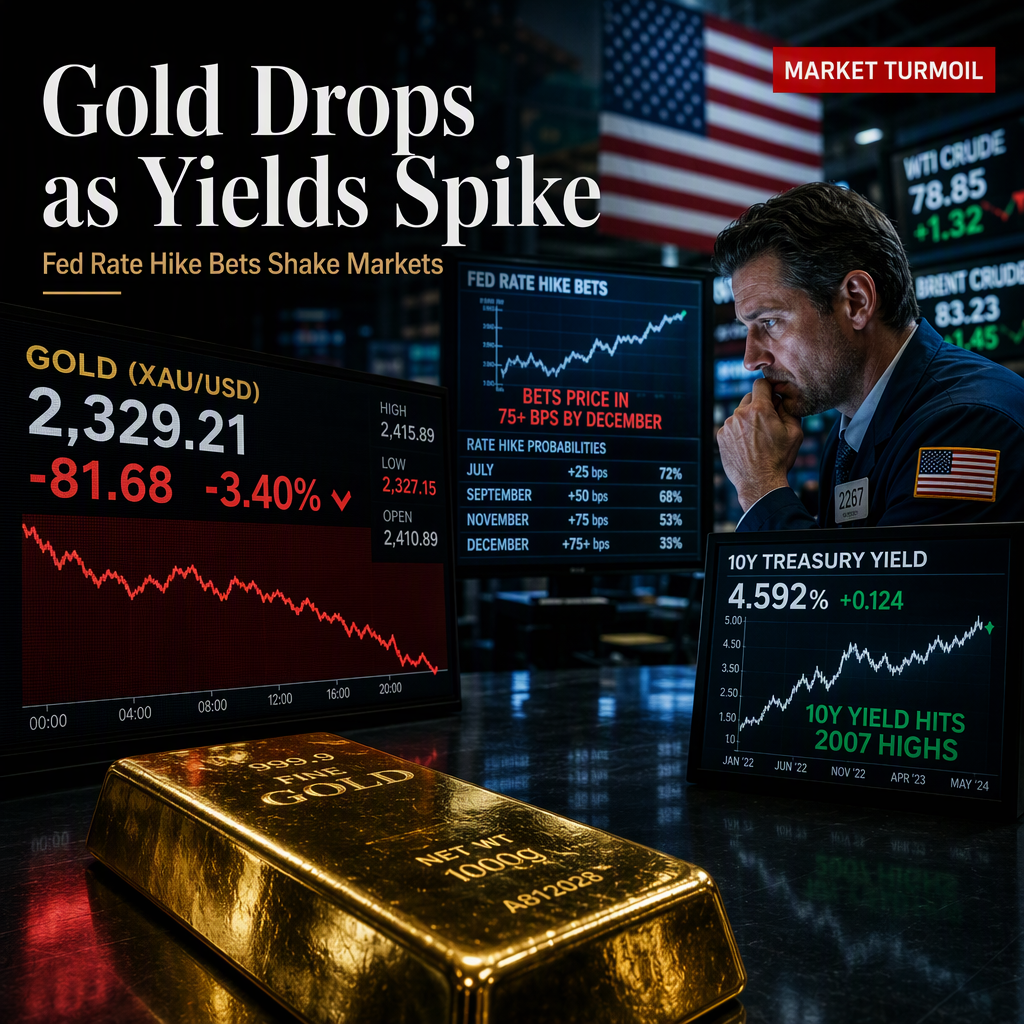
Gold (XAU/USD) experienced a sharp decline of more than 3.4% on Monday, trading at $4,139 after reaching a peak of $4,280 earlier in the session [1]. The sell-off was triggered by a surge in US Treasury yields, with the 10-year Treasury note yield climbing to 5.27%, its highest level since June 2007, before settling at 5.23% [1]. Elevated oil prices, with West Texas Intermediate (WTI) crude at $93.00 per barrel (up 0.6%), and persistent inflationary pressures contributed to the bearish sentiment in gold markets [1].
Market volatility was further heightened by conflicting reports regarding a potential US-Iran deal. While Al Hadath reported that Iran agreed to halt its uranium enrichment program, Press TV denied these claims, stating Tehran's position remains unchanged. Additionally, US President Donald Trump rejected a deal with Iran aimed at reopening the Strait of Hormuz [1].
Federal Reserve officials, notably Governor Lisa Cook, have maintained a hawkish stance, citing ongoing inflationary pressures from artificial intelligence and Middle East hostilities. This has led money markets to price in a 65% probability of a 25-basis-point rate hike at the Fed's October meeting, with a 94% chance of a hike by December, according to Prime Terminal [1].
Technical analysis indicates that gold broke below a bullish wedge pattern, with the next support levels at $4,100, $4,050, and the August 3 daily low of $4,019. The Relative Strength Index (RSI) is approaching oversold territory, suggesting continued bearish momentum unless gold can reclaim the $4,200 level and key moving averages at $4,298 and $4,319 [1].
Traders are now focusing on upcoming US jobs data, including the JOLTS report, ADP Employment Change for September, the Core PCE Price Index, and September's Nonfarm Payrolls, for further market direction [1].
CONCLUSION
Gold's steep decline reflects heightened market anxiety over surging US Treasury yields and increased expectations of further Fed rate hikes. With technical indicators signaling further downside and key economic data on the horizon, gold remains under significant pressure in the near term.