
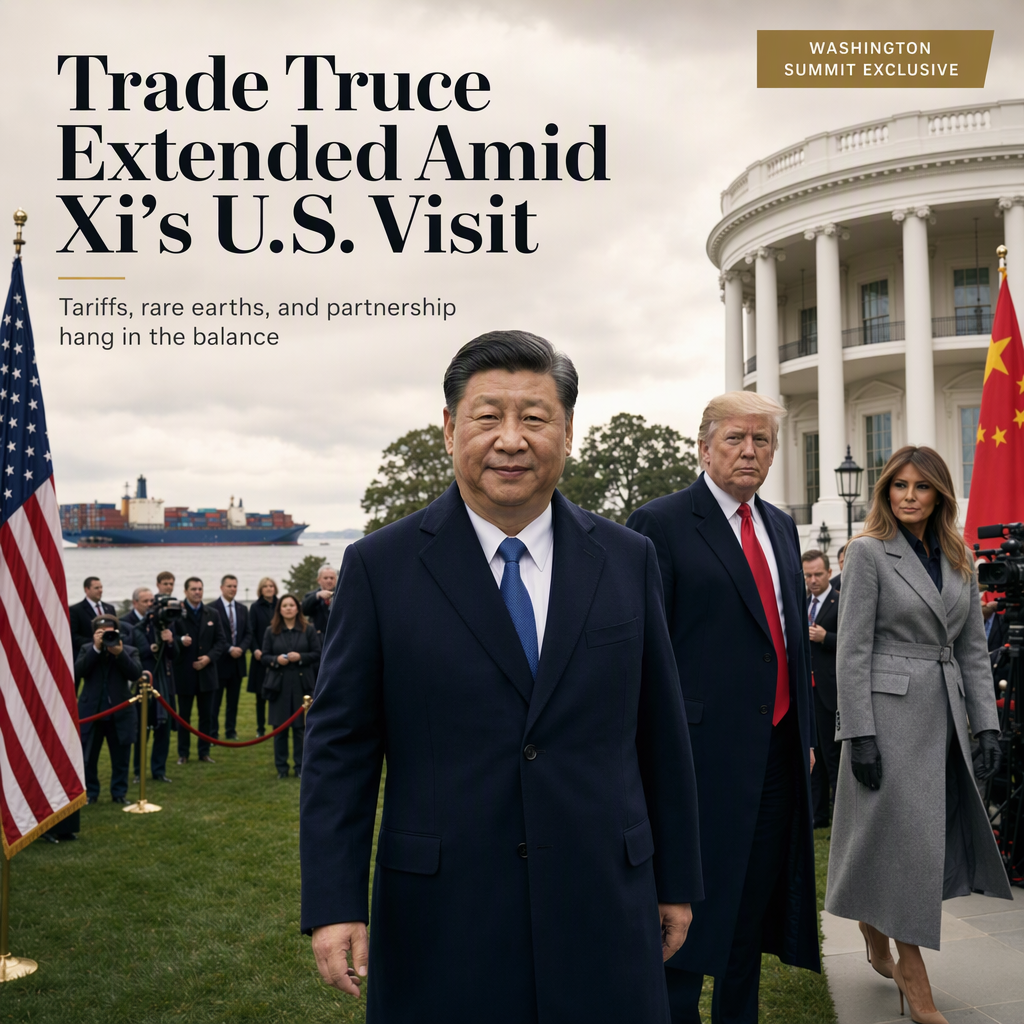
U.S. Treasury Secretary Scott Bessent announced that the U.S.-China trade truce has been extended until January 10, coinciding with Chinese President Xi Jinping's state visit to Washington, D.C. The extension aims to keep tariffs lower for a longer period and ensure the continued flow of rare earths between the two countries. This decision was revealed during Bessent's appearance on Fox News as President Xi arrived in Washington for a visit scheduled through Friday [1].
The original one-year trade truce was agreed upon by Xi and Trump during a meeting in South Korea last October and was set to expire in November. The new extension adds two months to the agreement, with Bessent emphasizing that Beijing still needs to fulfill additional deliverables. Prior to the summit, expectations were that the truce might be extended by six months or more, but the actual extension was shorter than anticipated [1].
Commenting on the extension, Scott Kennedy from the Center for Strategic and International Studies stated that the two-month period suggests the U.S. remains unsatisfied with China's current offers and is maintaining pressure, with the added possibility that Xi will attend the G20 summit in Miami. Jens Eskelund, president of the European Chamber of Commerce in China, noted that merely extending the truce does not resolve ongoing challenges for companies, such as the lack of a standardized process for rare earths export licenses [1].
Chinese state media did not immediately report on Bessent's comments regarding the trade truce. In an official statement upon his arrival, Xi expressed confidence that his visit would yield 'fruitful results' for both countries and emphasized the importance of partnership and managing competition and differences. However, his statement did not mention tariffs, rare earths, or artificial intelligence. The visit included a formal greeting by U.S. President Donald Trump and First Lady Melania Trump, though there was no public handshake between the two leaders. Trump indicated that discussions with Xi would cover the Iran war and other subjects. Additionally, Bessent met with Chinese Vice Premier He Lifeng in New York prior to Xi's arrival, where they discussed establishing an alert system for AI [1].
CONCLUSION
The two-month extension of the U.S.-China trade truce signals ongoing negotiations and unresolved issues, particularly regarding trade deliverables and rare earths. While the extension provides temporary relief from higher tariffs, it falls short of market expectations for a longer-term solution. The outcome of Xi's visit and future summits may further shape the trajectory of U.S.-China trade relations.