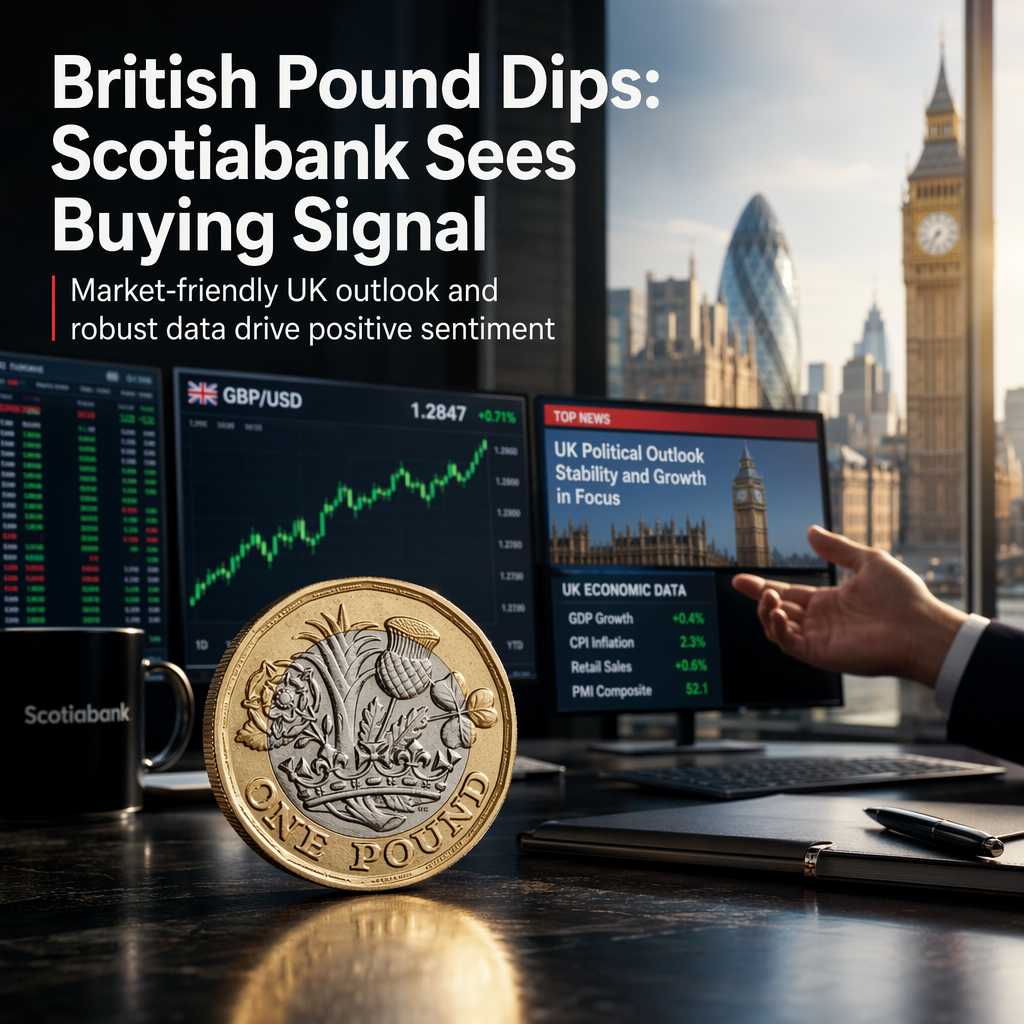
The British Pound (GBP) experienced a slight decline against the US Dollar (USD), retracing part of the previous session's strong advance, according to Scotiabank strategists Shaun Osborne and Eric Theoret [1]. This pullback comes after markets were buoyed by expectations of a centrist, market-friendly government led by Burnham, with reports indicating that Ed Miliband has been vetoed as a potential chancellor in favor of current Home Secretary Mahmood [1]. The anticipated centrist composition of Burnham's team is seen as positive for markets, though it has caused some discontent among left-wing factions who were instrumental in the ousting of Starmer [1].
Recent UK economic data presented a mixed picture. May's Gross Domestic Product (GDP) exceeded forecasts, rising 0.7% in three-month-on-three-month terms, signaling solid economic growth in the first half of the year [1]. However, May Industrial Production fell by 0.5% month-on-month, which was weaker than expected, though the components of the data were described as very mixed. The UK's trade deficit also narrowed during this period [1].
From a technical perspective, Scotiabank analysts maintain that the early July bullish reversal in GBP/USD remains intact. They highlight a fresh short-term cycle high and a bullish alignment across short-, medium-, and long-term trend oscillators, suggesting that minor dips should be viewed as buying opportunities [1]. The strategists see potential for GBP/USD gains to extend toward at least 1.3650 in the near term [1]. Additionally, while EUR/GBP has rebounded from a one-year low, technical trends remain positive for the pound overall [1].
No specific market reactions or analyst opinions beyond Scotiabank's technical outlook were mentioned in the article.
CONCLUSION
Scotiabank views the recent dip in the British Pound as a buying opportunity, supported by expectations of a centrist, market-friendly UK government and robust GDP data. Technical indicators suggest further gains for GBP/USD, with a near-term target of 1.3650. The overall market sentiment toward the pound remains positive, despite some mixed economic data.