
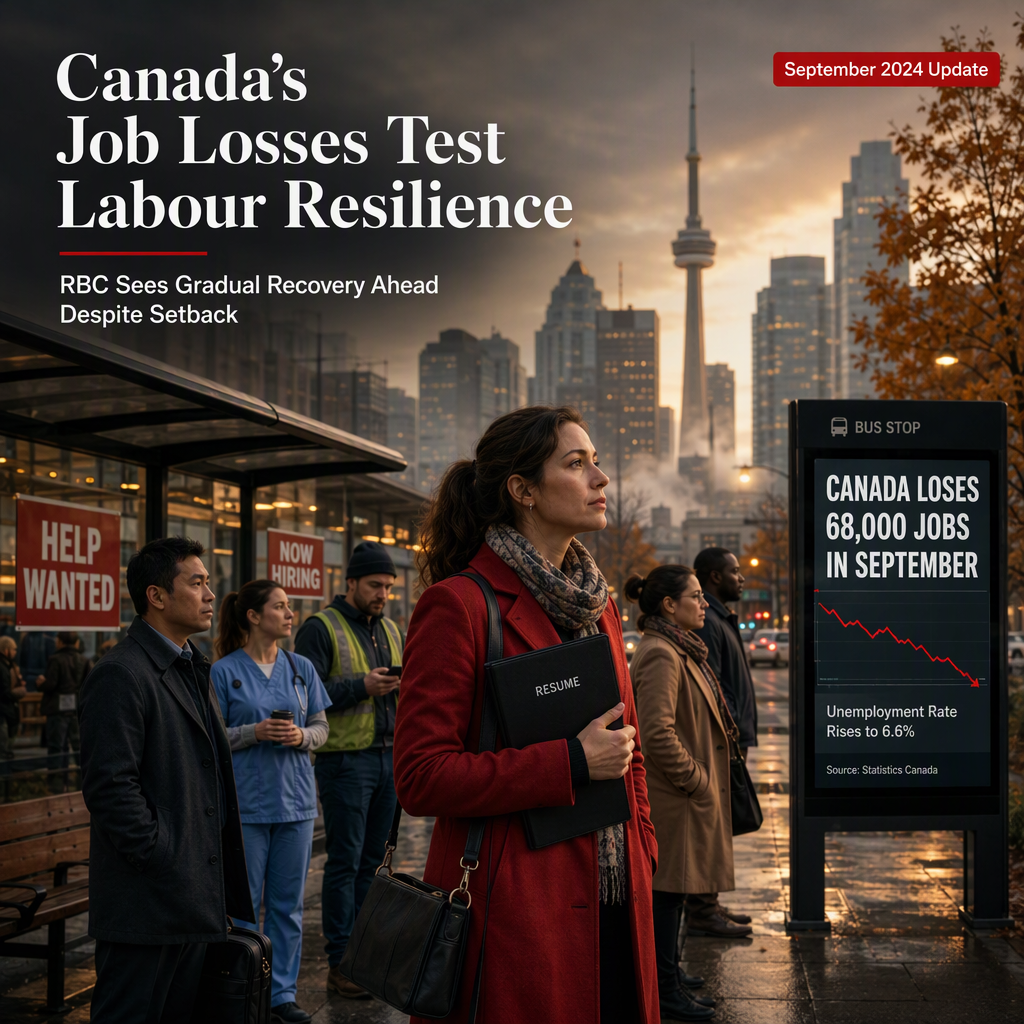
Canada's labour market experienced a significant setback in September, with a loss of 68,000 jobs, primarily in the public sectors such as education and health care, according to Royal Bank of Canada (RBC) economist Claire Fan [1]. This decline follows a 42,000-job loss in the previous month, effectively reversing much of the employment gains made during the summer and bringing the year-to-date employment change to -41,000 [1].
Despite the negative headline figure, Fan emphasizes that monthly employment data can be highly volatile and cautions against overinterpreting the softer reading [1]. She notes that the unemployment rate remains below last year's level, suggesting some underlying resilience in the labour market [1].
Looking forward, Fan points to leading indicators such as job openings from Indeed.com, which suggest that hiring demand has not deteriorated significantly, even after the imposition of new U.S. tariffs affecting a limited range of Canadian exports [1]. RBC expects that the progress made in Canada's labour market earlier in the year will largely be sustained, with the unemployment rate projected to edge lower through the end of 2026 [1].
CONCLUSION
While Canada saw a notable drop in employment in September, RBC maintains a cautiously optimistic outlook, expecting the unemployment rate to gradually decline through 2026. The bank highlights ongoing hiring demand and the volatility of monthly data as reasons for a measured response to the latest figures.