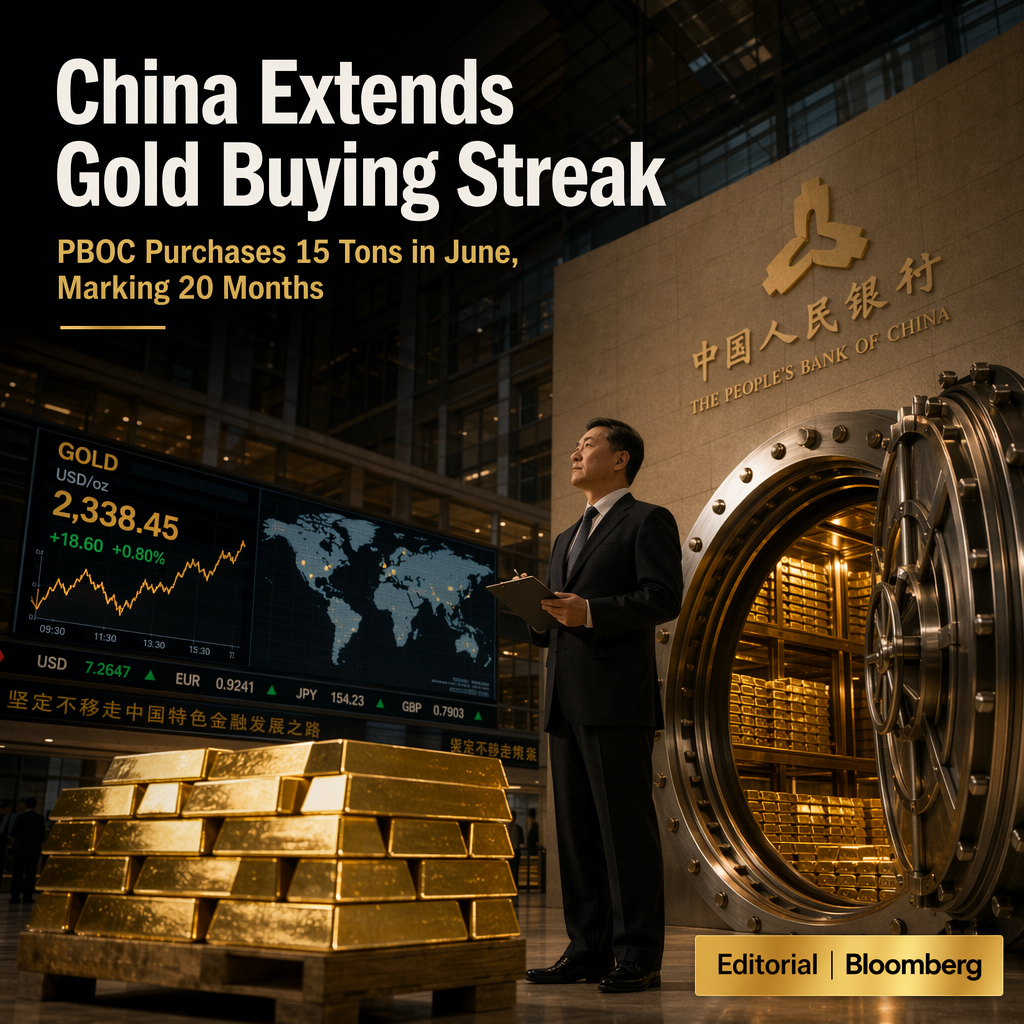
The People's Bank of China (PBOC) continued its record-setting gold accumulation in June 2026, purchasing 15 tons of gold and marking the 20th consecutive month of reserve increases—the longest streak since comparable data began in 1999 [1]. This sustained buying by China's central bank is part of a broader trend among central banks in emerging markets and other regions, which have increased gold purchases as prices have fallen [1].
This central bank activity stands in sharp contrast to institutional investors, who have been selling gold in response to rising U.S. interest rates. The higher rates have made dollar-denominated assets more attractive, prompting institutional investors to shift away from gold in search of better returns elsewhere [1].
Central banks, particularly in emerging markets, are using the recent dip in gold prices as an opportunity to diversify their reserves and reduce reliance on the U.S. dollar amid ongoing global economic uncertainties [1]. Analysts note that this divergence in behavior between central banks and institutional investors could influence the long-term outlook for gold prices, with official sector purchases potentially providing a floor for the market even as institutional demand declines [1].
China's persistent gold buying underscores its leading role in this trend, with the PBOC's actions providing notable support to gold prices despite broader market headwinds [1].
CONCLUSION
China's central bank has extended its gold buying streak to 20 months with a 15-ton purchase in June, highlighting a clear divergence from institutional investors who are selling gold amid rising U.S. interest rates. This ongoing central bank demand is helping to support gold prices and may influence the market's long-term trajectory.