
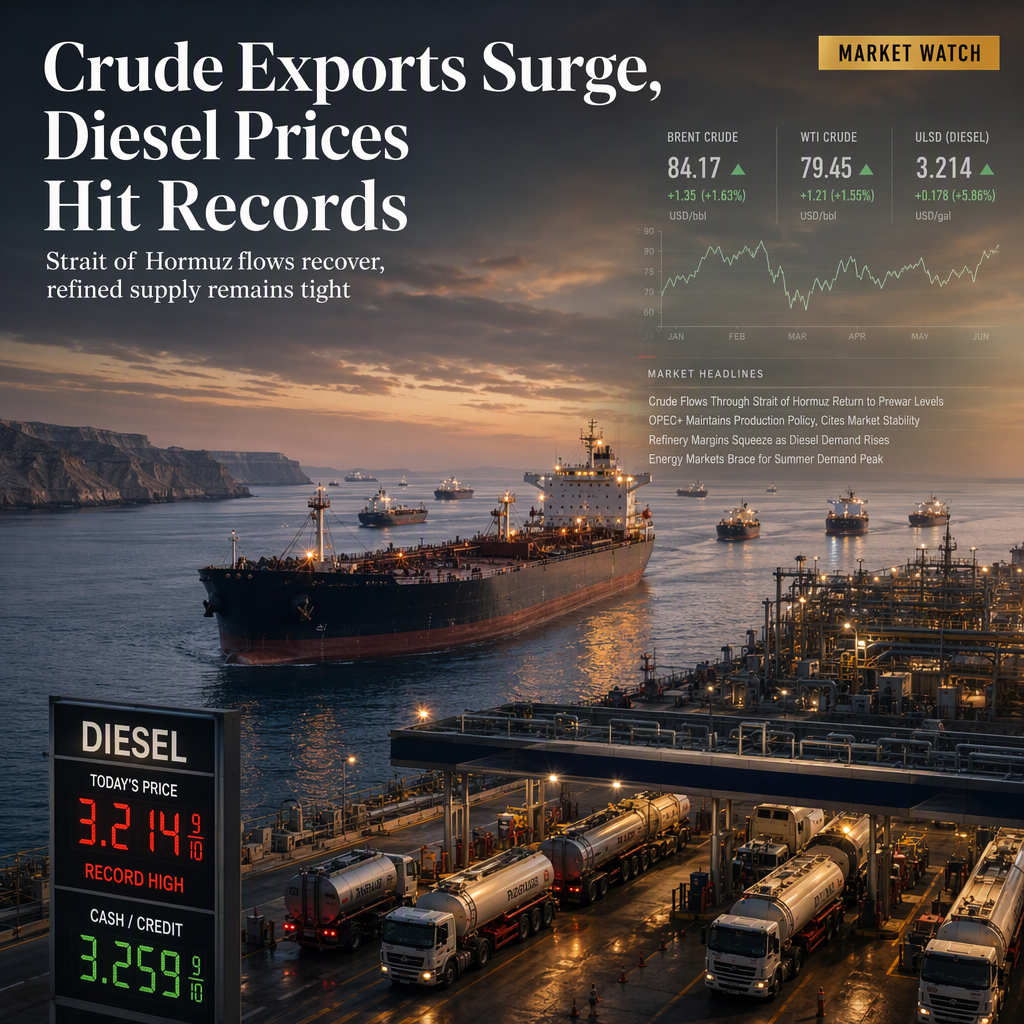
Crude oil exports transiting through the Strait of Hormuz have returned to prewar levels, marking a significant milestone for global energy markets. According to research from Goldman Sachs, JPMorgan, and Kpler, the seven-day average of crude exports through the Strait has reached 13.5 million barrels per day, matching the prewar baseline [1]. Despite this recovery in crude flows, refined product supplies remain constrained, with shipments still far below average, leading to record high diesel prices at the pump and ongoing challenges for the global economy [1].
In response to elevated diesel prices, U.S. President Donald Trump has stated he is still considering a ban on diesel exports as a measure to bring down costs for consumers [1]. Both Brent and WTI crude prices are lower in early Thursday trading, reflecting market reactions to the restored crude flows and ongoing concerns about refined product shortages [1].
The broader market context remains cautious, with Treasury yields elevated despite a softer U.S. inflation reading—PCE for August was up 3.4% [1]. Minneapolis Fed President Neel Kashkari commented that inflation remains too high and that the latest data did not significantly change his outlook [1]. Futures indicate a flat start to October trading, with lighter activity in Asia due to market holidays in China and Hong Kong [1].
CONCLUSION
While crude exports through the Strait of Hormuz have recovered to prewar levels, the market continues to grapple with record diesel prices and constrained refined product supplies. The potential for a U.S. diesel export ban and persistent inflation concerns are keeping market sentiment cautious. Investors remain watchful as the fourth quarter begins amid ongoing economic uncertainties.