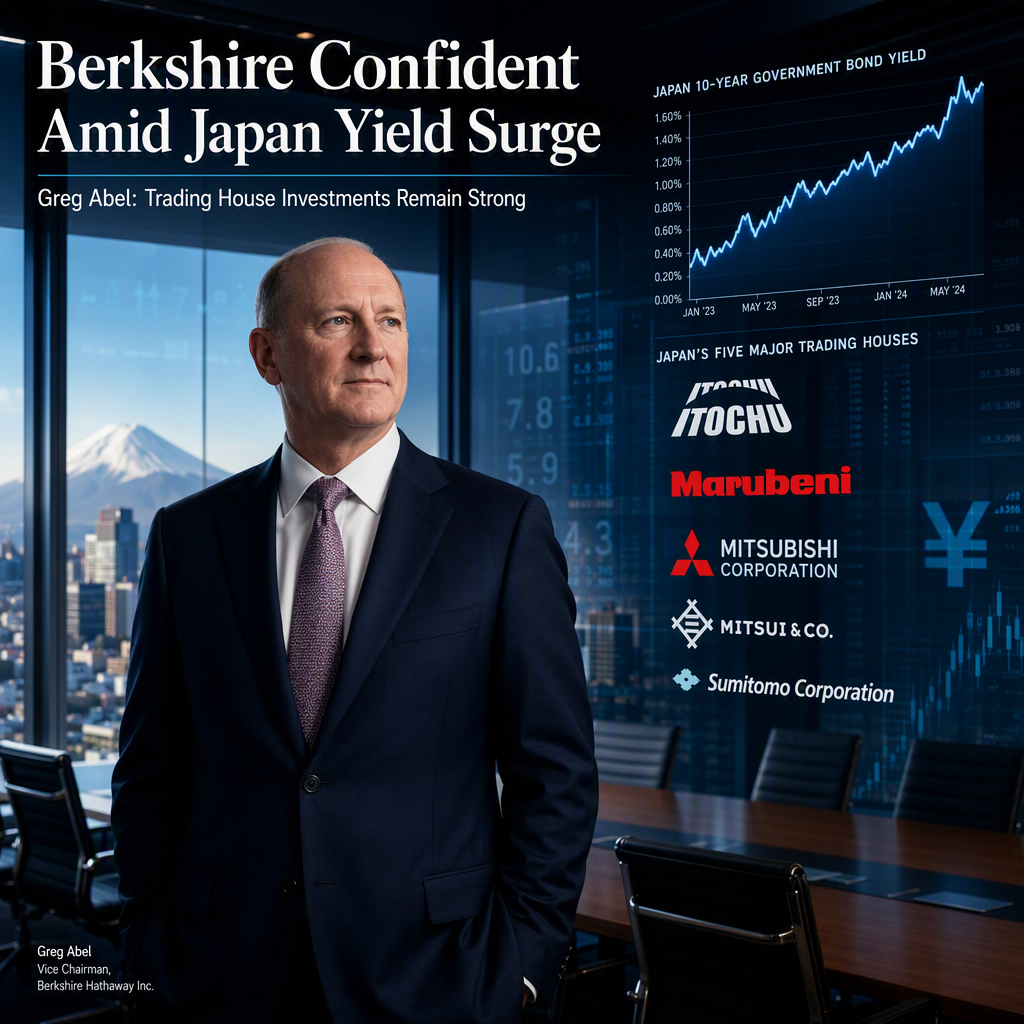
Berkshire Hathaway CEO Greg Abel stated that the recent surge in Japanese bond yields does not pose a significant challenge for the major Japanese trading houses in which Berkshire holds investments [1]. The Japanese 10-year bond yield reached a 30-year high this week, rising just above 3%, amid a global sell-off in bond markets [1]. Despite this, Abel emphasized that these yields remain relatively modest compared to other global bond yields, such as the U.S. 10-year Treasury yield, which hit nearly 4.8%—an almost three-year high—on Tuesday [1].
Abel clarified that none of the five trading companies—Itochu, Marubeni, Mitsubishi, Mitsui, and Sumitomo—expressed concerns about the higher yields as a fundamental challenge at this time [1]. Berkshire Hathaway currently holds more than a 10% stake in each of these firms, having received permission from each to exceed the previously agreed-upon double-digit ownership cap six years after the initial investment [1].
Abel also mentioned that Berkshire will continue to raise debt in yen as appropriate, despite the elevated yields [1]. He reiterated the company's long-term commitment to these investments, highlighting the substantial growth in the trading houses' share prices since Berkshire's initial investment six years ago [1]. Abel described the relationships with these companies as strong and ongoing, with Berkshire exploring additional opportunities both in Japan and internationally [1].
The market implications appear moderate, as Abel's comments suggest confidence in the resilience and value of Berkshire's Japanese trading house investments, even in the face of rising bond yields [1].
CONCLUSION
Berkshire Hathaway remains optimistic about its investments in Japan's major trading houses, viewing the current high bond yields as manageable and not a significant risk. The company continues to see long-term value and is open to further opportunities in Japan and abroad. Market sentiment is positive, with no immediate concerns raised by the trading houses themselves.