
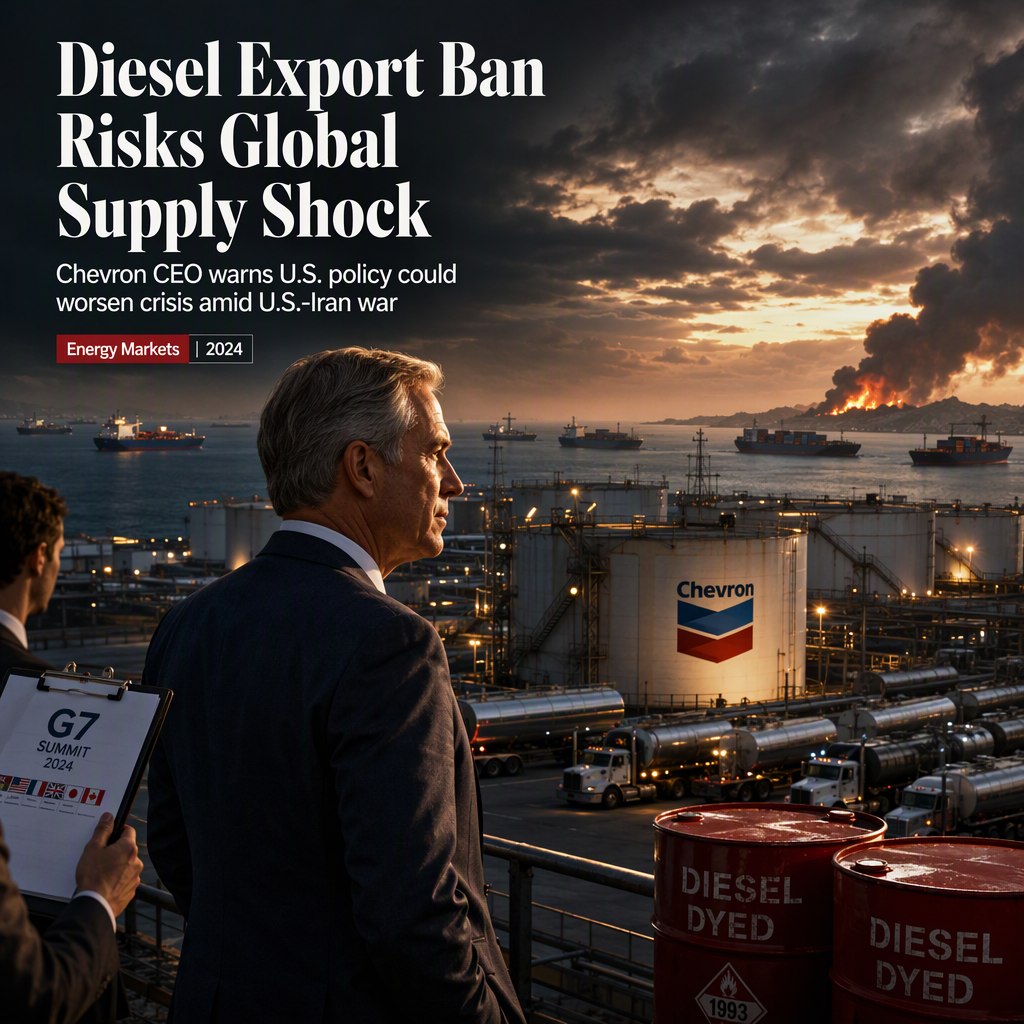
Chevron CEO Mike Wirth cautioned that a U.S. diesel export ban would be 'unwise,' arguing it could exacerbate supply pressures and undermine global confidence in the U.S. as a reliable energy supplier [1]. Wirth's comments come as the Trump administration considers such a ban, though President Trump has recently cooled on the idea after G7 countries agreed to release diesel and crude oil from emergency reserves [1]. Instead, Trump signed an executive order temporarily allowing broader use of red-dyed diesel, which is exempt from highway fuel taxes, and deferred related taxes through the end of the year in an effort to reduce record-high fuel costs [1].
The global energy market remains tense due to the ongoing U.S.-Iran war, which has severely disrupted shipping through the Strait of Hormuz—a critical passage for about 20% of the world's oil and liquefied natural gas supplies—causing significant economic shock waves [1]. Although increased Middle East crude exports and the G7 emergency stockpile release have helped ease some supply fears, market participants remain on edge as Saudi Arabia and Iran-backed Houthi forces continue to exchange attacks [1].
Saudi Aramco CEO Amin Nasser warned that rebuilding global oil inventories could take up to two years, and the supply squeeze may worsen if the U.S.-Iran conflict persists [1]. Chevron's CEO described the global inventory situation as 'very serious,' noting that while inventories were high at the start of the year, the energy system is now 'more vulnerable to disruption' [1].
The market implications are significant, with ongoing geopolitical tensions and policy uncertainty contributing to volatility and concerns about future supply reliability [1].
CONCLUSION
Chevron's CEO and other industry leaders are warning that policy moves such as a diesel export ban could further destabilize already fragile energy markets. With the U.S.-Iran war disrupting key supply routes and inventories under pressure, the market remains highly sensitive to both geopolitical developments and government interventions.