
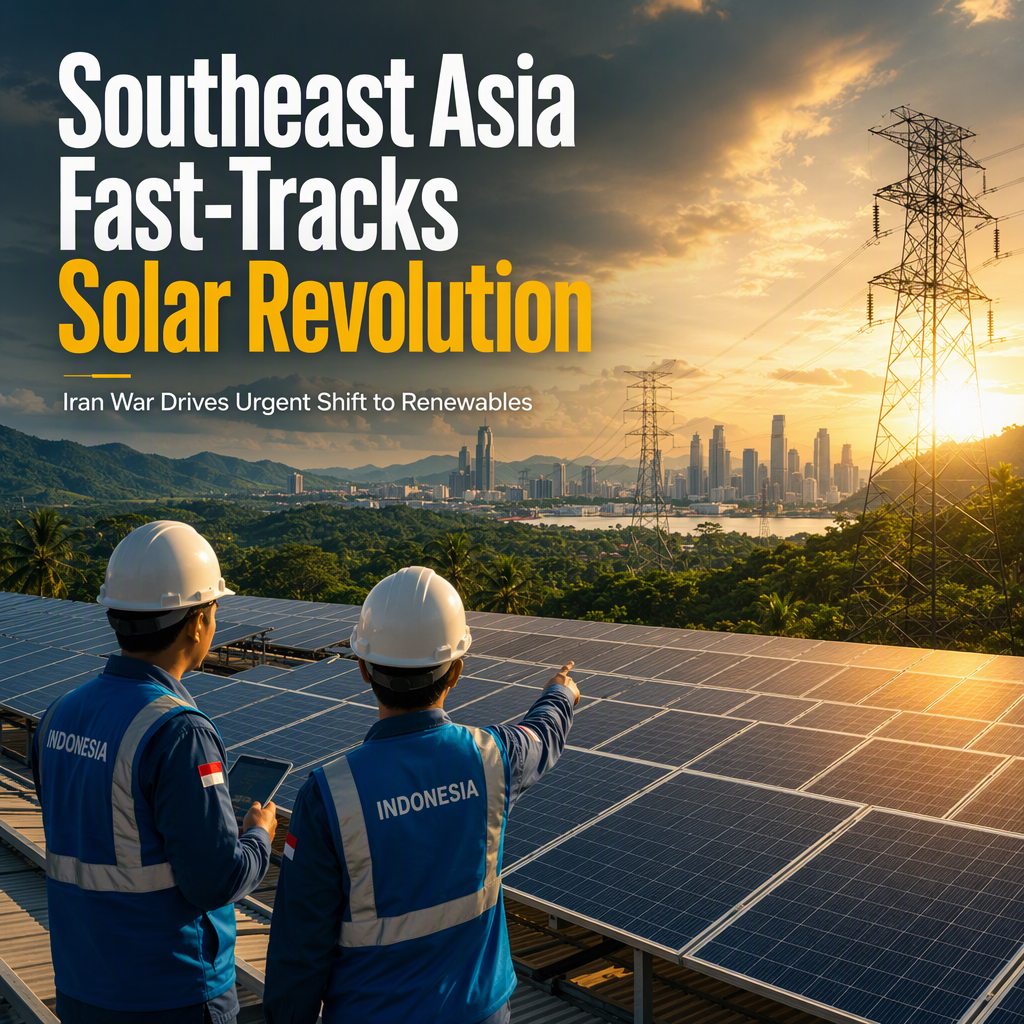
Southeast Asian governments are intensifying their focus on long-term renewable energy and electrification policies in response to energy shocks triggered by the ongoing Iran war, according to a study released on Friday [1]. The conflict has led to a sharp increase in energy prices, prompting countries in the region to prioritize investments in low-carbon energy sources and modernize their electrification infrastructure as part of new national strategies [1].
A notable example is Indonesia, which has announced an ambitious plan to develop 100 gigawatts (GW) of solar power capacity in the coming years. This initiative, one of the largest in Southeast Asia, aims to leverage Indonesia’s significant solar potential and reduce the country's dependence on imported fossil fuels [1]. The government is also emphasizing the need to build a modern grid to support the rapid expansion of renewable energy generation [1].
Despite the strong momentum, the study highlights several challenges, including grid capacity and stability issues, as well as the need for substantial financing to support these large-scale projects. Nevertheless, both government initiatives and private sector investments are driving the region’s transition to renewables [1].
The report concludes that while the Iran war has created volatility in global fossil fuel markets, it has simultaneously accelerated the adoption of low-carbon policies in Southeast Asia. The ongoing transition is expected to be further supported by policy reforms, international collaboration, and advancements in energy storage and power trading [1].
CONCLUSION
The Iran war has acted as a catalyst for Southeast Asian nations to fast-track their renewable energy and electrification plans, with Indonesia leading the way through a major solar power initiative. While challenges such as grid stability and financing remain, the region is poised for significant growth in renewables, supported by policy reforms and increased investment.