
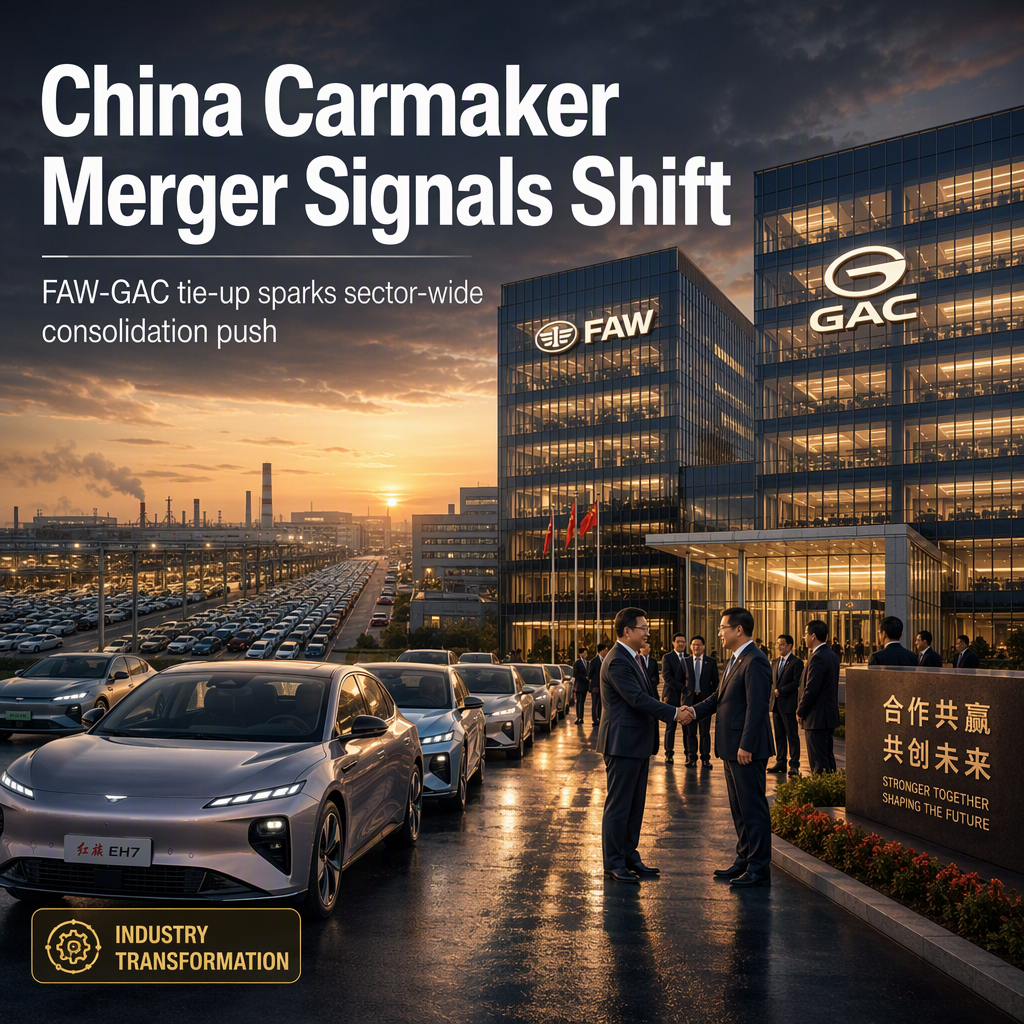
A significant development in China's automotive sector has occurred with a high-profile tie-up between two major state-owned carmakers, FAW and GAC. FAW is set to become GAC's No. 2 shareholder, a move that analysts interpret as a clear signal from Beijing to push for broader consolidation within the world's largest car market [1]. This action comes as the central government grows increasingly impatient with chronic overcapacity and unprofitable operations in the industry [1].
The consolidation is seen as a response to fierce domestic competition and a slowing economy, with many automakers operating below optimal scale and profitability. Analysts believe this deal could prompt other struggling automakers to pursue mergers or alliances, potentially reshaping the competitive landscape [1]. A market analyst familiar with the deal stated, "This is a clear message from Beijing that the days of unlimited support for unprofitable automakers are over. The government wants to see fewer, stronger players who can compete not just at home, but also internationally" [1].
Chinese automakers are also ramping up exports and investing heavily in new-energy vehicles, aiming to establish themselves as global leaders. However, the push for consolidation is largely driven by mounting financial pressures, as price wars in the domestic market erode margins and strain company finances [1].
While the article does not provide specific trading advice or technical analysis, market sentiment suggests that further consolidation could support the share prices of leading state-owned automakers, while putting pressure on smaller, less competitive players. Investors are closely monitoring the sector for additional announcements and potential moves from other major automakers in the coming months, with the consolidation trend expected to impact sector valuations and competitiveness [1].
CONCLUSION
The tie-up between FAW and GAC marks a pivotal moment for China's auto industry, signaling a government-driven push for consolidation to address overcapacity and financial strain. Market sentiment is cautiously optimistic for leading state-owned automakers, while smaller players may face increased pressure. Investors are advised to watch for further consolidation moves that could reshape the sector's competitive dynamics.