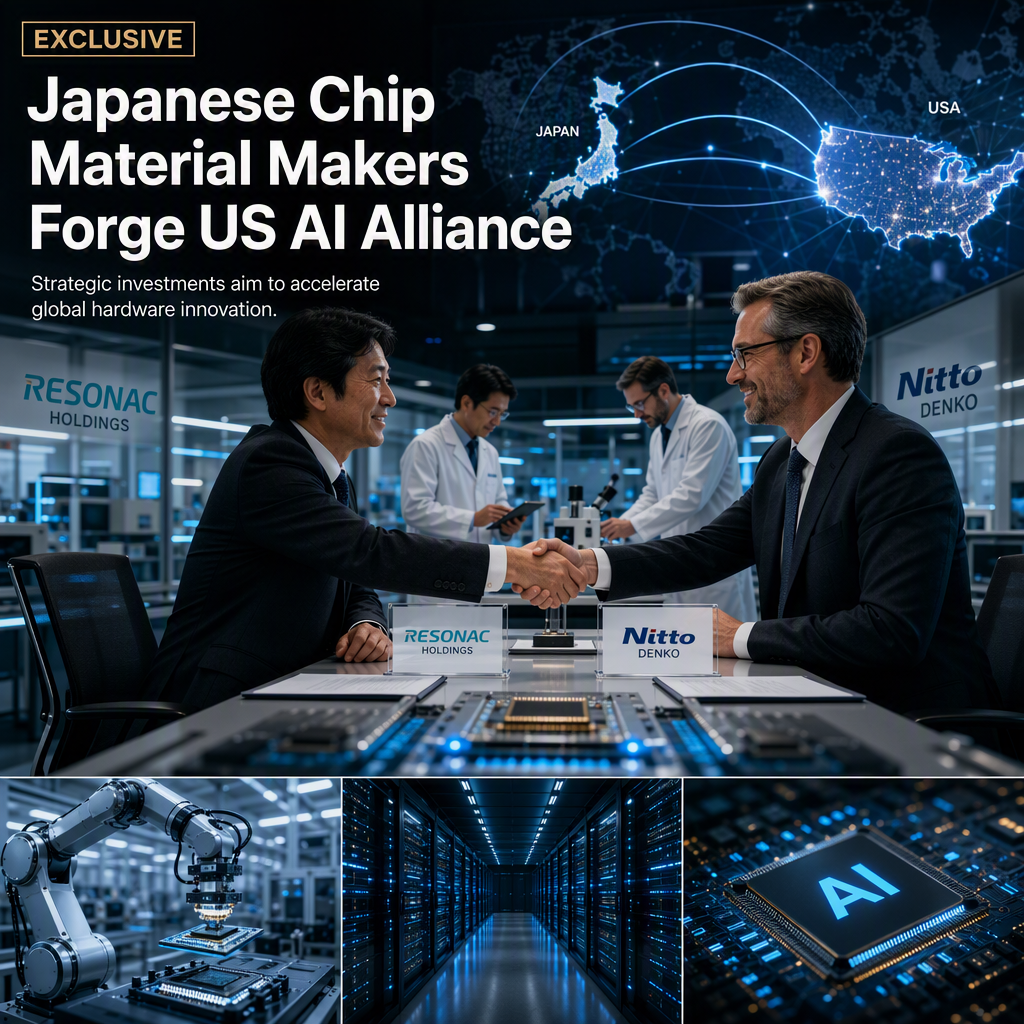
Resonac Holdings and Nitto Denko, two Japanese chip materials manufacturers, have agreed to invest in a U.S.-based fund focused on supporting makers of chips and other artificial intelligence-related hardware, aiming to find partners for collaboration on AI projects [1]. The fund, managed by Matter Venture Partners, has previously invested in companies that have established synergies with Japanese firms, such as Path Robotics' collaboration with Yaskawa Electric on industrial welding robots [1].
The fund's objective is to address production bottlenecks in the AI hardware industry, which has seen investments from major players like TSMC and ASML [1]. By connecting Japanese material makers with U.S. startups and hardware companies, the fund seeks to facilitate technological collaboration and enhance supply chains [1].
Resonac Holdings and Nitto Denko's participation highlights the strategic importance Japanese manufacturers place on securing access to advanced AI hardware and strengthening international partnerships [1]. The increasing demand for AI applications in robotics, data centers, and industrial production is intensifying the need for high-quality chip materials and innovative production solutions [1].
These investments are expected to help Japanese companies remain competitive in the rapidly evolving AI hardware market, where supply chain disruptions and talent shortages have become significant challenges [1]. Collaboration with U.S.-based firms is viewed as a pathway to overcoming these obstacles and integrating advanced technologies into Japanese manufacturing processes [1].
No specific financial amounts or trading advice were disclosed in the article. The overall sentiment is positive, with Japanese firms seeking to leverage global partnerships to strengthen their position in the AI hardware industry [1].
CONCLUSION
Japanese chip materials manufacturers are strategically investing in a U.S. fund to foster collaboration and address challenges in the AI hardware sector. The move is expected to enhance supply chain resilience and technological innovation, positioning Japanese firms to better compete in the global AI hardware market. While no financial details were provided, the sentiment is positive and signals a proactive approach to industry challenges.