
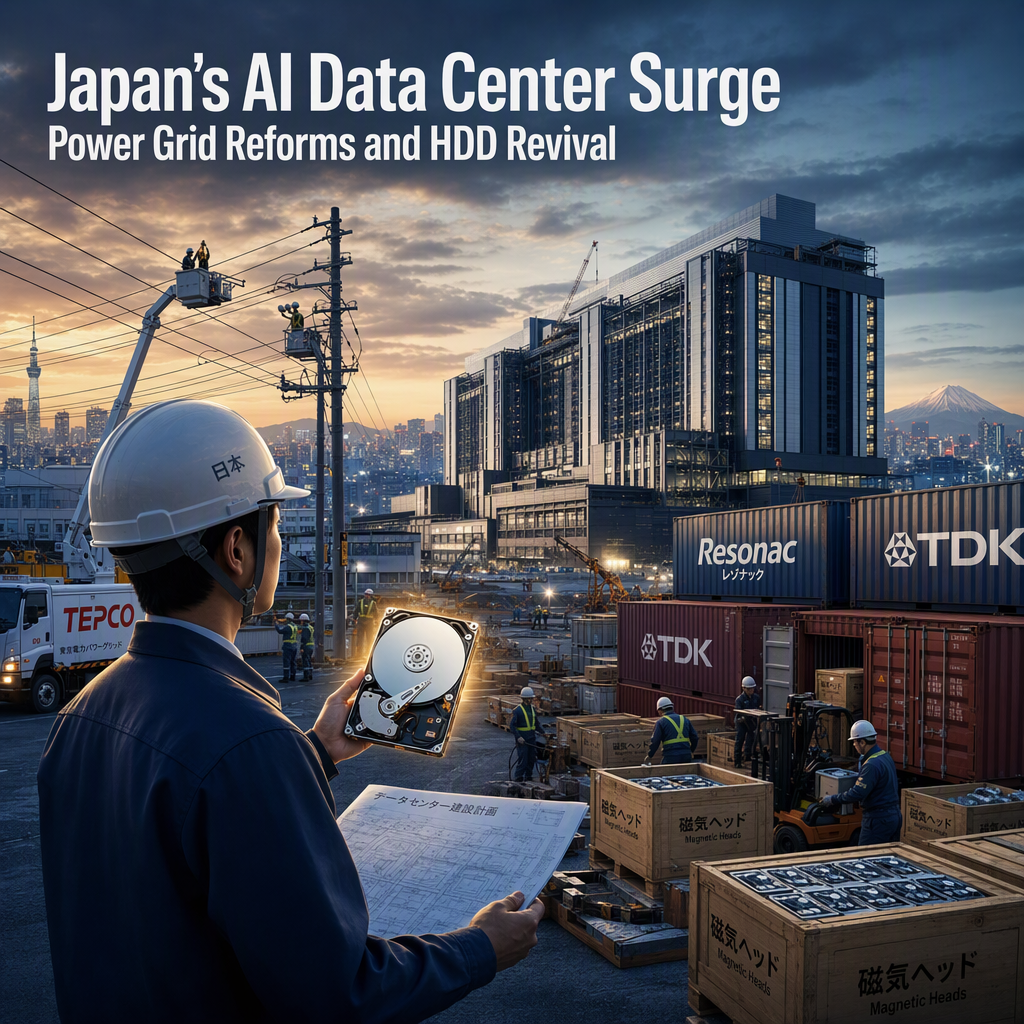
Japan is experiencing a significant surge in demand for hard-disk drive (HDD) components and electricity infrastructure, driven by the rapid expansion of artificial intelligence (AI) applications and the resulting boom in data center construction. Japanese companies such as Resonac Holdings and TDK, recognized for their expertise in advanced HDD media and magnetic heads, are ramping up production to meet soaring orders from global cloud service providers and AI developers. A senior executive at a leading Japanese HDD component maker stated, 'We are seeing orders from global cloud service providers and AI developers that far exceed our initial forecasts. Our production lines are running at full capacity, and we are planning further expansion to keep up with demand' [1]. This marks a reversal from a previous decline in the sector, with industry insiders attributing Japan's success to its coordinated approach and technological edge in high-precision components [1].
Simultaneously, the AI-driven data center boom is straining Japan's electricity infrastructure. Tokyo Electric Power Co. Holdings (TEPCO) and other utilities are tightening rules on electricity reservations for data centers to counter 'capacity squatting,' where operators reserve more power than they use, leading to underutilized infrastructure [2]. TEPCO's new measures include stricter deadlines for using reserved capacity and potential penalties for unused or delayed capacity, aiming to prevent stranded investments and ensure efficient allocation of limited electricity resources [2]. These changes are part of a broader movement among Japanese utilities and authorities, who are closely monitoring the situation and considering regulatory adjustments to support both infrastructure growth and market fairness [2].
The surge in AI-related data processing needs has made balancing rapid data center expansion with reliable power supply a pressing challenge for Japan's energy and technology sectors. Industry participants note that the new rules could affect how both international and domestic data center operators plan their expansion and manage electricity contracts [2]. Meanwhile, the continued growth in AI adoption is expected to sustain high demand for advanced HDD components, benefiting Japanese suppliers like Resonac and TDK [1].
CONCLUSION
Japan's AI-driven data center expansion is fueling a revival in the hard-drive component sector and prompting significant reforms in electricity reservation policies. While component makers like Resonac and TDK benefit from unprecedented demand, utilities such as TEPCO are implementing stricter rules to ensure efficient use of power resources. The ongoing challenge will be balancing infrastructure growth with resource management as AI adoption accelerates.