
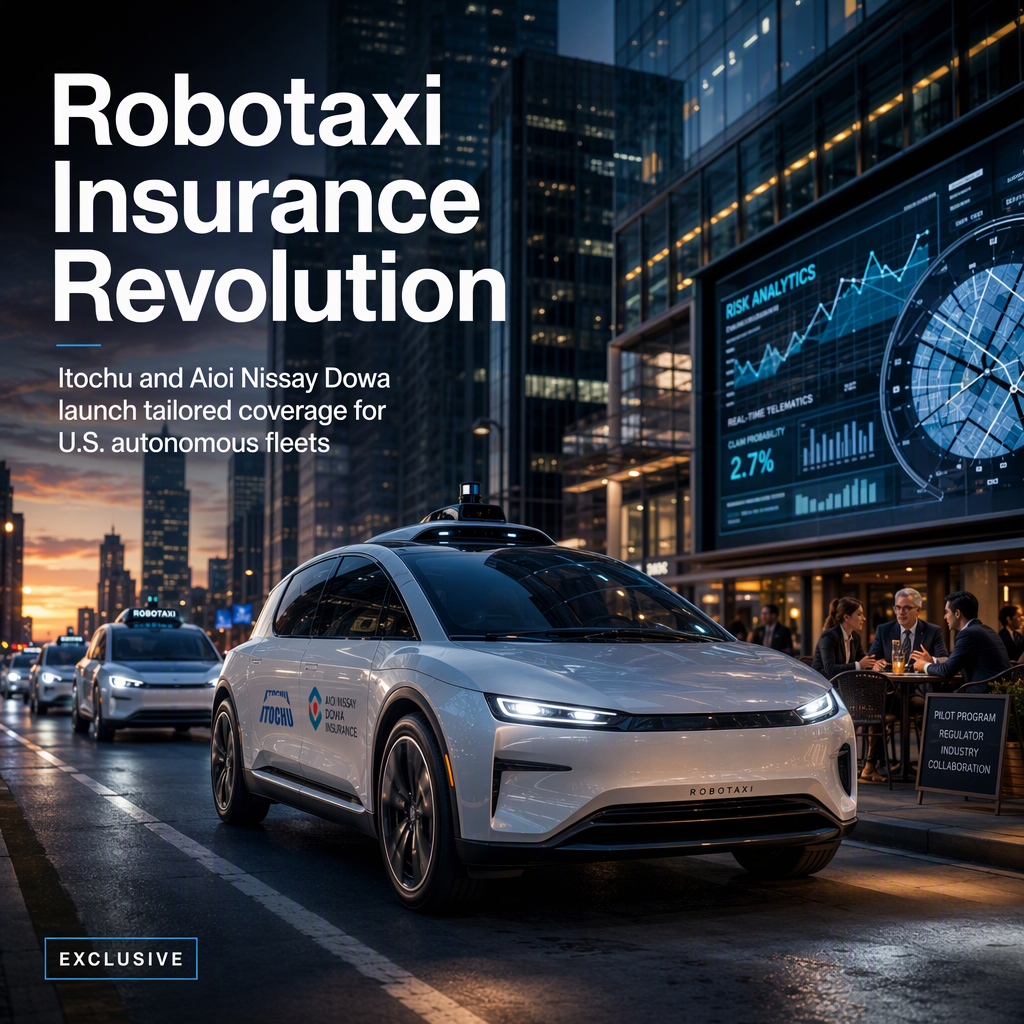
Aioi Nissay Dowa Insurance and Japanese trading house Itochu have announced plans to jointly develop insurance products tailored for self-driving taxis, with a targeted launch in the United States as early as fiscal 2027 [1]. This initiative aims to address the unique risks and liability structures associated with autonomous vehicles, which are not adequately covered by conventional auto insurance products [1]. The companies intend to customize coverage for robotaxi fleets, factoring in operational data and accident risk profiles specific to self-driving cars [1].
Industry sources indicate that the partnership's insurance offerings will likely include both third-party liability and coverage for damages resulting from software or technology failures, reflecting the growing relevance of such risks as the proportion of autonomous vehicles increases [1]. Waymo's deployment of robotaxis in 15 American cities underscores the potential scale and opportunity within the U.S. market [1]. Itochu and Aioi Nissay Dowa plan to conduct pilot programs and consult with U.S. regulatory authorities prior to a broader commercial rollout [1].
The companies are expected to leverage their expertise in telematics and mobility insurance, as well as collaborations with technology leaders in the autonomous driving sector, to develop robust risk assessment models for their new products [1]. This move comes amid a broader industry trend, with global insurers and financial institutions intensifying efforts to adapt to the evolving mobility landscape, where autonomous vehicles are anticipated to play a pivotal role in future transportation networks [1].
The U.S. robotaxi market is viewed as a critical frontier due to its scale and the advanced pace of autonomous vehicle deployment, presenting an opportunity for Itochu and Aioi Nissay Dowa to establish a foothold before competitors introduce similar offerings [1].
CONCLUSION
Itochu and Aioi Nissay Dowa's planned entry into the U.S. robotaxi insurance market signals a proactive response to the evolving risks of autonomous vehicles. Their specialized products and early engagement with regulators position them to capitalize on a rapidly expanding segment. The initiative is likely to influence both insurance and mobility sectors as autonomous technology adoption accelerates.