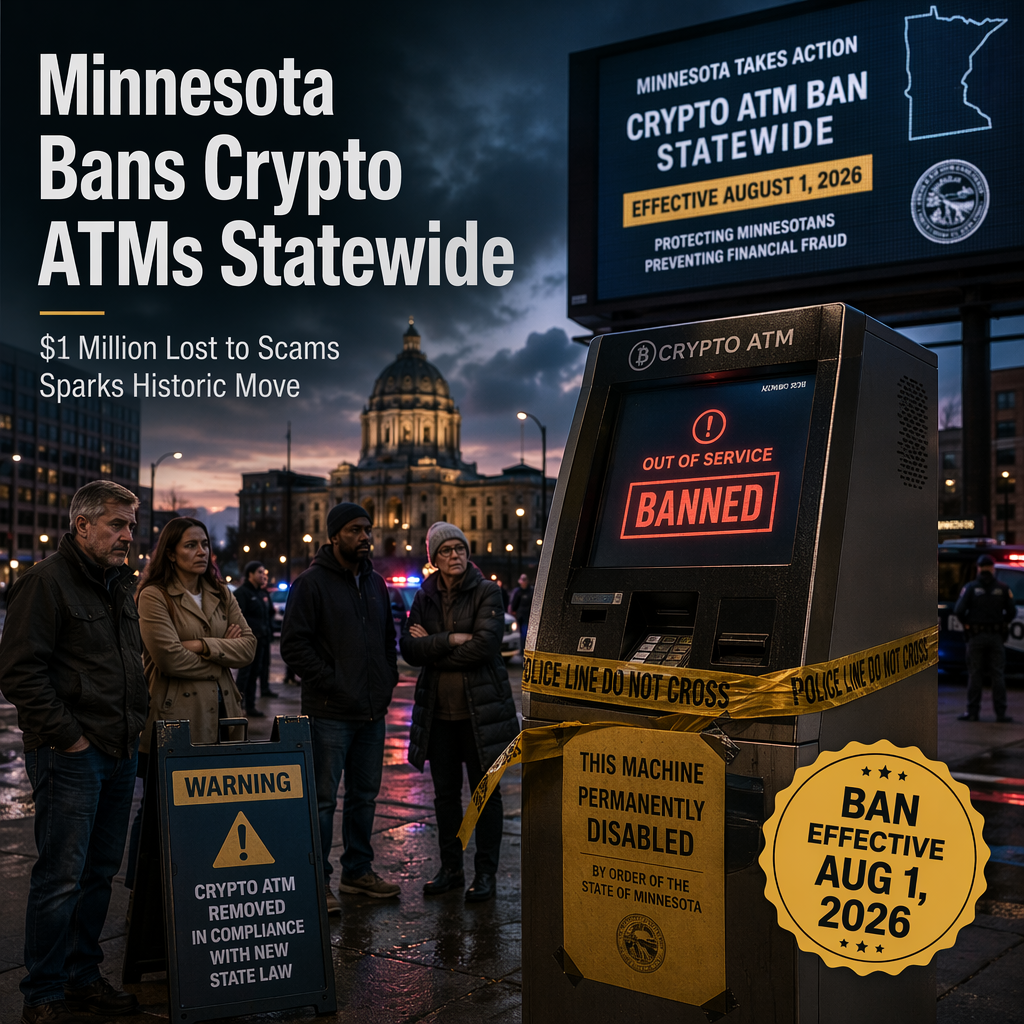
Minnesota has announced a statewide ban on cryptocurrency ATMs, also known as crypto kiosks, following a surge in scams that reportedly cost residents nearly $1 million over the past few years [1]. The ban will take effect on August 1, 2026, with operators required to remove all publicly accessible machines by the end of the year [1]. State officials cited that scammers have exploited the speed and anonymity of these machines to pressure victims into making rapid cash-to-crypto transfers during fake emergencies, legal threats, and romance scams [1].
Between 2023 and 2025, Minnesota recorded 134 complaints related to crypto kiosk scams, with reported losses approaching $1 million. In 2025 alone, there were 70 cases resulting in more than $540,000 in losses [1]. Authorities believe the actual numbers may be higher, as many victims do not report incidents due to embarrassment or fear of judgment [1].
Prior to the ban, Minnesota had implemented safeguards such as warnings, transaction limits, and consumer protections on these machines. However, law enforcement officials noted that scammers adapted by coaching victims through the process and instructing them on what to say if questioned [1]. The state determined that removing the machines from public use was necessary to effectively combat the ongoing threat [1].
The article highlights that crypto ATM scams are particularly difficult to reverse, as transactions are rapid and often irreversible, with funds quickly moved across borders or through multiple wallets. This leaves victims with little recourse once the transfer is completed [1].
CONCLUSION
Minnesota's decision to ban crypto ATMs reflects the state's response to persistent and costly scams targeting residents. The move is expected to significantly reduce the risk of such fraud, though it also underscores the challenges regulators face in keeping pace with evolving criminal tactics in the digital currency space.