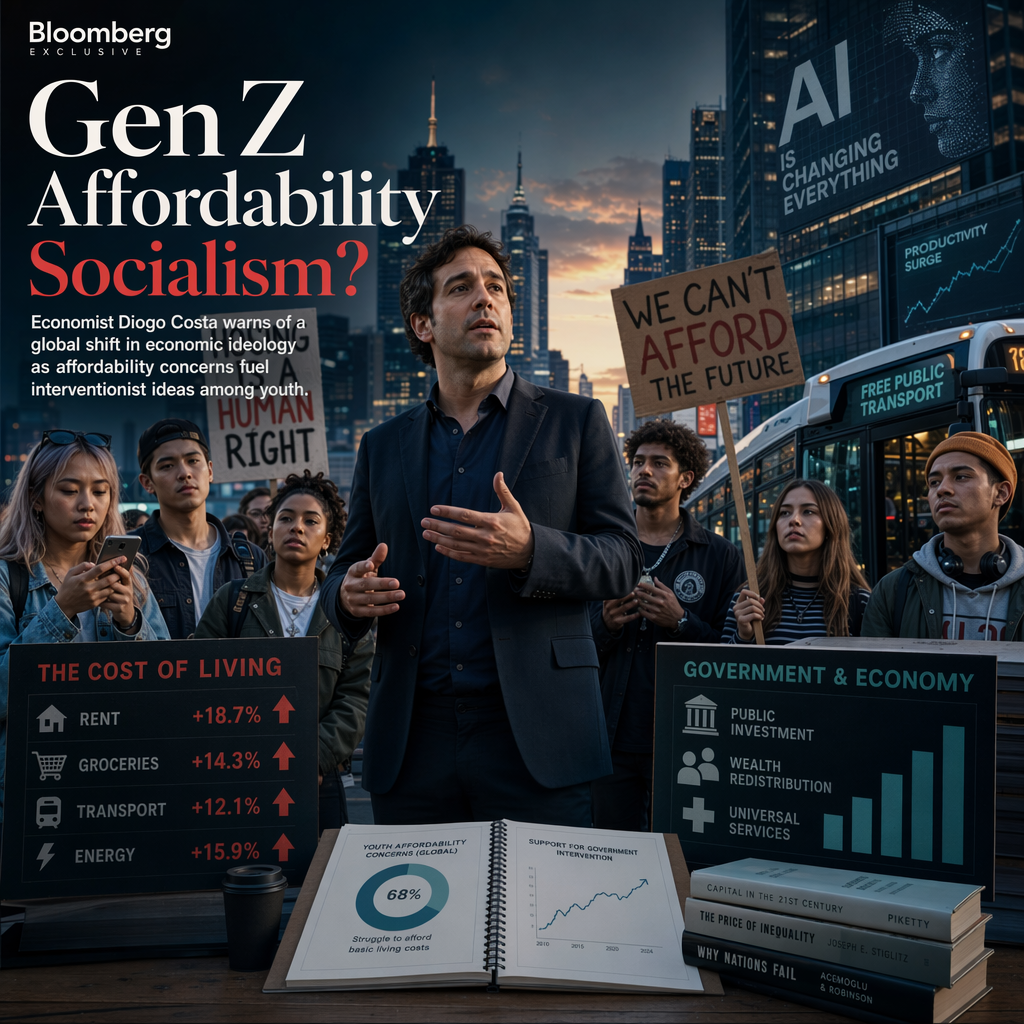
Diogo Costa, president of the Foundation for Economic Education (FEE), has raised concerns about a growing trend he describes as 'Gen Z affordability socialism.' In an interview at Freedom Fest in Las Vegas, Costa argued that the current affordability crisis is creating fertile ground for the resurgence of interventionist economic ideas among younger generations, particularly Gen Z. He noted that while young people recognize the benefits of living in a market economy, they increasingly advocate for heavy-handed government intervention, such as price controls on rent, groceries, and public transportation, to address cost-of-living issues. Costa emphasized that this phenomenon is not limited to specific regions like New York City or California but is occurring globally [1].
Costa warned that the ideological foundation of capitalism is under unprecedented attack, even as technological advancements—especially in artificial intelligence—are transforming the global economy. He highlighted a paradox: despite living in a 'golden age for technology,' there is widespread pessimism about the future, with fears that AI could eliminate jobs and threaten humanity. Costa believes that the lack of understanding and appreciation for free-market principles is contributing to this pessimism and the rise of 'anti-economics' thinking [1].
Drawing on the Austrian school of economics, Costa stressed the importance of economic education as a defense against the spread of these interventionist ideas. He argued that good economic concepts must be continually recycled and reframed to prevent prosperity from turning into poverty, referencing FEE founder Leonard Read's perspective on the generational fragility of economic understanding [1].
No specific market reactions, analyst opinions, or forward-looking statements regarding financial markets were discussed in the article. The focus remained on ideological and generational shifts in economic thinking rather than direct market impacts [1].
CONCLUSION
Diogo Costa's warning highlights a generational shift toward interventionist economic policies driven by affordability concerns, which he believes could undermine the foundations of market economies. While no immediate market reactions were reported, the trend suggests potential challenges for free-market principles and policy debates in the future. Economic education is positioned as a key tool to counteract these developments.