
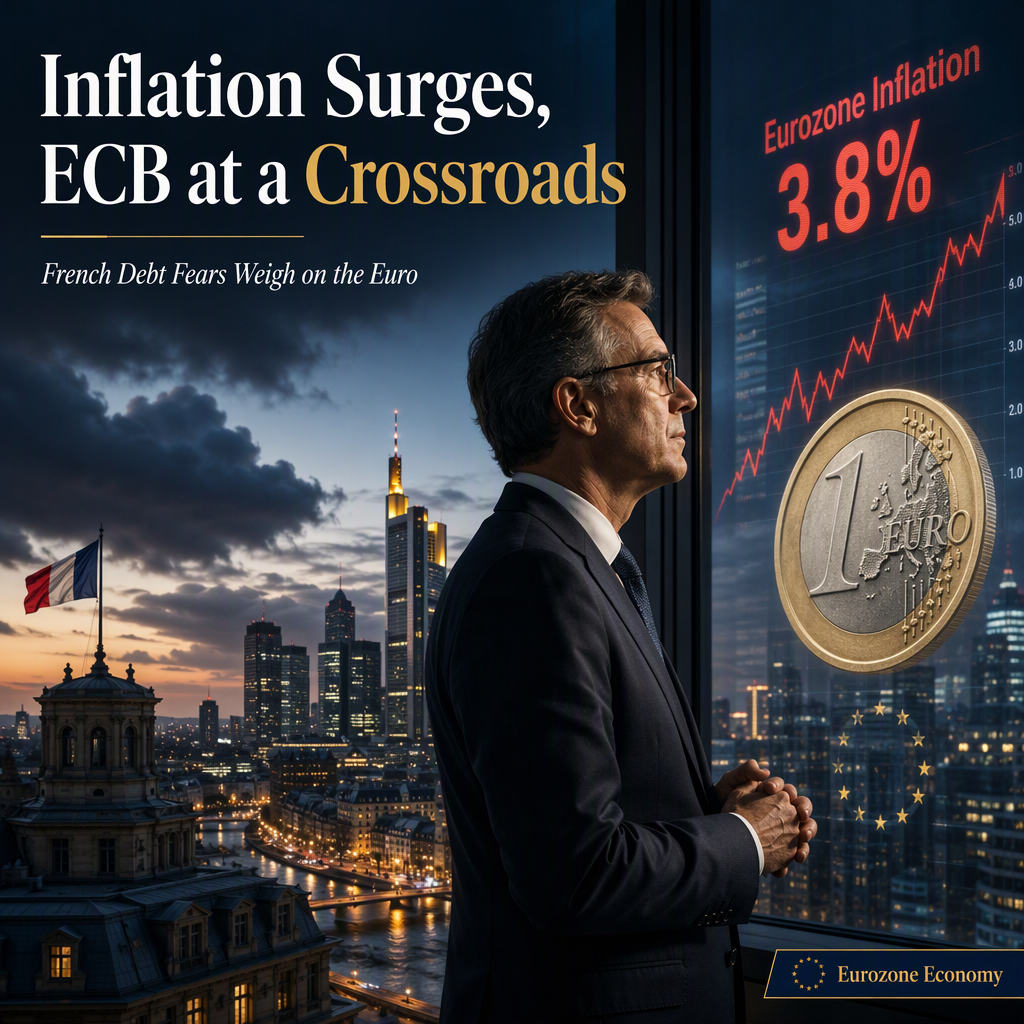
Eurozone inflation accelerated sharply in September, with the preliminary Harmonised Index of Consumer Prices (HICP) rising to 3.8% year-over-year, up from 3.2% in August and surpassing market expectations of 3.6% [1][3][4]. This marks the highest inflation rate in three years, significantly above the European Central Bank's (ECB) 2% target [4]. Core HICP, which excludes volatile items such as food and energy, increased to 2.5% year-over-year, matching expectations and slightly above the previous reading of 2.4% [1][3][4]. On a monthly basis, headline inflation rose by 0.6%, compared to 0.4% previously, while core inflation grew by 0.2% [3].
The main driver of the inflation surge was energy, with energy inflation reaching 18.8%, its highest level since January 2023, as oil prices soared due to ongoing Middle East conflict [4]. However, analysts noted that the inflation spike is now about more than just energy, with food and other components also contributing [1][4]. Despite the strong inflation data, the Euro (EUR) showed little immediate reaction, with EUR/USD trading near 1.1250, up just 0.1% on the day and remaining close to a 16-month low of 1.1210 hit earlier in the week [1][3].
Market sentiment around the Euro remains bearish, largely due to concerns over France's fiscal health and a sharp sell-off in French government bonds. The yield on France's 10-year bond surged more than 70 basis points in September, reaching its highest level since 2002, and the spread between French and German bonds widened to a 14-year high above 140 basis points [1]. ING analysts highlighted that the French debt sell-off has undermined expectations for further ECB tightening, suggesting that the ECB may have less cause to raise rates than the US Federal Reserve [2]. They warned that the market could add another 2% risk premium to the Euro if the bond market turmoil continues, and that any ECB intervention to stabilize bonds—such as using the Transmission Protection Instrument—would be seen as very bearish for the Euro [2].
Looking ahead, the ECB faces a policy dilemma. While recent comments from President Lagarde indicated that higher bond yields were already tightening financial conditions, the latest inflation data challenges this stance and increases pressure on the ECB to act [4]. Harry Woolman of Validus Risk Management stated that the ECB will not want to wait for second-round inflation effects to become entrenched before responding [4]. Meanwhile, investors are also watching for the upcoming US Nonfarm Payrolls report, with consensus expecting 90,000 new jobs and the unemployment rate steady at 4.1%—data that could further influence expectations for Federal Reserve policy [1].
CONCLUSION
Eurozone inflation has surged to a three-year high, intensifying pressure on the ECB to consider further tightening despite mounting concerns over French debt and market stability. The Euro remains under pressure, with analysts warning of additional downside risk if bond market stress persists. The ECB's upcoming policy decisions will be closely watched as markets weigh inflation risks against financial stability concerns.