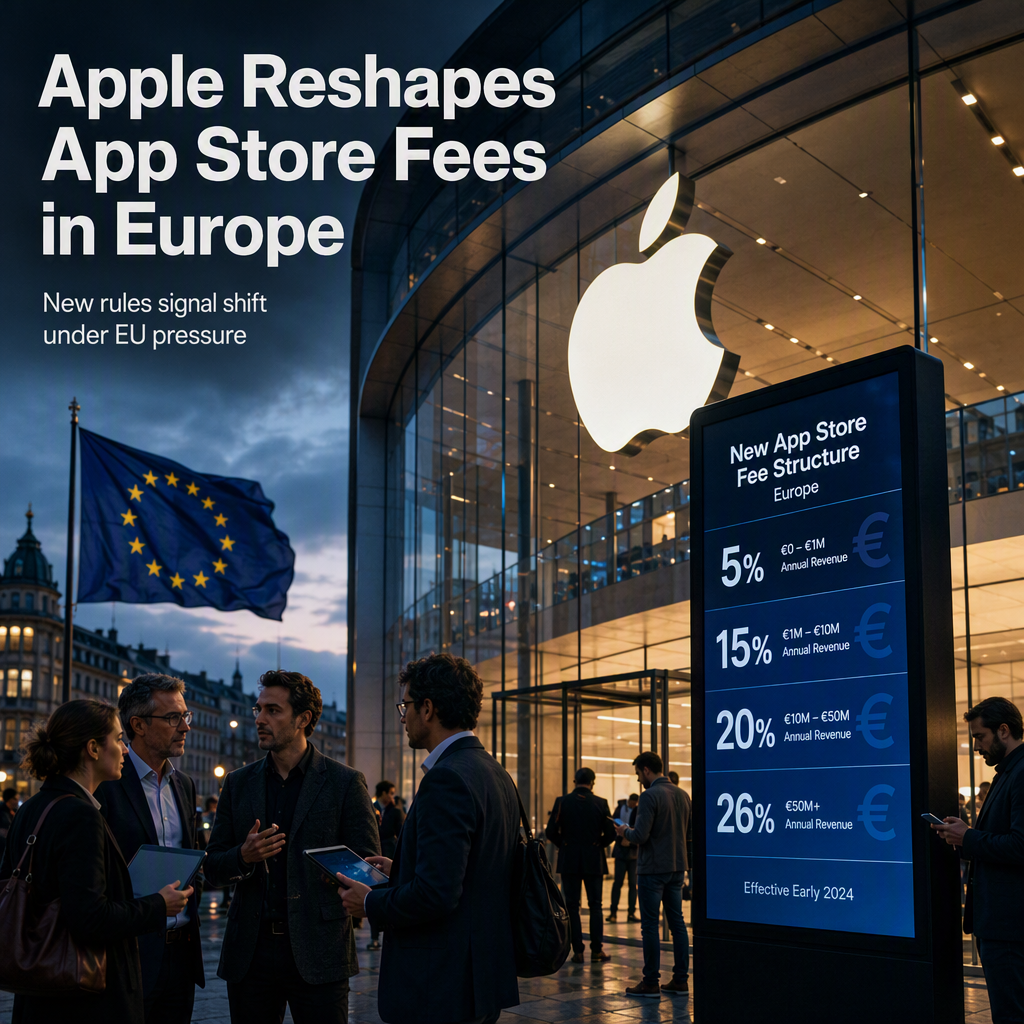
Apple announced a major overhaul of its App Store fee structure in the European Union, introducing a 5% commission for third-party app stores and a 26% commission on in-app purchases made through Apple's system. This change is part of Apple's efforts to resolve ongoing disputes with EU regulators following the implementation of the Digital Markets Act, which requires 'gatekeepers' like Apple to open their platforms to third parties [1].
Under the new rules, apps using their own payment processing systems will pay Apple a 20% commission, while those that link out to external websites for purchases will be charged 15%. Apps distributed through third-party app stores or the web will be subject to a 5% 'Core Technology Commission.' Apple stated that some fees could be reduced by participating in various company programs. These new fee tiers will take effect on October 1 [1].
Historically, Apple charged either 30% or 15% on all iPhone in-app purchases and required all non-enterprise apps to be installed through its App Store. The company's model has faced global scrutiny from lawsuits and regulators, with critics labeling it a monopoly that imposes high fees on developers and users. Apple maintains that its policies are designed to enhance trust, safety, and security [1].
The European Commission passed the Digital Markets Act in 2022, targeting large tech companies and mandating increased openness. Apple has faced friction and significant fines from the EC over its App Store policies. While only a few regions, including Japan and Brazil, require Apple to allow third-party app stores, Europe is currently the only region where users can install iPhone software from the web [1].
Apple claims its new proposal resolves disagreements with the European Commission and includes new child safety measures, such as parental restrictions on some in-app purchases. The App Store is a significant revenue source for Apple, reported within its Services division, though it was not highlighted as a top driver of services growth in the most recent quarter for the first time since 2023, according to a Morgan Stanley note [1].
CONCLUSION
Apple's revised EU App Store fee structure marks a significant shift in response to regulatory demands, with lower commissions for third-party app stores and alternative payment methods. The changes are expected to impact Apple's Services revenue and developer relations in Europe, while also addressing regulatory concerns and child safety. Market participants will be watching closely as the new fee schedule takes effect on October 1.