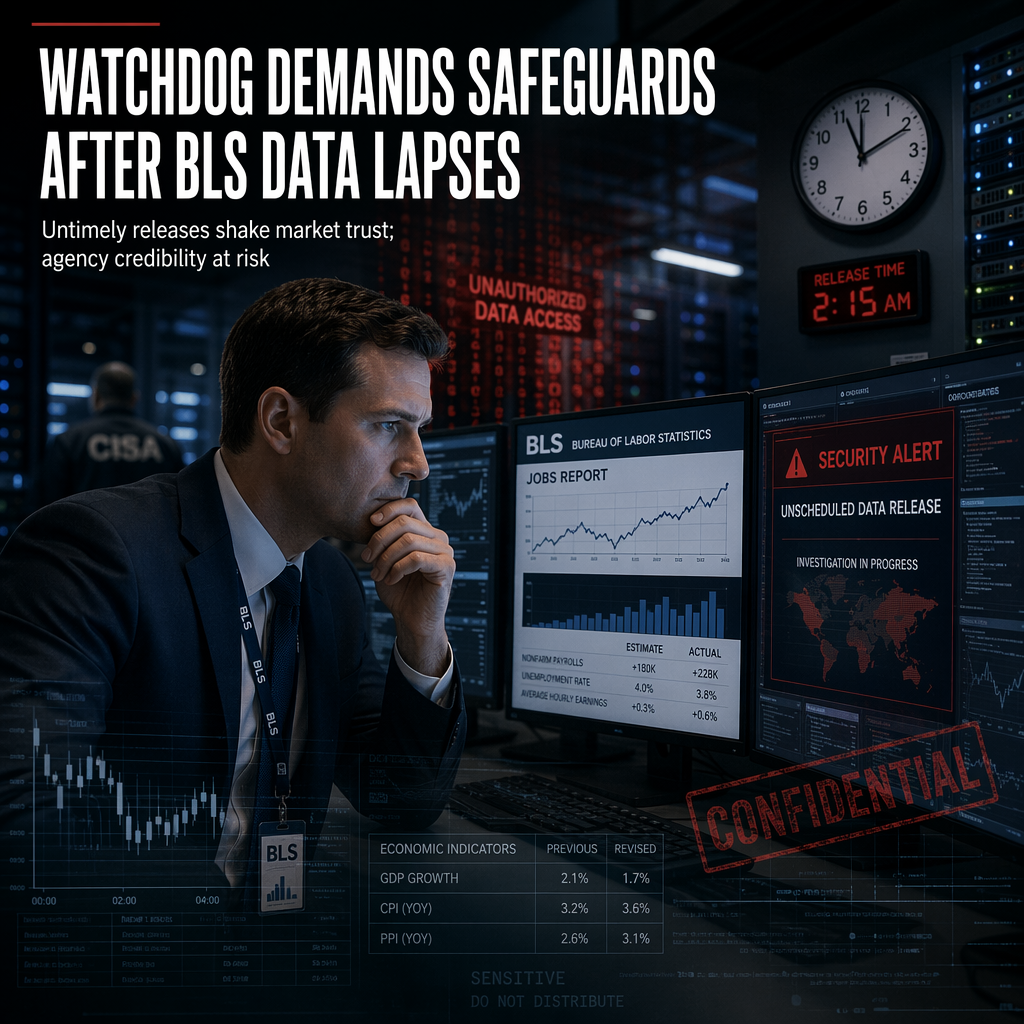
The Bureau of Labor Statistics (BLS) faced scrutiny after a series of incidents in 2024 where key economic data was released at improper times, prompting a review by the Labor Department's inspector general (IG) [1]. The IG's report highlighted three specific cases: in May 2024, the monthly consumer price index (CPI) data was published 31 minutes early, and in August 2024, the preliminary benchmark revision to employment data was delayed by 34 minutes, with some users receiving the information upon request before its public release [1]. Additionally, internal or inaccurate methodology information was shared externally three times before official publication in 2024 [1].
These incidents were significant because BLS data, such as CPI inflation figures and employment benchmarks, are closely watched by economic decision-makers and financial markets. Untimely or unauthorized releases could provide certain traders with an unfair advantage, potentially impacting market integrity [1]. The IG report criticized the BLS for inadequately emphasizing equitable access to information and for lapses in safeguarding restricted materials, noting that these deviations "negatively affected its reputation and credibility" [1].
In response, the BLS implemented several corrective actions, including closing gaps in IT safeguards, revising performance standards, strengthening management oversight, and enhancing staff training [1]. The agency also updated its policies and procedures to prevent unauthorized data releases [1]. However, the IG maintained that further improvements are necessary, recommending updates to testing procedures, clarification of new policies, increased staff accountability, and the finalization of crisis communications plans [1].
Acting BLS Commissioner William Wiatrowski acknowledged the audit's findings, stating that they are "generally consistent with the previous reviews" aimed at preventing early or unauthorized disclosures [1].
CONCLUSION
The BLS has taken steps to address recent failures in the timing and security of economic data releases, but the inspector general warns that more robust safeguards are still needed. These incidents have raised concerns about market fairness and the agency's credibility, underscoring the importance of continued improvements to protect sensitive economic information.