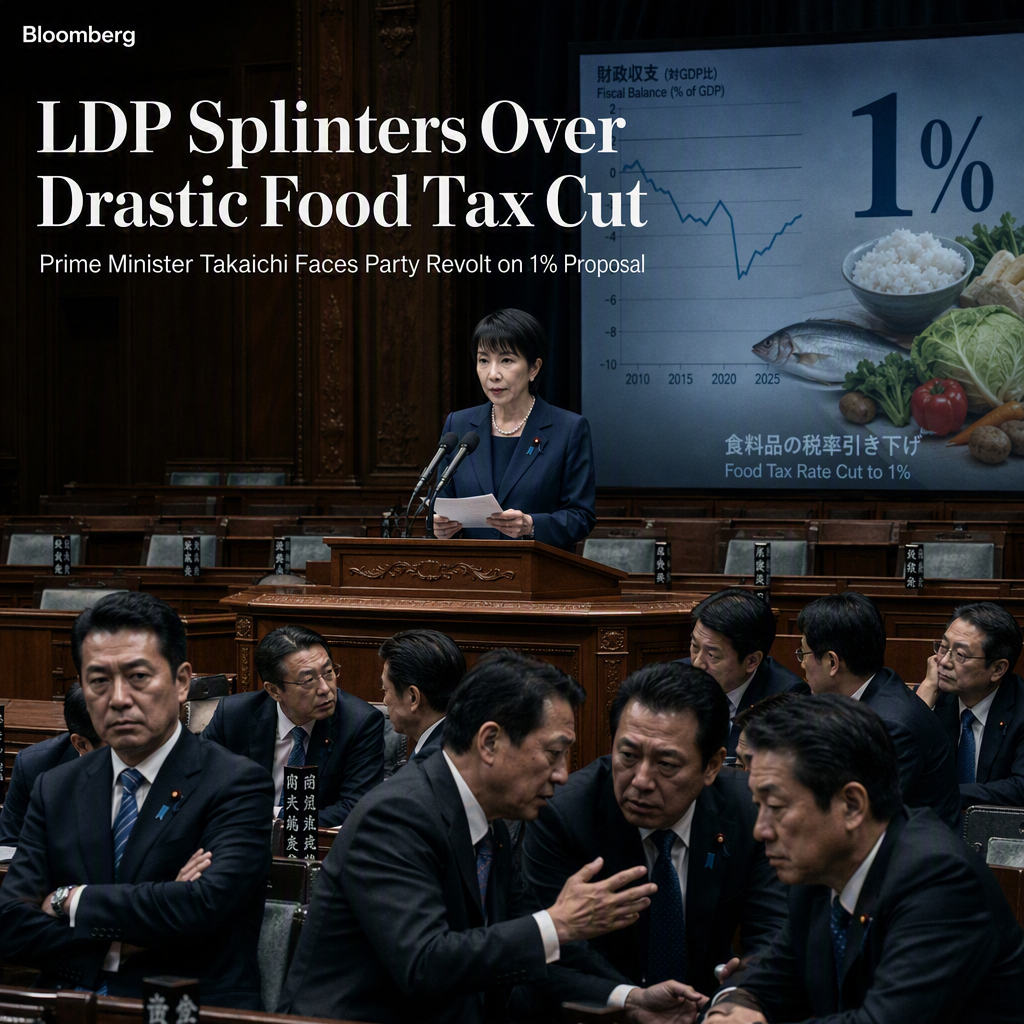
Japan's ruling Liberal Democratic Party (LDP) has postponed approval of Prime Minister Sanae Takaichi's proposal to reduce the consumption tax on food to 1%, following significant pushback from party members concerned about the plan's fiscal implications [1]. Prime Minister Takaichi announced the tax cut initiative before securing party consensus, a move that has caused discontent among LDP lawmakers who are questioning both the funding mechanism and the potential need to raise the consumption tax in the future to offset lost revenue [1].
The proposed tax cut is part of a broader $2.3 trillion economic strategy, but it has sparked debate due to an estimated $30 billion funding gap [1]. Some party members argue that the measure could undermine Japan's fiscal stability and jeopardize future government finances [1]. The timing of the debate coincides with declining approval ratings for Prime Minister Takaichi, adding to concerns about interest rates and the overall economic outlook [1].
Japanese businesses have responded with mixed reactions: while some welcome the potential relief from inflationary pressures, others are apprehensive about the long-term sustainability of public finances if the tax cut is implemented [1]. The internal resistance within the LDP underscores a significant division over major fiscal policy decisions, as lawmakers balance the immediate benefits for consumers against the risks of future tax increases and budgetary constraints [1].
CONCLUSION
The LDP's postponement of the food tax cut plan reflects deep divisions within the party over fiscal policy and economic strategy. With a substantial funding gap and concerns about fiscal stability, the proposal faces significant hurdles, and market participants are likely to remain cautious amid ongoing political uncertainty.