
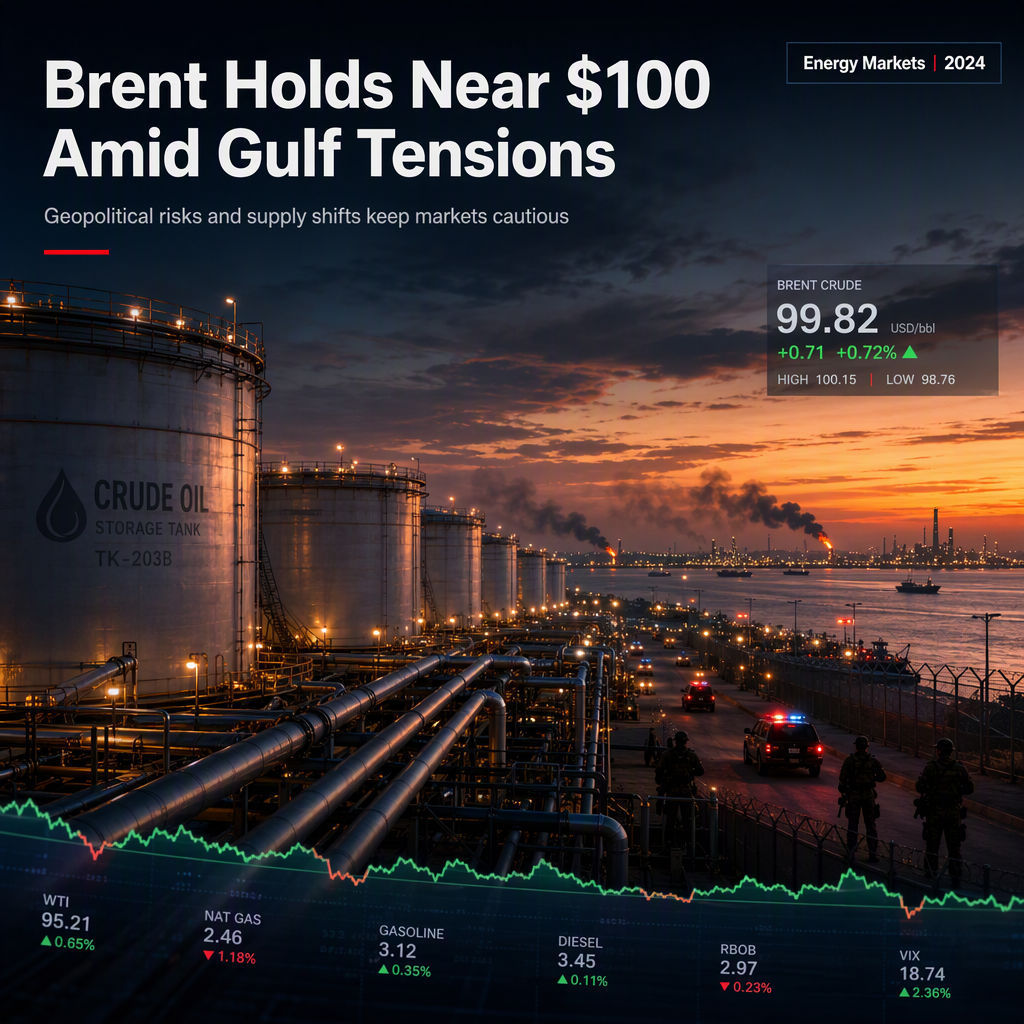
Brent crude oil prices are maintaining support around the $100 per barrel level, as ongoing geopolitical risks in the Persian Gulf continue to outweigh improvements in the global oil supply situation, according to ING analysts Warren Patterson and Ewa Manthey [1]. The analysts highlight that recent attacks on Saudi infrastructure, specifically the East-West pipeline, have heightened market nervousness. Although the latest attack did not disrupt flows, it serves as a reminder of the persistent risks to supply from the region [1].
Producers in the Persian Gulf are responding to the volatile environment. Kuwait is currently producing at 75% of its pre-war levels, while Saudi Arabia has reduced the official selling price of its Arab Light crude for November loadings into Asia, signaling an improving supply outlook [1]. Despite these adjustments, the market remains cautious, with ING noting that this nervousness is likely to persist until there is progress in negotiations between the US and Iran [1].
In the European energy market, vulnerability persists despite a recent increase in LNG flows from the Persian Gulf. EU gas storage levels are just under 73% full, which is a decline from 83% at the same time last year and below the five-year average of 88% [1]. This lower storage level adds to concerns as the region heads into winter, further supporting energy prices.
Overall, the combination of geopolitical tensions, supply adjustments by key Gulf producers, and concerns over European gas storage is keeping Brent prices elevated near the $100 mark, with market sentiment remaining cautious and alert to further developments [1].
CONCLUSION
Brent crude prices remain well-supported near $100 per barrel as geopolitical risks in the Persian Gulf overshadow improvements in supply. Market sentiment is likely to stay cautious until there is progress in US-Iran negotiations, while European gas storage concerns add to the bullish outlook for energy prices.